


|
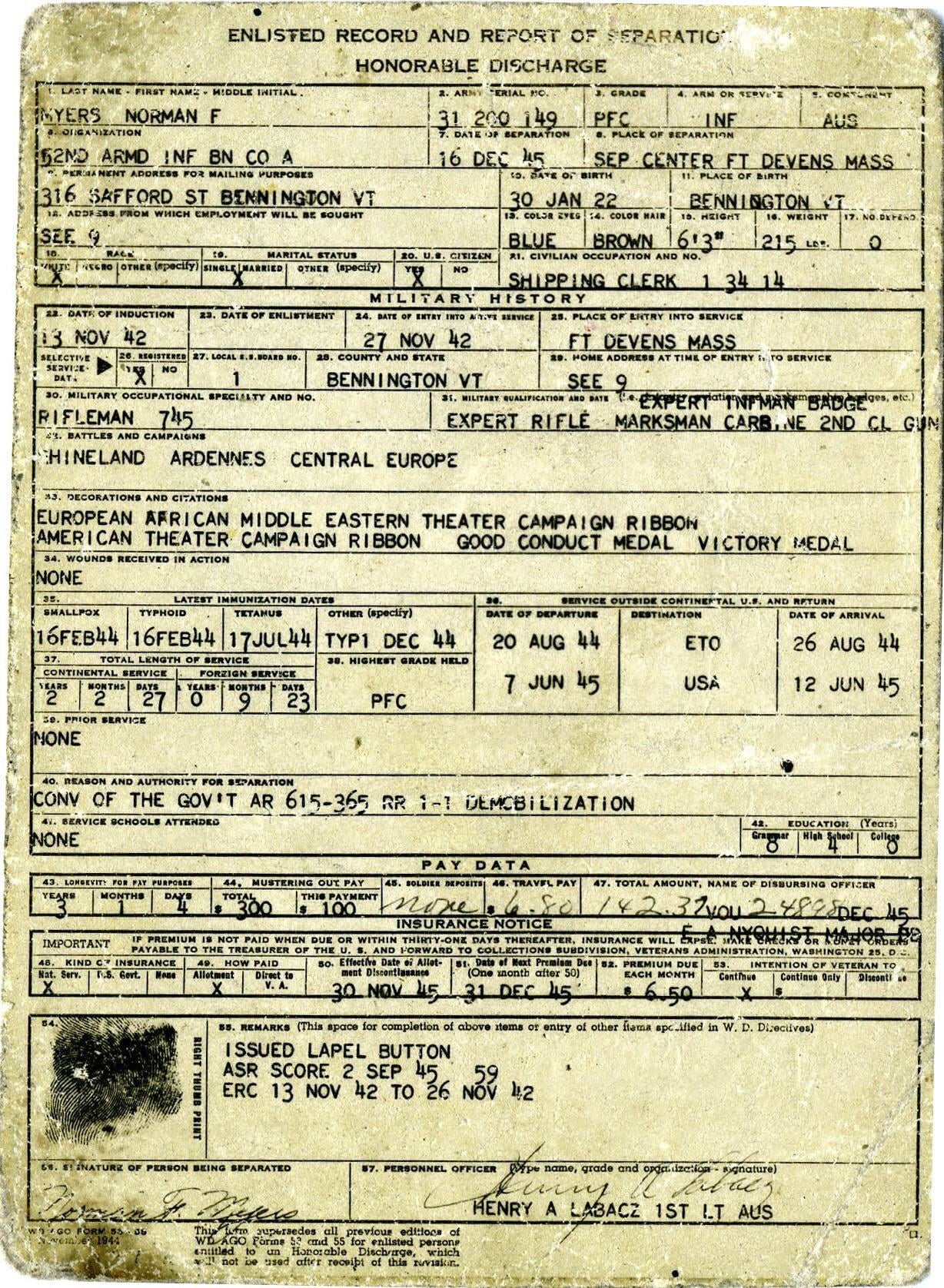
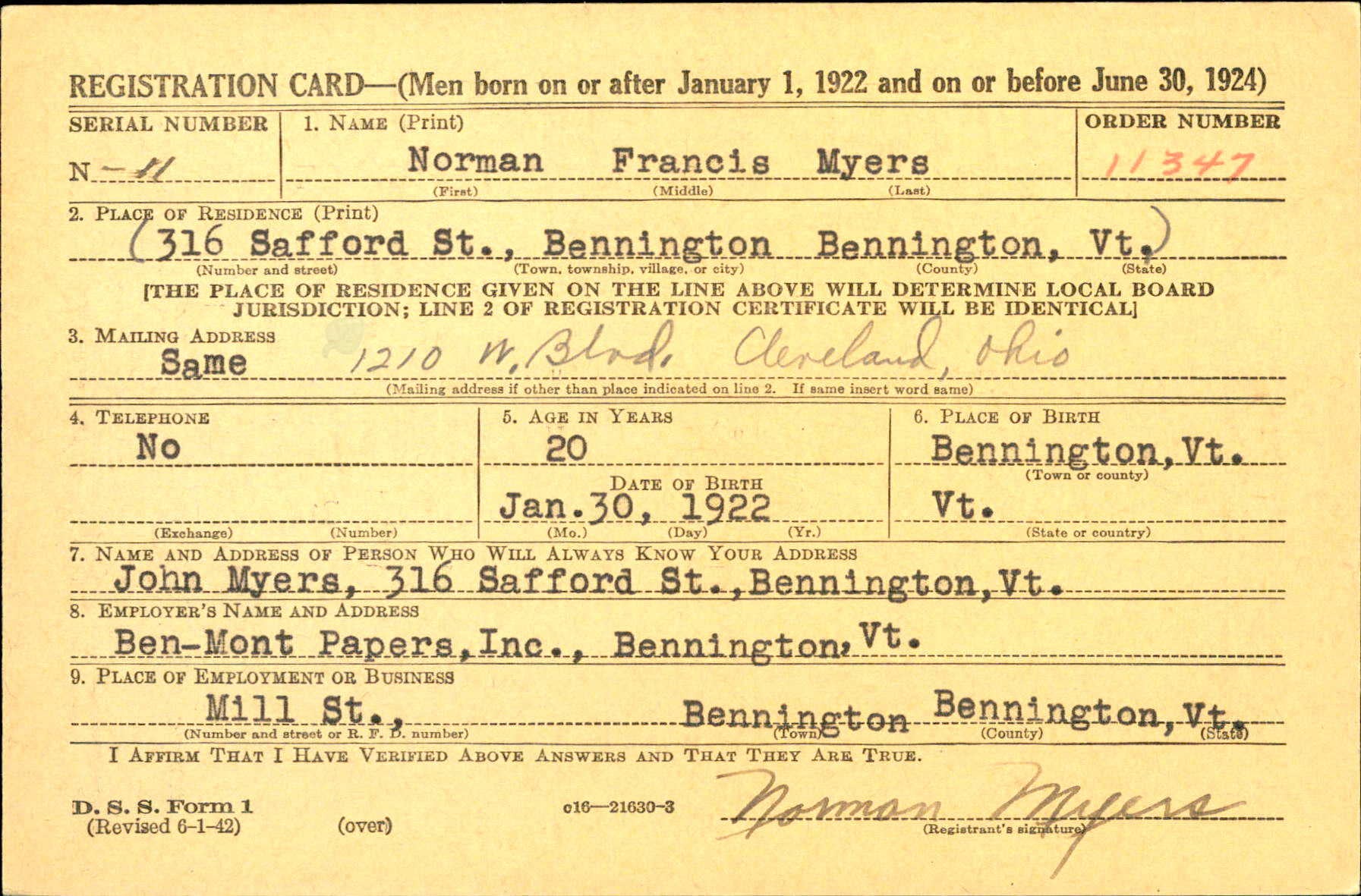
Norman Francis MYERS
| ||||||||||||||||||||||||||
|---|---|---|---|---|---|---|---|---|---|---|---|---|---|---|---|---|---|---|---|---|---|---|---|---|---|---|
|
Source : Ellen Marchese | ||||||||||||||||||||||||||
| NUMBER OF SERVICE | 31200149 | |||||||||||||||||||||||||
| AGE | 62 yo | |||||||||||||||||||||||||
| DATE OF BIRTH | 30 January 1922 in Bennington VERMONT | |||||||||||||||||||||||||
| ENLISTMENT STATE | VERMONT | |||||||||||||||||||||||||
| FAMILY |
Spouse : Margaret Delima "Peg" Trembley MYERS Parents : John Joseph (Maillard) MYERS & Jennie Ella Stratton Siblings : Richard Thomas, Robert John, Marie Josephine & James Joseph | |||||||||||||||||||||||||
| RANK |
| |||||||||||||||||||||||||
| FONCTION | Infantry Man | |||||||||||||||||||||||||
| JOB BEFORE ENLISTEMENT | Master Carpenter |  | ||||||||||||||||||||||||
| DATE of ENLISTEMENT | 13 November 1942 Rutland VERMONT | |||||||||||||||||||||||||
| COMPANY | ||||||||||||||||||||||||||
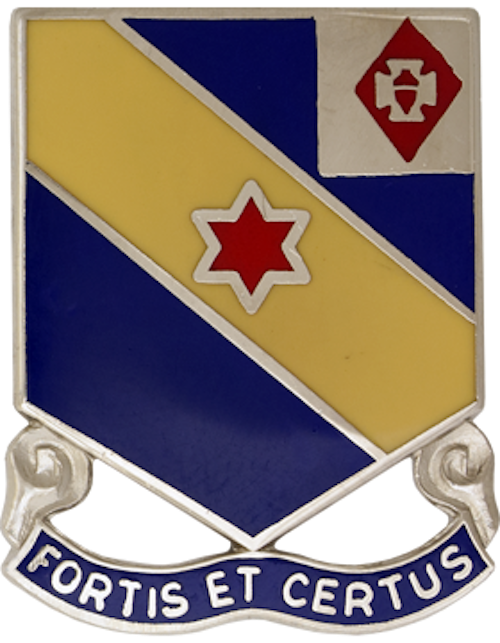
| BATTALION | 52nd Armored Infantry Battlion | |||||||||||||||||||||||||
| DIVISION | 9th Armored Division | |||||||||||||||||||||||||
| WAR | The Ardennes Battle of The Bulge | Zittau, Zittau Arbeitskommando 1315 Germany | ||||||||||||||||||||||||
| POW |
Source : Ellen Marchese | |||||||||||||||||||||||||
| SERVICE END DATE | 16 December 1945 | |||||||||||||||||||||||||
| DATE OF DEATH | 7 March 1984 | |||||||||||||||||||||||||
| PLACE OF DEATH | Fishkill, Dutchess, NEW YORK | |||||||||||||||||||||||||
| CEMETERY |
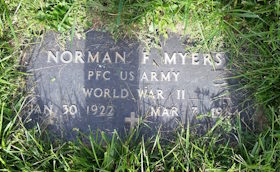
FISHKILL RURAL CEMETERY in Fishkill, Dutchess, NEW YORK | |||||||||||||||||||||||||
| DECORATION |
| |||||||||||||||||||||||||
| ||||||||||||||||||||||||||
| STORY | ||||||||||||||||||||||||||
|
Source : Ellen Marchese | 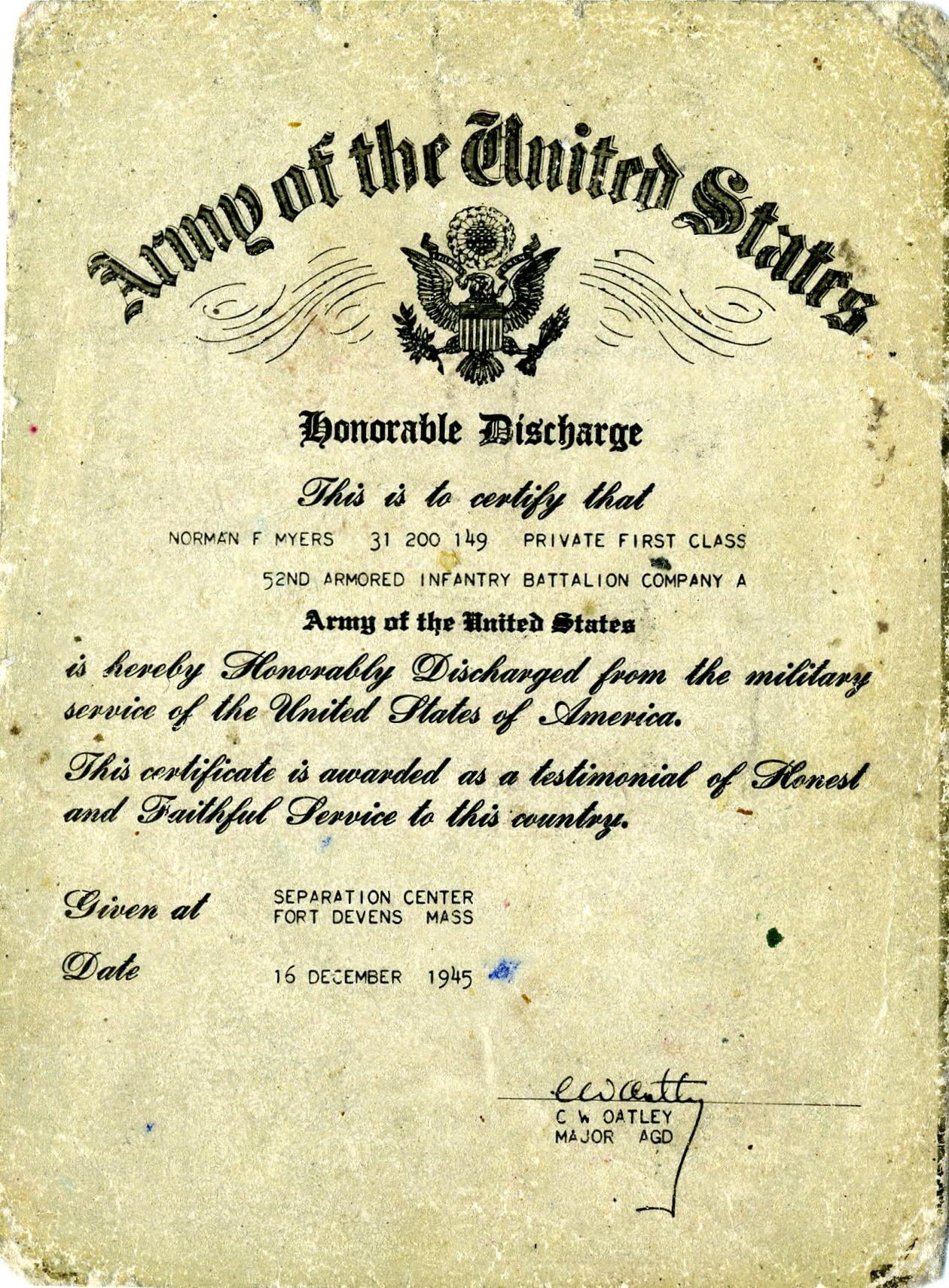
Source : Ellen Marchese | |||||||||||||||||||||||||
|
Source : Ellen Marchese |
Source : Ellen Marchese | |||||||||||||||||||||||||
|
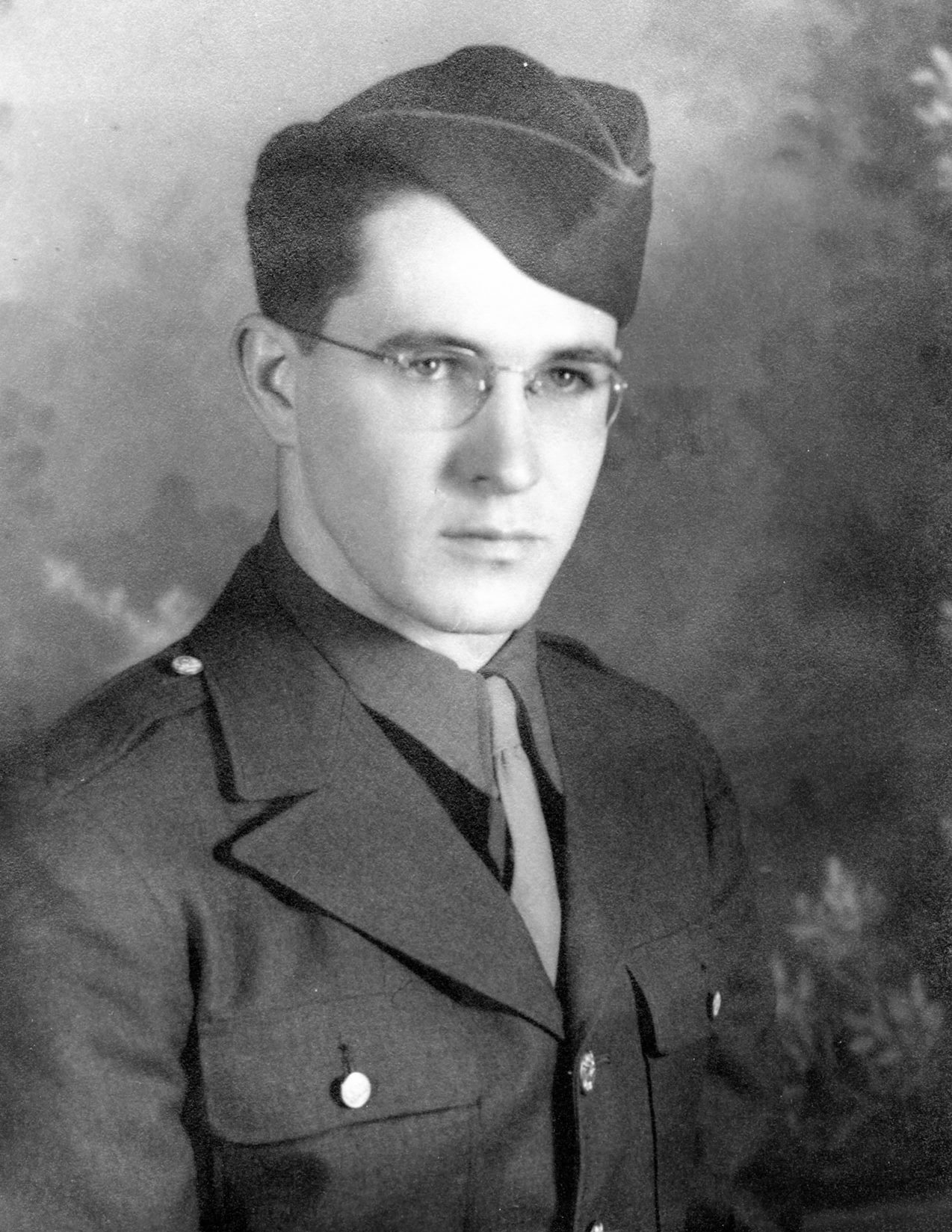
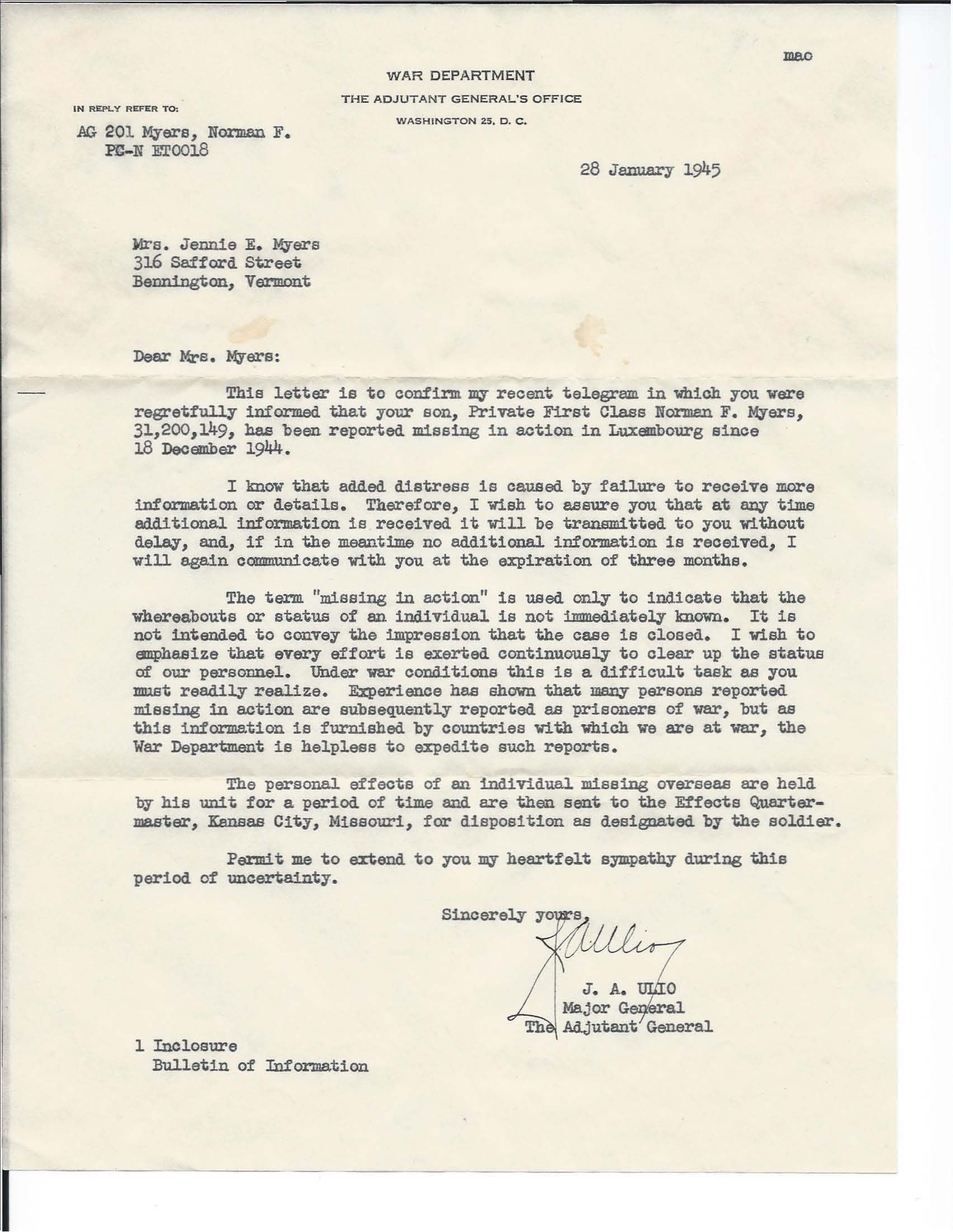
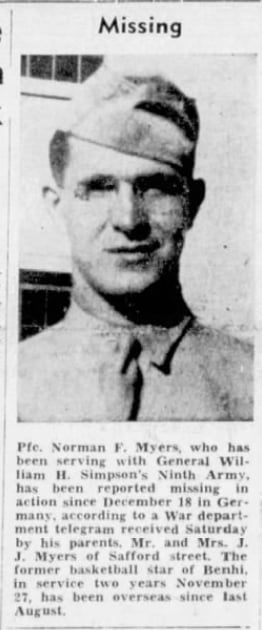
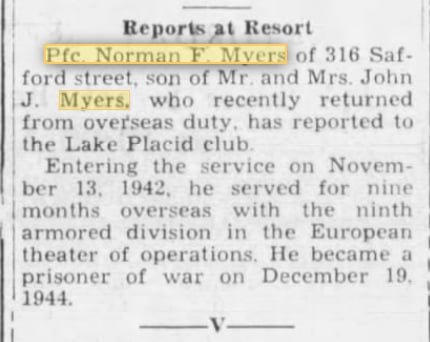
Norman Francis Myers, born in Bennington, Vt on 30 Jan 1922 to John Joseph (Maillard) Myers and Jennie Ella Stratton. He served during the Battle of the Bulge and was captured and listed as missing In action. He was a POW in Zittau Germany. Once home he was a Master Carpenter and worked for his uncle, Norman Green Stratton. He met, at the Five Flys (State Line)the love of his life, and married Margaret Delima Trembley on 6 Apr 1947 and lived in Hoosick Falls, NY. When work went dry he moved our family to Wappinger Falls, NY (on 6 Sep 1964) and worked for Dutchess Lumber owned by Mark Ritter. At the time of his death he was employed by Marist College. In Aug of 1983 he became sick and died in March 1984. He had 5 daughters, Ellen Marchese, Marie DiMartino, Elizabeth Lewis, Jeanne Myers and Patricia Faulkner. He had a grandson, Jason Frahm, at the time of his death. Later he had 6 more grandchildren, Nicole DiMartino-DeMarco, Daniella DiMartino, Sean Lewis, Ryan Lewis, and Devin Faulker and 3 great-grandchildren, Arden Leigh and Jared Frahm, and Carmelo George Ottaviano. His hobby was flying airplanes at the Rhinebeck Aerodrome, where he spent many hours as well as being a WWII buff. He had reunions with his POW buddies for many years. He enjoyed long rides with his wife and children and many picnics and activities with friends and relatives. He was Past Exalted Ruler of the Elks Club (#178 Hoosick Falls). The burial, with military honors, was in Fishkill Rural Cemetery, Fishkill, N.Y. |
Source : Ellen Marchese | |||||||||||||||||||||||||
|
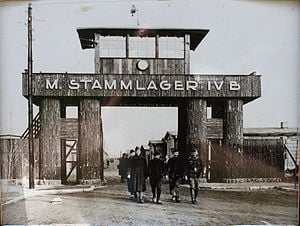
Stalag 4B Muhlberg Germany Source : Ellen Marchese |
Source : Ellen Marchese | |||||||||||||||||||||||||
|
Source : Ellen Marchese | ||||||||||||||||||||||||||
| | ||||||||||||||||||||||||||




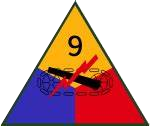

Activated/Activé |
|
| 1 Juil 1942 | Days of Combat/Jour de Combat 91 |
| Casualties/Victimes 3,845 | |
Entered Combat/Entré au combat |
|
| 16 Dec 1944 at Ardennes | |
|
Commanding Generals/Commandants généraux Maj. Gen. Geoffrey Keyes (Jun 42 - Sep 42) |
Campaigns/CampagnesRhineland (15 Sep 44 - 21 Mar 45) |
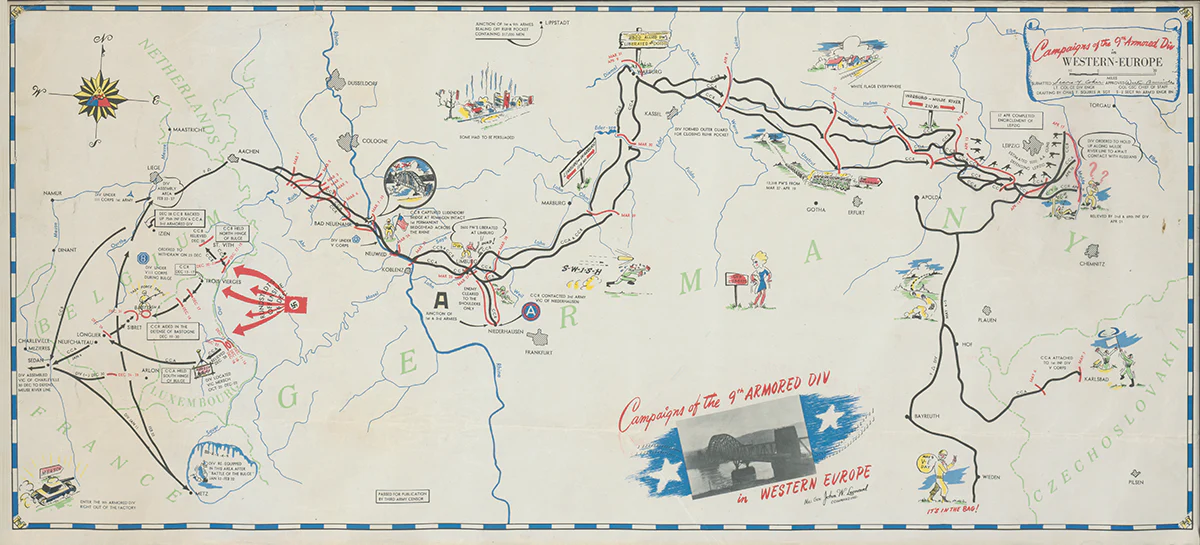
CAMPAIGN MAP OF THE 9TH ARMORED DIVISION |
|
|
This vintage map chart the journey of the 4th Armored Division throughout World War II. The map can be zoomed in and purchased at HistoryShots.com. |
|
DIVISION CHRONICLEThe 9th Armored Division landed in Normandy late in September 1944, and first went into line, 23 October, on patrol duty in a quiet sector along the Luxembourg-German frontier. When the Germans launched their winter offensive, the 9th, with no real combat experience, suddenly found itself engaged in heavy fighting. The Division saw its severest action at St. Vith, Echternach, and Bastogne, its units fighting in widely separated areas. Its stand at Bastogne held off the Germans long enough to enable the 101st Airborne to dig in for a defense of the city. After a rest period in January 1945, the Division made preparations for a drive across the Roer River. The offensive was launched, 28 February, and the 9th smashed across the Roer to Rheinbach, sending patrols into Remagen. The Ludendorff Bridge at Remagen was found intact, and was seized by elements of the 9th Armored minutes before demolition charges were set to explode on 7 March 1945. The Division exploited the bridgehead, moving south and east across the Lahn River toward Limburg, where thousands of Allied prisoners were liberated. The Division drove on to Frankfurt and then turned to assist in the closing of the Ruhr Pocket. In April it continued east, encircled Leipzig and secured a line along the Mulde River. The Division was shifting south to Czechoslovakia when the war in Europe ended. |
CHRONIQUE DE DIVISION
Le pont Ludendorff à Remagen a été retrouvé intact et saisi par des éléments du 9e bataillon blindé avant que les charges de démolition ne soient mises à exploser le 7 mars 1945. La division exploite la tête de pont, se déplace vers le sud et l’est à travers la rivière Lahn vers le Limbourg, où des milliers de prisonniers alliés ont été libérés. La division se rend à Francfort et se tourne pour aider à la fermeture de la poche de la Ruhr. En avril, il continue vers l’est, encerclant Leipzig et sécurisant une ligne le long de la rivière Mulde. La division se dirigeait vers le sud, en Tchécoslovaquie, lorsque la guerre en Europe s’est terminée. |
| SOURCE INFORMATION & PHOTO | Armydivs.squarespace.com |
|---|
| SOURCE INFORMATION & SOURCE PHOTO | Ellen Marchese - Fold3 -Aad.archives.gov - Doc Snafu - Ronald Stassen - Erwin Verholen - Ralph Peters - James Franklin - Findagrave.com |
|---|---|
| EDITORS | Victor, Jean-Philippe, Eric, Henri, Garrett, Clive, Frédéric & Renaud |