


|
David Crowder WAYBUR
| ||||||||||||||||||||||||||
|---|---|---|---|---|---|---|---|---|---|---|---|---|---|---|---|---|---|---|---|---|---|---|---|---|---|---|
|
Source : Cmohs.org | ||||||||||||||||||||||||||
| NUMBER OF SERVICE | O-452653 | |||||||||||||||||||||||||
| AGE | 25 yo | |||||||||||||||||||||||||
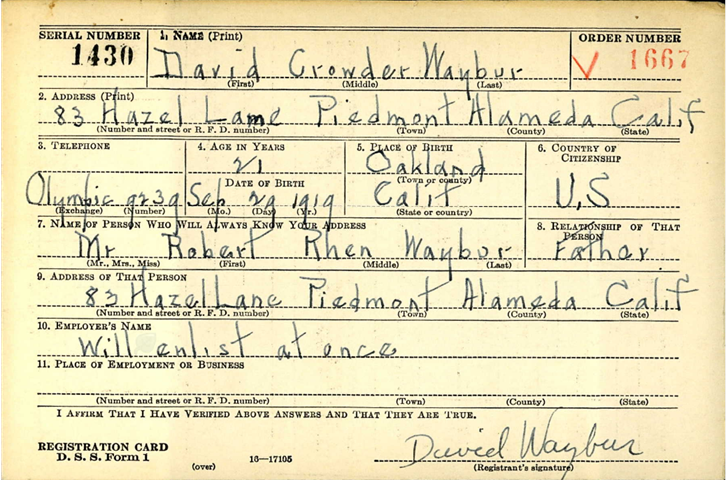
| DATE OF BIRTH |
19 September 1919 Oakland, Alameda county, CALIFORNIA | |||||||||||||||||||||||||
| ENLISTMENT STATE | Piedmont, Alameda county, CALIFORNIA | |||||||||||||||||||||||||
| FAMILY |
Spouse : Dorothy A Culver WAYBUR Parents : Robert R & Anne E Crowder WAYBUR Sisters : Corinne A & Robannie R | |||||||||||||||||||||||||
| RANK |
| |||||||||||||||||||||||||
| FONCTION | Platoon leader | |||||||||||||||||||||||||
| JOB BEFORE ENLISTEMENT | Grocery clerk |  | ||||||||||||||||||||||||
| DATE of ENLISTEMENT | 16 October 1940 | |||||||||||||||||||||||||
| COMPANY | 3rd Reconnaissance Troop | |||||||||||||||||||||||||
| DIVISION | 3rd Infantry Division | |||||||||||||||||||||||||
| CORPS | VI Corps | |||||||||||||||||||||||||
| ARMY | 7th Army | |||||||||||||||||||||||||
| DATE OF DEATH | 28 March 1945 |
Source : JoMarRo | ||||||||||||||||||||||||
| STATUS | KIA | |||||||||||||||||||||||||
| PLACE OF DEATH | Allemagne | |||||||||||||||||||||||||
| CEMETERY TEMPORARY |
CEMTERY TEMPORARY of ---N°--- | |||||||||||||||||||||||||
| CEMETERY |
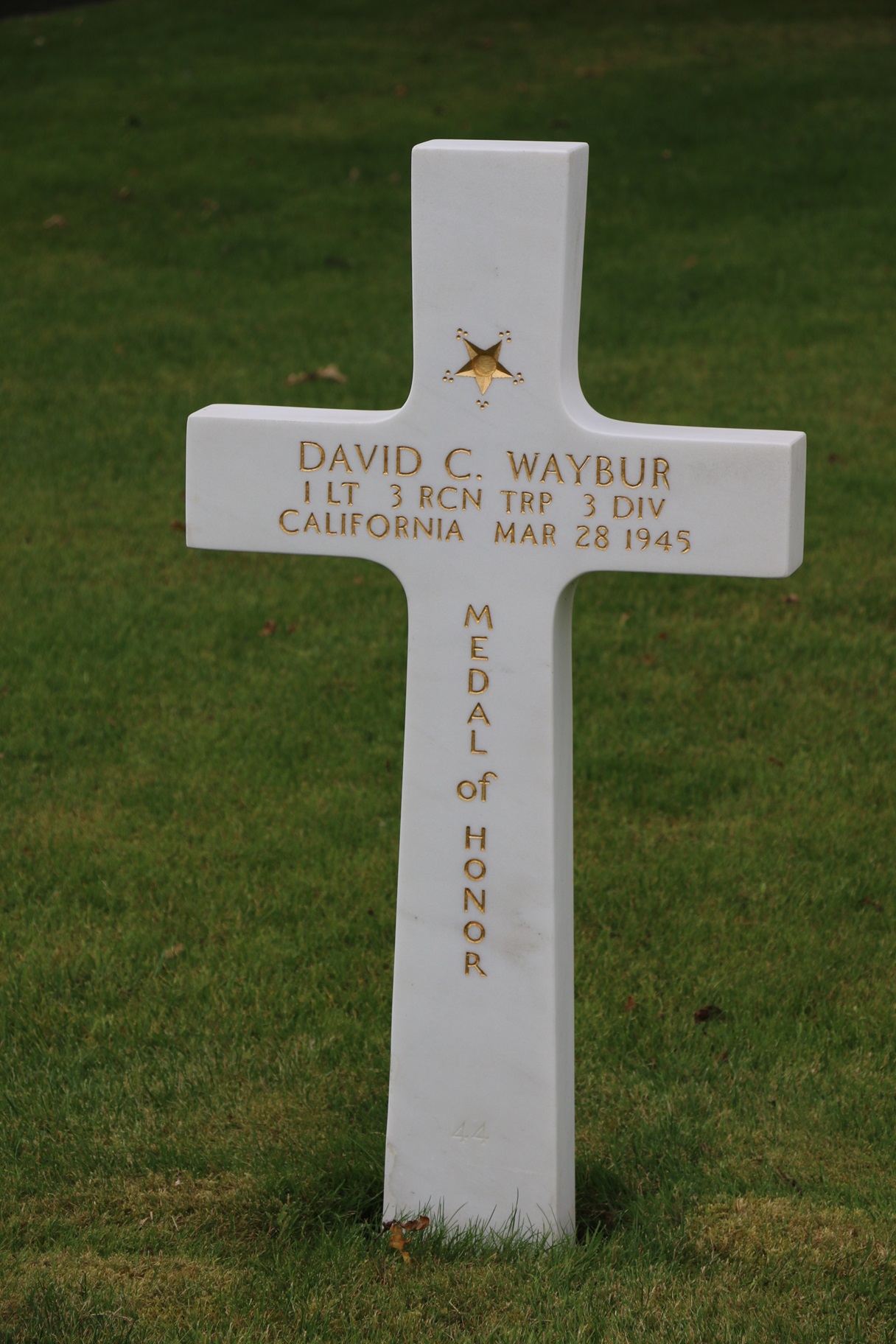
LORRAINE AMERICAN CEMETERY of Saint Avold | |||||||||||||||||||||||||
| GRAVE |
| |||||||||||||||||||||||||
| DECORATION |
| |||||||||||||||||||||||||
| ||||||||||||||||||||||||||
| STORY | ||||||||||||||||||||||||||
|
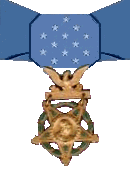
He joined the 3rd Reconnaissance Troop of the famous 3rd Infantry Division which was then landing in Sicily. A week later he volunteered to lead a patrol near Agrigento. Near Agrigento, Sicily, on 17 July 1943, he volunteered to conduct a patrol of 3 vehicles in enemy territory in order to locate an isolated unit of the Rangers. The patrol’s progress was interrupted by darkness at a destroyed bridge and it was suddenly cut off from its support vehicles by 4 enemy tanks. It is this mission that will earn him his Medal of Honor with the following quote:
MEDAL of HONOR
|
Source : John "J-Cat" Griffith | |||||||||||||||||||||||||
 | ||||||||||||||||||||||||||
|
Source : Victor Thomas |
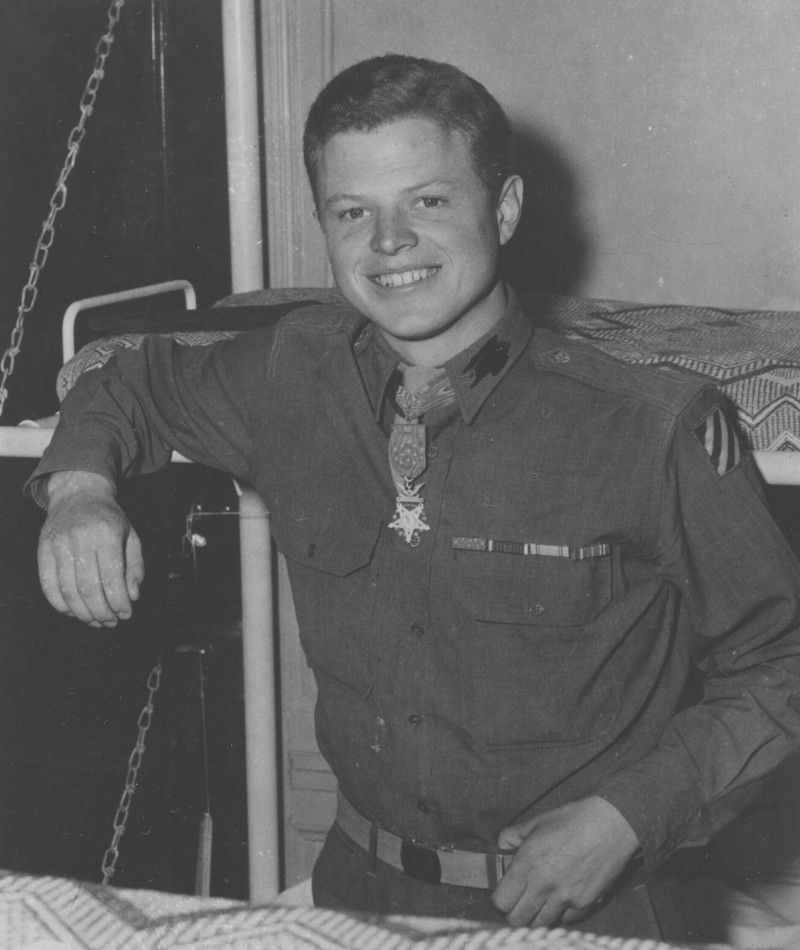
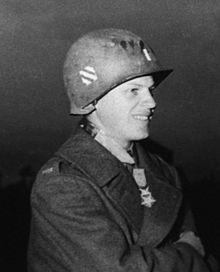
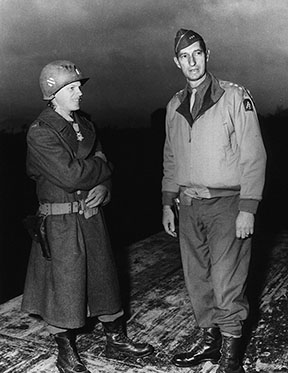
Waybur chats with Mark W. Clark, who presented him with the Medal of Honor. Source : John "J-Cat" Griffith | |||||||||||||||||||||||||
|
Source : John "J-Cat" Griffith | ||||||||||||||||||||||||||
|
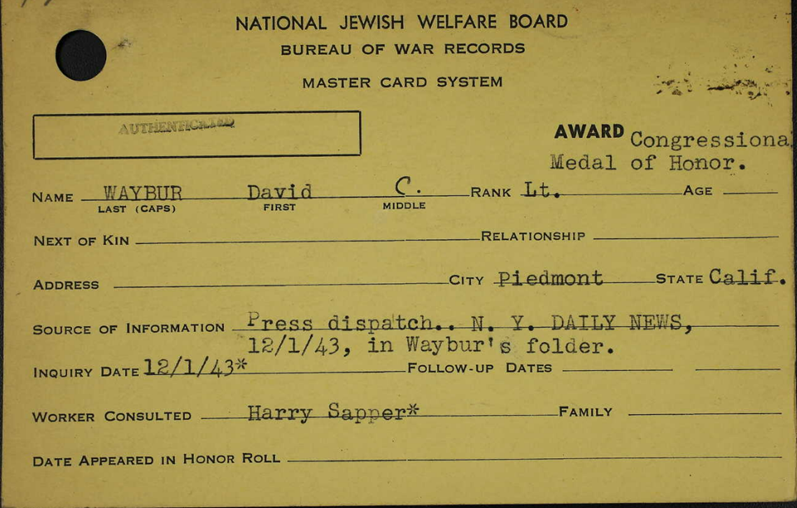
Recipient of the World War II Medal of Honour. Born in Oakland, California and raised in neighboring Piedmont, he served in the US Army during World War II as a first lieutenant in the 3rd Reconnaissance Troop, 3rd Infantry Division. David Waybur lived all his childhood in Piedmont, Calfornia. After graduating from high school he enrolled at the University of California Berkley until October 1940 when he enlisted as a soldier in the US Army. He was commissioned as an officer shortly after his engagement. Out of numbers and out of range, he quickly dispersed his vehicles and ordered his gunners to open fire with their 0.30 and 0.50 calibre machine guns. Then, with 3 of his men hit and himself wounded, he grabbed his 45 caliber Thompson sub-machine gun and standing directly in the line of fire, only he engaged the head tank killing the crew members, which caused the tank to crash into the bed of the stream. After sending one of the men to help, he gathered the rest to cover and resist the continuous fire of tanks until the arrival of relief the next morning. He received the Medal of Honor on 21 October 1943 and returned to combat in Europe where he was later killed in France. 3 months later he received the Medal of Honor from Lt. Gen. Mark CLARK commanding the 5th Army. He was then sent back to the United States for more than a year to help advertise selling War Bonds in support of the American war effort. He will later ask to join his unit on the front but he will be killed a few weeks before the end of the conflict on March 28, 1945 in Germany. At the request of his family, he will be buried on European soil in the Lorrain American Cemetery. Biography by: John "J-Cat" Griffith | ||||||||||||||||||||||||||
| | ||||||||||||||||||||||||||








Activated/Activé |
Normandy/Normandie |
| 12 Nov 1917 | Days of Combat/Jour de Combat 531 |
| Casualties/Victimes 25 977 | |
Entered Combat/Entré au combat |
|
| 8 Nov 1942 North Africa | |
|
Commanding Generals/Commandants généraux Maj. Gen. Charles F. Thompson (Jul 40 - Aug 41) |
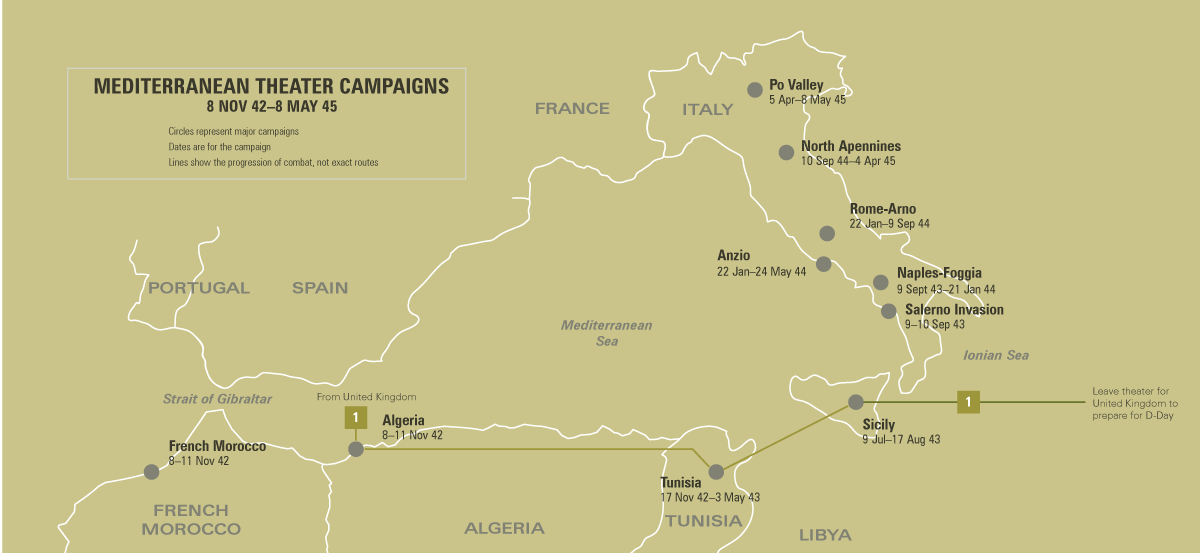
Campaigns/CampagnesTunisia (17 Nov 42 - 13 May 43) Naples-Foggia (9 Sep 43 - 21 Jan 44) Southern France (15 Aug 44 - 14 Sep 44) |
PLAN DE ROUTE DE LA CAMPAGNE de MEDITERANNEE - CAMPAIGN ROUTE MAP |
|
 |
|
DIVISION CHRONICLEThe 3d Division is the only American Division which fought the Nazi on all fronts. The Division first saw action in the North African invasion, landing at Fedala, 8 November 1942, and capturing half of French Morocco. On 10 July 1943, the Division made an assault landing on Sicily, fought its way into Palermo before the armor could get there, and raced on to capture Messina, thus ending the Sicilian campaign. Nine days after the Italian invasion, 18 September 1943, the 3d landed at Salerno and in intensive action drove to and across the Volturno and to Cassino. After a brief rest, the Division was ordered to hit the beaches at Anzio, 22 January 1944, where for 4 months it maintained its toe-hold against furious German counterattacks. On 29 February 1944, the 3d fought off an attack by three German Divisions. In May the Division broke out of the beachhead and drove on to Rome, and then went into training for the invasion of Southern France. On 15 August 1944, another D-day, the Division landed at St. Tropez, advanced up the Rhone Valley, through the Vosges Mountains, and reached the Rhine at Strasbourg, 26-27 November. After maintaining defensive positions it took part in clearing the Colmar Pocket, 23 January18 February 1945, and on 15 March struck against Siegfried Line positions south of Zweibrucken. The Division smashed through the defenses and crossed the Rhine, 26 March 1945 ; then drove on to take Nurnberg in a fierce battle, capturing the city in block-by-block fighting, 17-20 April. The 3d pushed on to take Augsburg and Munich, 27-30 April, and was in the vicinity of Salzburg when the war in Europe ended.
|
CHRONIQUE DE DIVISIONLa 3ème division est la seule division américaine à avoir combattu les nazis sur tous les fronts. La Division a été la première à intervenir lors de l’invasion nord-africaine, atterrissant à Fedala le 8 novembre 1942 et capturant la moitié du Maroc français. Le 10 juillet 1943, la Division effectue un assaut en Sicile, se fraye un chemin jusqu'à Palerme avant que l’armure puisse y arriver et se lance à la conquête de Messine, mettant ainsi fin à la campagne sicilienne. Neuf jours après l’invasion italienne, le 18 septembre 1943, la 3D a atterri à Salerno et, dans une action intense, elle a traversé le Volturno et Cassino. Après un bref repos, la division reçut l’ordre de frapper les plages d’Anzio, le 22 janvier 1944, où elle resta en garde pendant quatre mois contre les contre-attaques allemandes. Le 29 février 1944, le 3ème combat contre une attaque de trois divisions allemandes. En mai, la division sortit de la tête de pont et se rendit à Rome avant de se préparer à l'invasion du sud de la France. Le 15 août 1944, un autre jour J, la Division débarqua à Saint-Tropez, remonta la vallée du Rhône, traversa les Vosges et atteignit le Rhin à Strasbourg les 26 et 27 novembre. Après avoir maintenu des positions défensives, elle a participé au déblaiement de la poche de Colmar, le 23 janvier 18 février 1945, et le 15 mars, elle a frappé les positions de la ligne Siegfried au sud de Zweibrucken. La division défonça dans les défenses et traversa le Rhin le 26 mars 1945; puis a continué à prendre Nurnberg dans une bataille féroce, capturant la ville dans des combats de bloc par bloc, 17-20 avril. La 3d se poursuit à Augsbourg et à Munich, du 27 au 30 avril, et se trouve à proximité de Salzbourg à la fin de la guerre en Europe.
|
| SOURCE INFORMATION & PHOTO | Armydivs.squarespace.com |
|---|
| SOURCE INFORMATION & SOURCE PHOTO | Victor DANIEL - abmc.gov - ancestry.com - Findagrave.com - En.wikipedia.org - Cmohs.org |
|---|---|
| EDITORS | Victor, Jean-Philippe, Eric, Henri, Garrett, Clive, Frédéric & Renaud |