|
Emma Mae SNAVELY
| |||||||
|---|---|---|---|---|---|---|---|
|
Source : JodiBee ( Fold 3 ) | |||||||
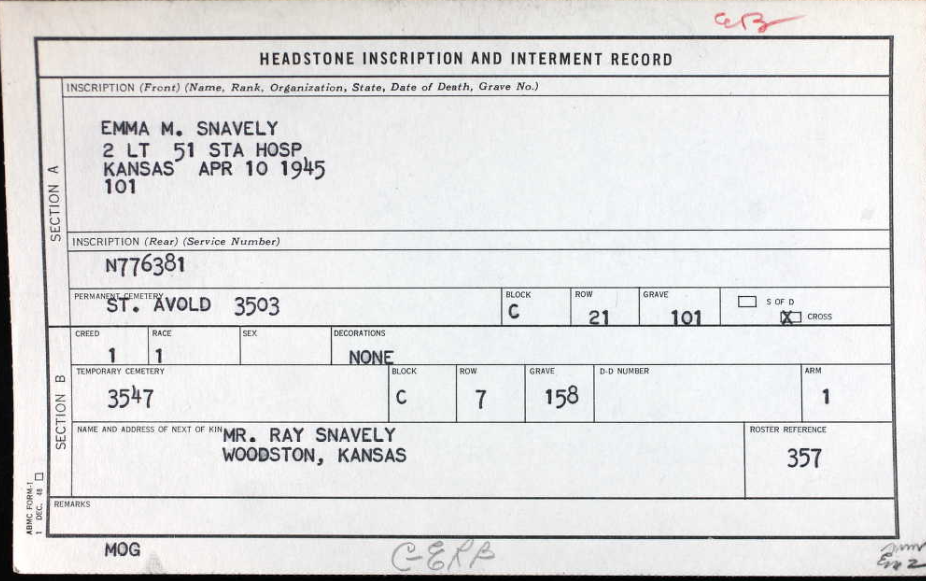
| NUMBER OF SERVICE | N-776381 | ||||||
| AGE | 23 yo | ||||||
| DATE OF BIRTH | 8 February 1922 Stockton, Rooks County, KANSAS | ||||||
| ENLISTMENT STATE | KANSAS | ||||||
| FAMILY |
Parents : William Ray & Lillian Hazel Nowland SNAVELY Siblings : Eva Maxine & Ray Junior "Bud" | ||||||
| RANK |
| ||||||
| FONCTION | psychiatric nurse | ||||||
| JOB BEFORE ENLISTEMENT | salesperson |  | |||||
| DATE of ENLISTEMENT | |||||||
| REGIMENT | 51st Station Hospital | ||||||
| ARMY | |||||||
| DATE OF DEATH | 10 April 1945 |
Source : JoMarRo | |||||
| STATUS | DNB | ||||||
| PLACE OF DEATH | ---- | ||||||
| PLAN DE VOL / FLIGHT PLAN | |||||||
| CEMETERY TEMPORARY |
CEMTERY TEMPORARY of Limey Cemetery, Toul N°3547
| ||||||
| CEMETERY |
LORRAINE AMERICAN CEMETERY of Saint Avold | ||||||
| GRAVE |
| ||||||
| DECORATION & BREVET |
| ||||||
| |||||||
| STORY | |||||||
|
Source : Lori Wheaton |
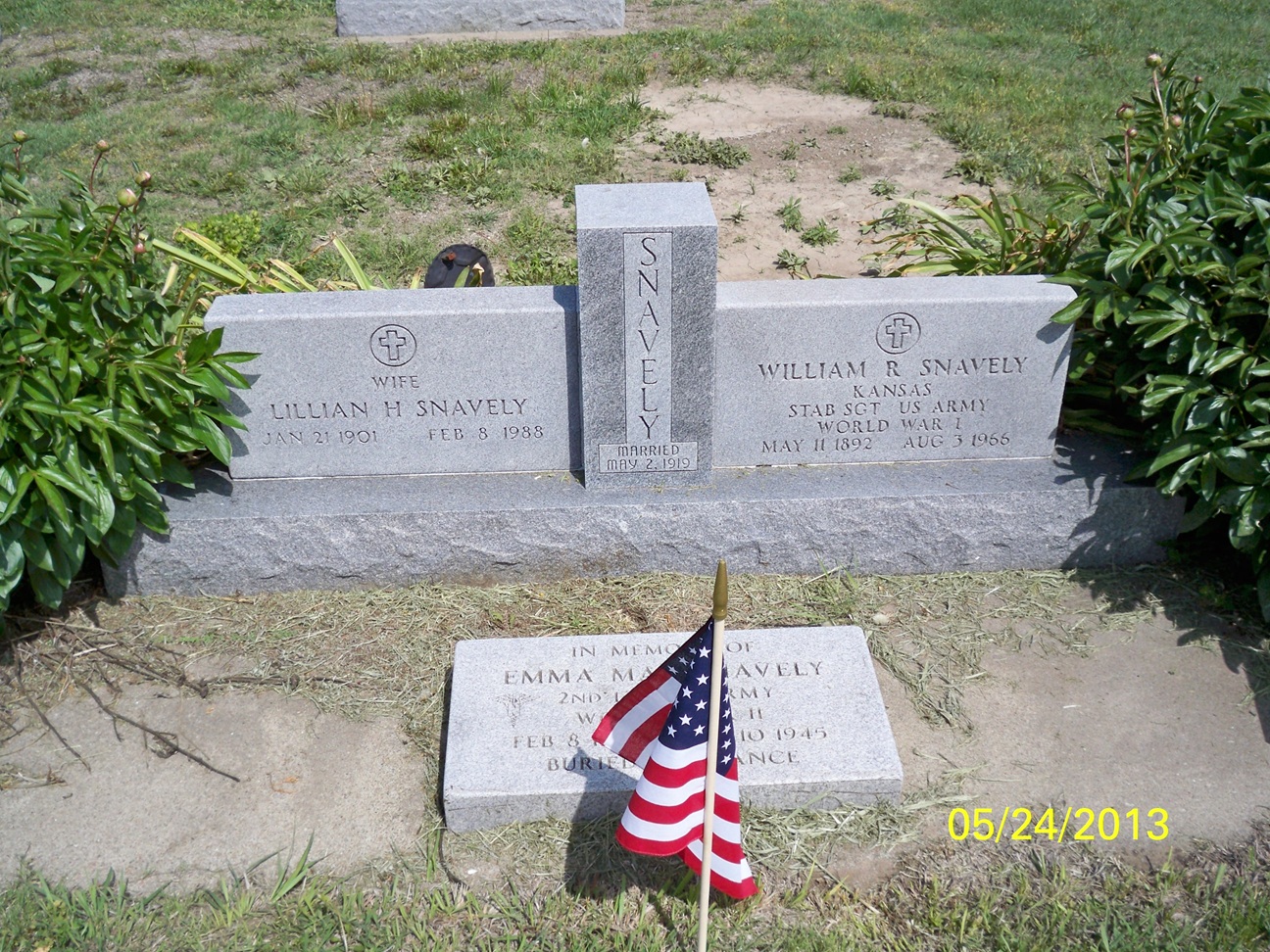
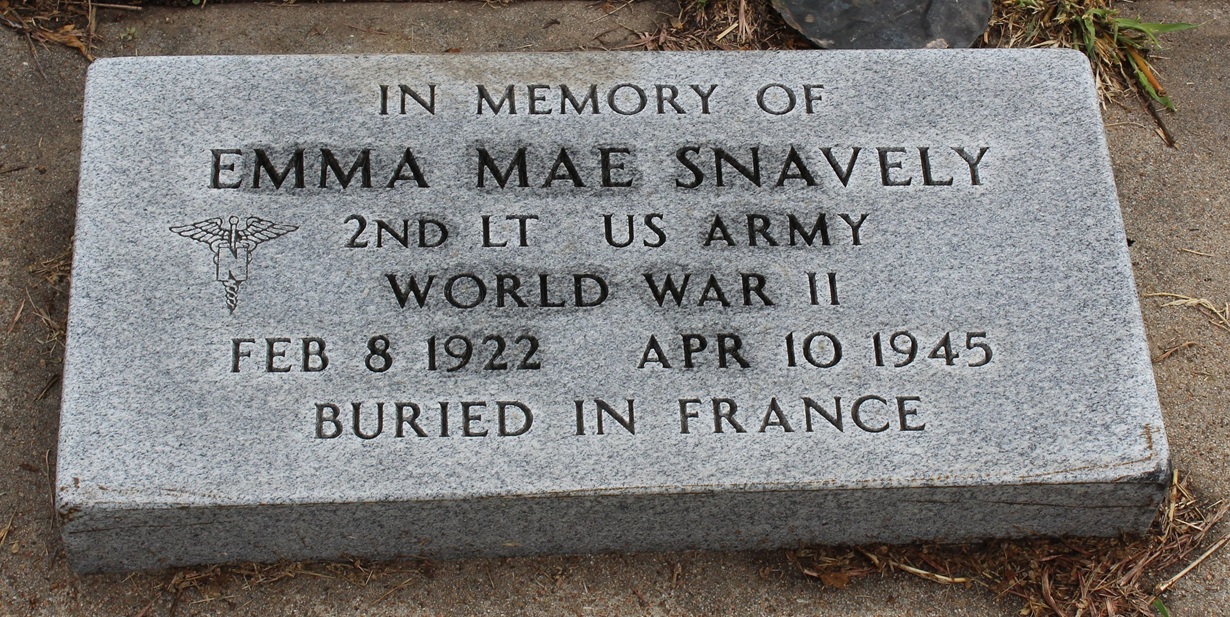
Woodston Cemetery Woodston, Rooks County, KANSAS source : Tim Kershner | ||||||
|
Source : JodiBee ( Fold 3 ) |
Source : JodiBee ( Fold 3 ) | ||||||
|
Source : Ancestry | |||||||
|
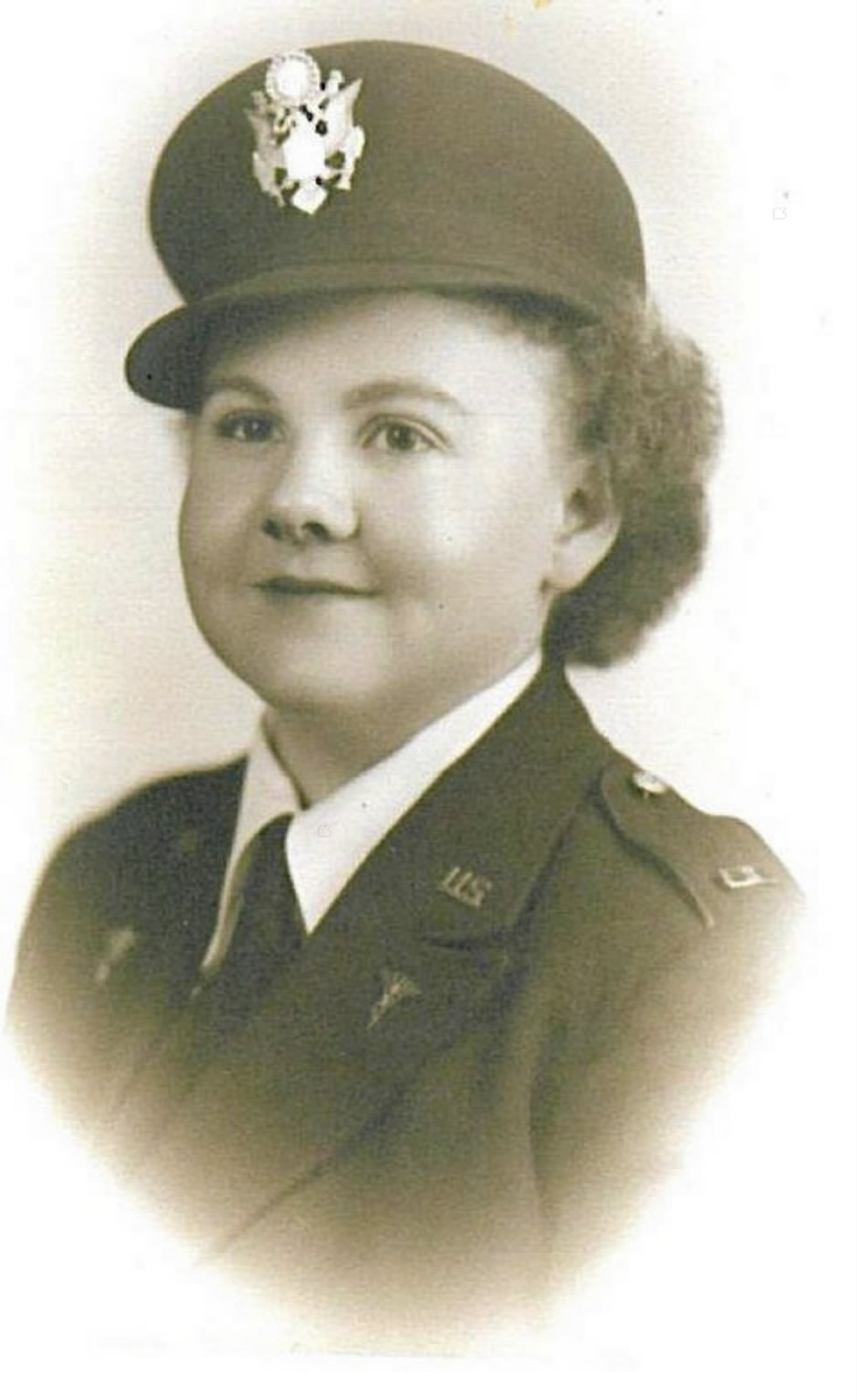
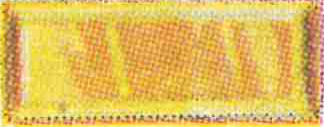
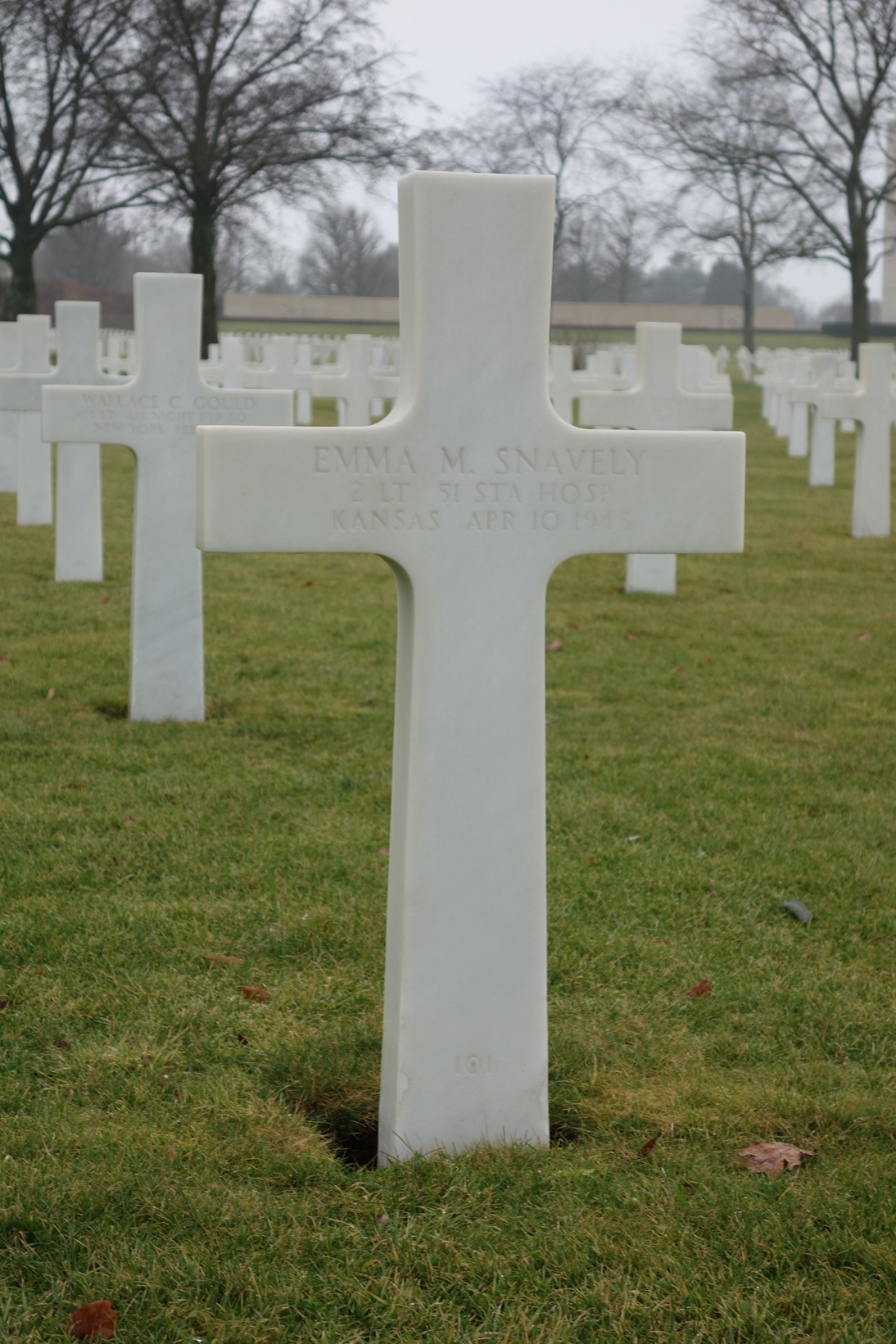
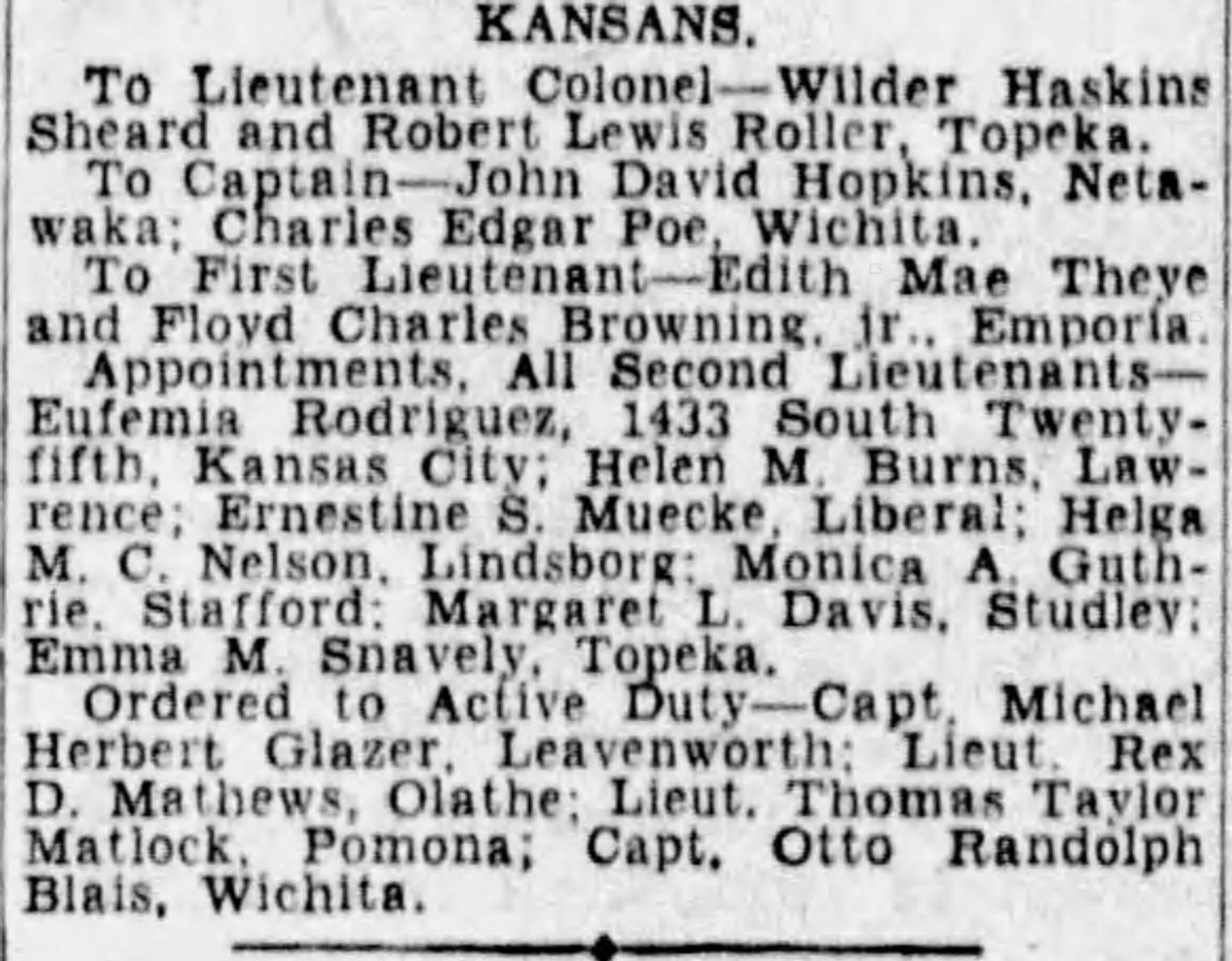
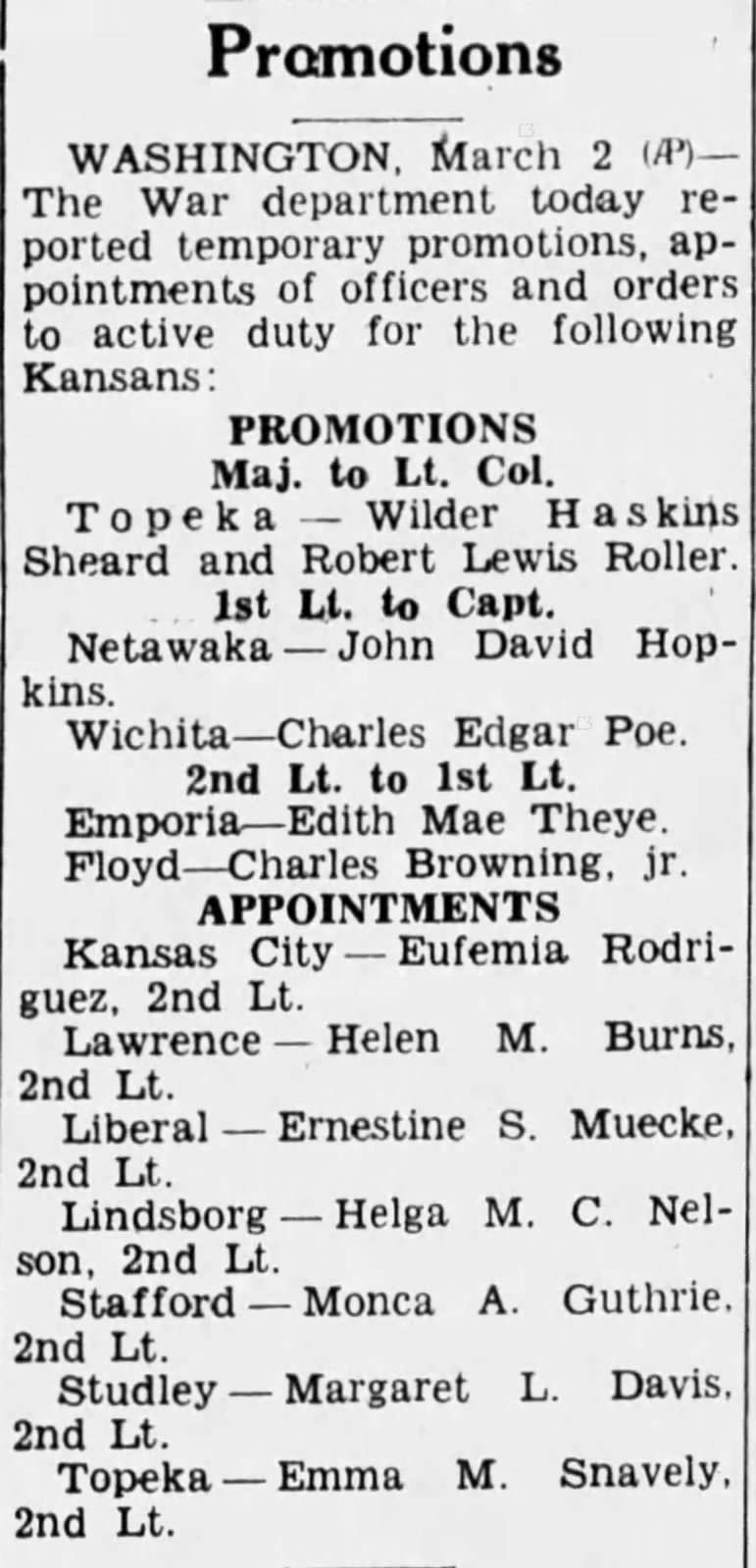
2nd Lt. Emma M. Snavely, Psych Nurse Middle child of William “Ray” Snavely and Lillian Hazel (Nowland) Snavely, Emma Mae had an older sister, Eva Maxine (Snavely) Dibble, and a younger brother, Ray Snavely, Junior, who went by “Bud”. Emma was born in Stockton, Kansas on February 8, 1922, although she lived most of her life in Woodston in the same county of Rooks. Both of her parents were born in Kansas, and both sets of grandparents were born in the U.S. At one point, her father Ray was a farmer, but later on, he worked in the gas and oil industry, transporting petroleum products from one location to another. At 18, Emma was listed as having three years of high school and working as a clerk in a store. She enlisted in the Army in her home county and left Woodston for Topeka, where she underwent nurses training at Christ’s Hospital. She achieved the rank of 2nd lieutenant on March 2, 1944. Her records list her as being Protestant, and it appears that she never married or had children. Her dad and younger brother Bud survived their service in World War I and World War II, respectively. Army nurses like Emma were essential to the war effort, not only for their training and empathy but for their adaptability. “The Army nurse was probably the most versatile and adaptable officer in the Medical Department and one of the most indispensable in certain medical programs during World War II. These nurses had a way of adapting themselves to a purpose that was unique wherever they served.” (history.ammed.army.mil) Emma was assigned to the 51st Station Hospital, first in the Mediterranean Theatre of Operations, and then in Europe. There were several types of hospitals during the war, ranging from housing temporary tents only a few miles from the front to permanent buildings set back in England or even America. Station hospitals like Emma’s were somewhere in the middle range of these care facilities. Station hospitals were farther to the rear than evacuation and field hospitals, “set up usually in buildings rather than tents, and located thirty to fifty miles behind the front lines. They were to have bed capacities for 250, 500 or 750 patients. These hospitals would receive patients who needed a longer term of treatment than a field or evacuation hospital could provide, but less than 180 days. If a soldier needed more than six months to recover, he was to be sent back to the States.” (Monahan 30) We do not know exactly when Emma arrived at the 51st Station Hospital (probably early 1944), but we do know that from December 1942 to November 1944, the 51st covered the Mediterranean’s areas of French Morocco, Algeria, Italy, and France. While in North Africa, on 1 January 1944, the 51st Station Hospital was located in a medical center at Oran, Algeria. It was at this site that the unit was converted to a Psychiatric Hospital. If Emma were a part of the unit at this point, she would have been one of 25 nurses, 15 who had psychiatric training and 10 who did not. Those 10 would hold special classes hosted by medical officers to acclimate them to psychiatric nursing, as “after caring for surgical patients, it was quite a transition to care for patients who appeared physically sound but were mentally unstable.” By 11 October 1944, the 51st moved to France, where she would die in April of 1945. (https://history.amedd.army.mil/booksdocs/wwii/NeuropsychiatryinWWIIVolI/chapter21.htm; themedicaladvancesofww1.weebly.com) Since special training was needed, what kind of cases were psychiatric nurses needed for? “What was known as ‘battle fatigue’ or ‘war neurosis’ at that time was a psychological ailment resulting from trauma during war. It produced multiple symptoms, including but not limited to hypervigilance (being ever on the alert), irritability, nightmares, flashbacks (a psychological reexperiencing of traumatic events as if they were occurring in the present), and difficulties in forming and maintaining close relationships. This condition has existed for as long as wars have been fought; during the Civil War, it was labeled ‘soldier’s heart’; in World War I, it was called ‘shell-shock.’ Today, the condition is known as post-traumatic stress disorder (PTSD).” (Monahan 106) To treat PTSD, it was deemed that it was imperative to move the patient away from the front line so he could have relief from all the shells exploding and bullets firing, since it was these very things that were causing their illness in the first place. Hence, the station hospital. “To protect patients from further psychological damage, and to hasten their return to duty, [U.S. Army psychiatrist Captain Frederick R.] Hanson developed a treatment protocol: heavy sedation would be administered to the traumatized soldier at the clearing station; he would then be transferred to an evacuation hospital, where sedation was continued for three days. During this time, patients were to be awakened only for food and toileting. The vast majority of these patients would then be evacuated to hospitals farther to the rear.” (Monahan 297) “The 51st Station Hospital assigned nurses in areas other than traditional nursing, as is indicated in the following: Five nurses were assigned as Recreational Supervisors in addition to their regular type duties. These nurses work in liaison with the Red Cross Social Service Workers. They were with the patients during organized activities, even participating. This has been a big factor in the therapy program. Once a patient's confidence had been won, the nurses played a very important role by securing information that ofttimes the soldier was not inclined to tell the ward officer. This information often helped the doctor make a diagnosis which otherwise could have been quite difficult.” (https://history.amedd.army.mil/booksdocs/wwii/NeuropsychiatryinWWIIVolI/chapter21.htm)) According to Sue McFarland, Coordinator of the Frank Walker Museum in Stockton, Kansas, Emma Mae was killed in a car accident while serving in France. However, many conspiracy theories regarding Emma have surfaced over the years. She said she recently heard one rumor that claimed that Emma was murdered. “Some people just can’t accept that bad things happen,” she said. According to a newspaper article in the April 19, 1945 edition of the Rooks County Record, Emma Mae’s family was notified on the previous Wednesday morning of her death on April 10 in France. At that time, they were given no further details regarding the circumstances of her death. The article says she had been working on a Red Cross hospital plane that was transferring wounded soldiers from the front. At 23 years old, Emma Mae Snavely was put to rest in French soil at the Lorraine American Cemetery in Avold (Plot C, Row 21, Grave 101), where she is surrounded by other American fallen. She also has a memorial headstone placed at her parents’ burial site in Kansas. 2nd Lt. Snavely was overseas for a little more than a year before her death, which came only three weeks before victory in Europe. Sincerest thanks is given to Crystal Dunlap of the Stockton Public Library and Sue McFarland, Coordinator of the Frank Walker Museum in Stockton, Kansas, who provided vital information for this article. | |||||||

| SOURCE INFORMATION & SOURCE PHOTO | Findagrave.com - Weremember.abmc.gov - Fold 3 - Ancestry |
|---|---|
| EDITORS | Victor, Jean-Philippe, Eric, Henri, Garrett, Clive, Frédéric & Renaud |
|
Father of Emma M |
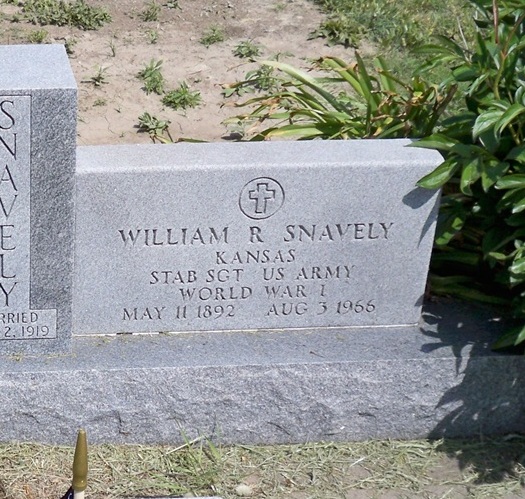
William Ray SNAVELY Sr.
| ||
|---|---|---|---|
| NUMBER OF SERVICE |
Source : Fold 3 | ||
| DATE OF BIRTH | 11 May 1892 Huron, Atchison County, KANSAS | ||
| ENLISTMENT STATE | KANSAS | ||
| FAMILY |
Epouse : Lillian Hazel Enfants : Eva Maxine, Emma Mae & Ray Junior "Bud" Parents : Edgar Armstrong & Emma May Toliver Snavely Frères et sœurs : Guy Alfred, Leeta Ellen "Leta", Eva A & Charles Edgar | ||
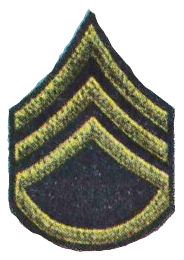
| RANK |
| ||
| JOB BEFORE ENLISTEMENT | | ||
| DATE of ENLISTEMENT | |||
| UNIT | US Army WW1 | ||
| SOURCE INFORMATION & SOURCE PHOTO | Findagrave.com | ||