


|
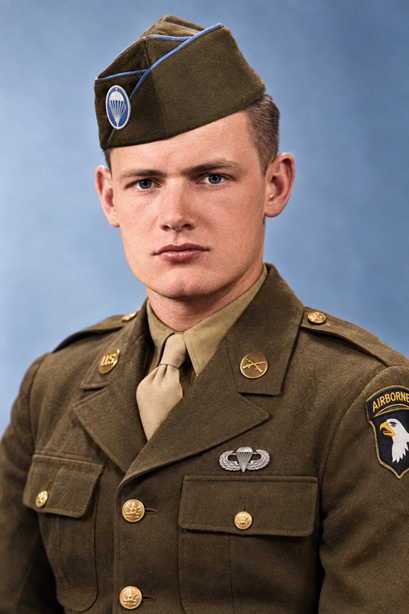
Robert J. BLOSER
| ||||||||||||||||||||||||
|---|---|---|---|---|---|---|---|---|---|---|---|---|---|---|---|---|---|---|---|---|---|---|---|---|
|
Source : Randy & Ellen Marchese | ||||||||||||||||||||||||
| NUMBER OF SERVICE | 13099636 | |||||||||||||||||||||||
| AGE | 22 | |||||||||||||||||||||||
| DATE OF BIRTH | 29 May 1922 Philadelphia, Philadelphia, PENNSYLVANIA | |||||||||||||||||||||||
| ENLISTMENT STATE | PENNSYLVANIA | |||||||||||||||||||||||
| FAMILY | Parents : Lynn J. & Helen V. BLOSER | |||||||||||||||||||||||
| RANK |
| |||||||||||||||||||||||
| FONCTION | paratrooper | |||||||||||||||||||||||
| JOB BEFORE ENLISTEMENT | Hatchery men |  | ||||||||||||||||||||||
| DATE of ENLISTEMENT | 14 August 1942 Philadelphia PENNSYLVANIA | |||||||||||||||||||||||
| COMPANY | Company | |||||||||||||||||||||||
| BATTALION | Battalion | |||||||||||||||||||||||
| REGIMENT SQUADRON | Regiment | |||||||||||||||||||||||
| DIVISION GROUP | Group | |||||||||||||||||||||||
| ARMY | Army | |||||||||||||||||||||||
| DATE OF DEATH | Day Month Year |
Source : | ||||||||||||||||||||||
| STATUS | KIA | |||||||||||||||||||||||
| PLACE OF DEATH | Place | |||||||||||||||||||||||
| PLAN DE VOL / FLIGHT PLAN | -- | |||||||||||||||||||||||
| CEMETERY TEMPORARY |
CEMETERY TEMPORARY of -- N°--
| |||||||||||||||||||||||
| CEMETERY | NORMANDY AMERICAN CEMETERY of Colleville | |||||||||||||||||||||||
| GRAVE |
| |||||||||||||||||||||||
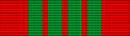
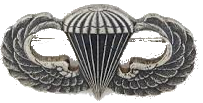
| DECORATION & BADGE |
| |||||||||||||||||||||||
| -- | ||||||||||||||||||||||||
| STORY | ||||||||||||||||||||||||
|
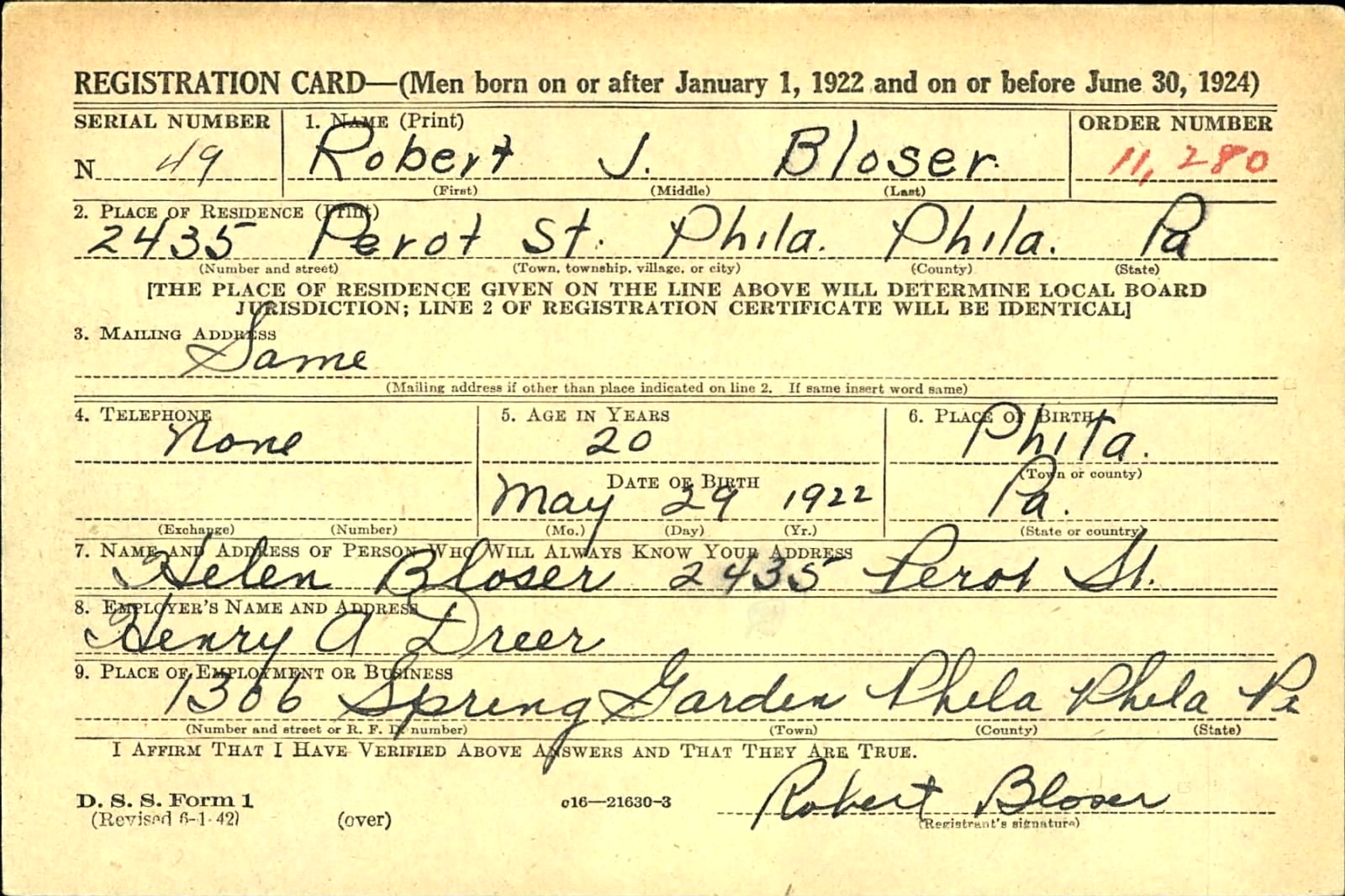
Robert J. Bloser was born on 30 May 1922 in Harrisburg, PA and died on 7 Jun 1944 in Normandy, France as the result of hostile action on D-Day in WWII. His parents were Lynn B. Bloser (1885-1959) and Helen V. Powers (1899-1989). Per the 1930 US Census, his father was a shoe cutter for Canteluce Company and his mother was a housewife and they lived in Harrisburg, PA. Per the 1940 census, they lived in Philadelphia, PA. Robert had 1 younger and 1 older brother and he had completed three years of high school. He was not married. Robert worked for Henry A. Dreer as a hatchery man. Robert registered for the draft on 30 Jun 1942 and enlisted on 14 Aug 1942 both in Philadelphia, PA as an infantryman. His service number was 13099636. Details about his initial time in the Army are not known, including when he deployed to Europe. He was a Private in the Company E, 506th Parachute Infantry Regiment (PIR), 101st Airborne Division. This company formed the basis for the HBO Mini-series “Band of Brothers.” The 506th PIR was activated at Camp Toccoa, Georgia on 15 Nov 1942 where they underwent vigorous training through Mar 1943 and then marched to Atlanta, GA, a distance of 105 miles. They then moved to Fort Benning, GA to jump train all members of the unit who had not previously been qualified. After this qualification period, the 506th PIR moved to Camp MacKall, NC for continued training. In Jan 1944, the unit deployed to England by way of Camp Myles Standish, MA where they became a permanent attachment to the 101st Airborne Division. Based on the dates, it is assumed that Pvt Bloser was part of the 506th PIR when they deployed. In England, they trained for the eventual D-Day invasion at Normandy although the unit was not informed of this mission until several days before D-Day when they were sequestered in well-guarded marshalling camps. For the Normandy invasion, Company E’s mission was to capture the entrances to and clear any obstacles around Causeway #2, a pre-selected route off Utah Beach for the Allied forces landing from the sea a few hours later. At 2245, 5 Jun 1944, the 506thtook off on 8 Douglas C-47 Skytrain aircraft, each carrying about 17 paratroopers, from Devon, England. The 506th PIR Drop Zone C was north and east of the town of Carentan with jumps beginning at 0130 6 Jun 1944. One of the company’s aircraft was hit by enemy fire which caused it to crash, killing all aboard, including the Company Commander. The aircraft formations were widely scattered due to low clouds, poor visibility and enemy anti-aircraft fire which resulted in highly scattered drops across the battlefield. After assembling after the drops, Company E disabled a battery of 4 German heavy guns that threatened Allied forces coming across Causeway 2. By the time Company E was pulled off the line, they had taken 65 casualties including 22 KIA. Of the 139 men of the company who left England on 5 Jun 1944, only 74 remained. Obviously Pvt Bloser survived the drops on 6 Jun 1944, but somehow was killed on 7 Jun 1944. The details of exactly when, where and how Pvt Bloser died are not known.
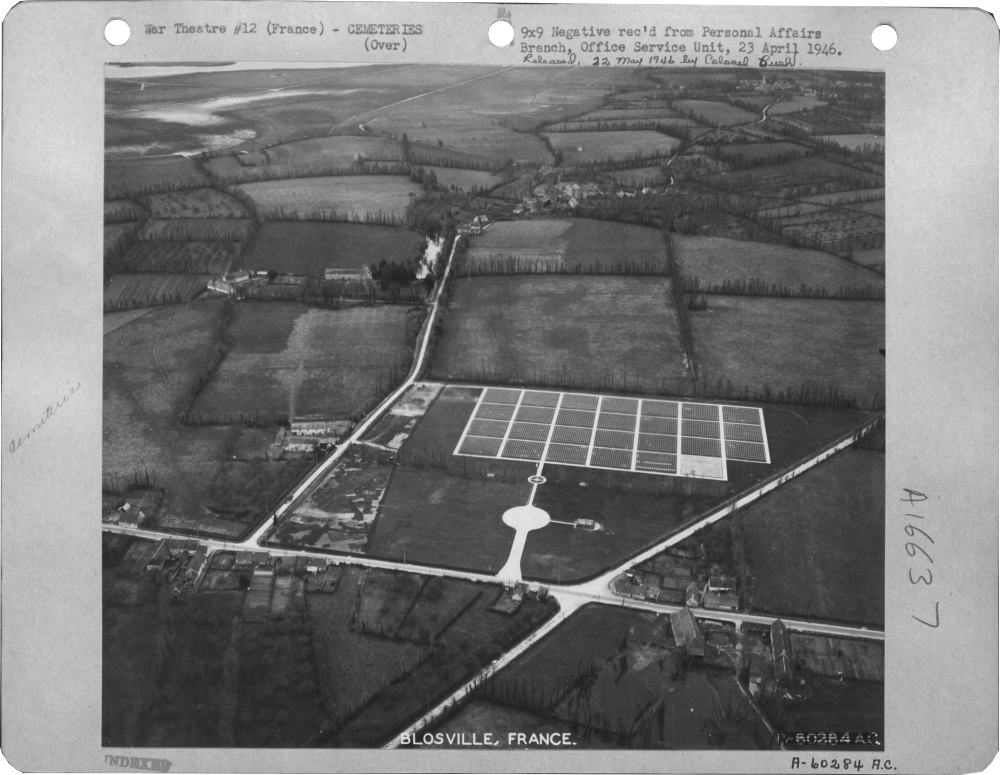
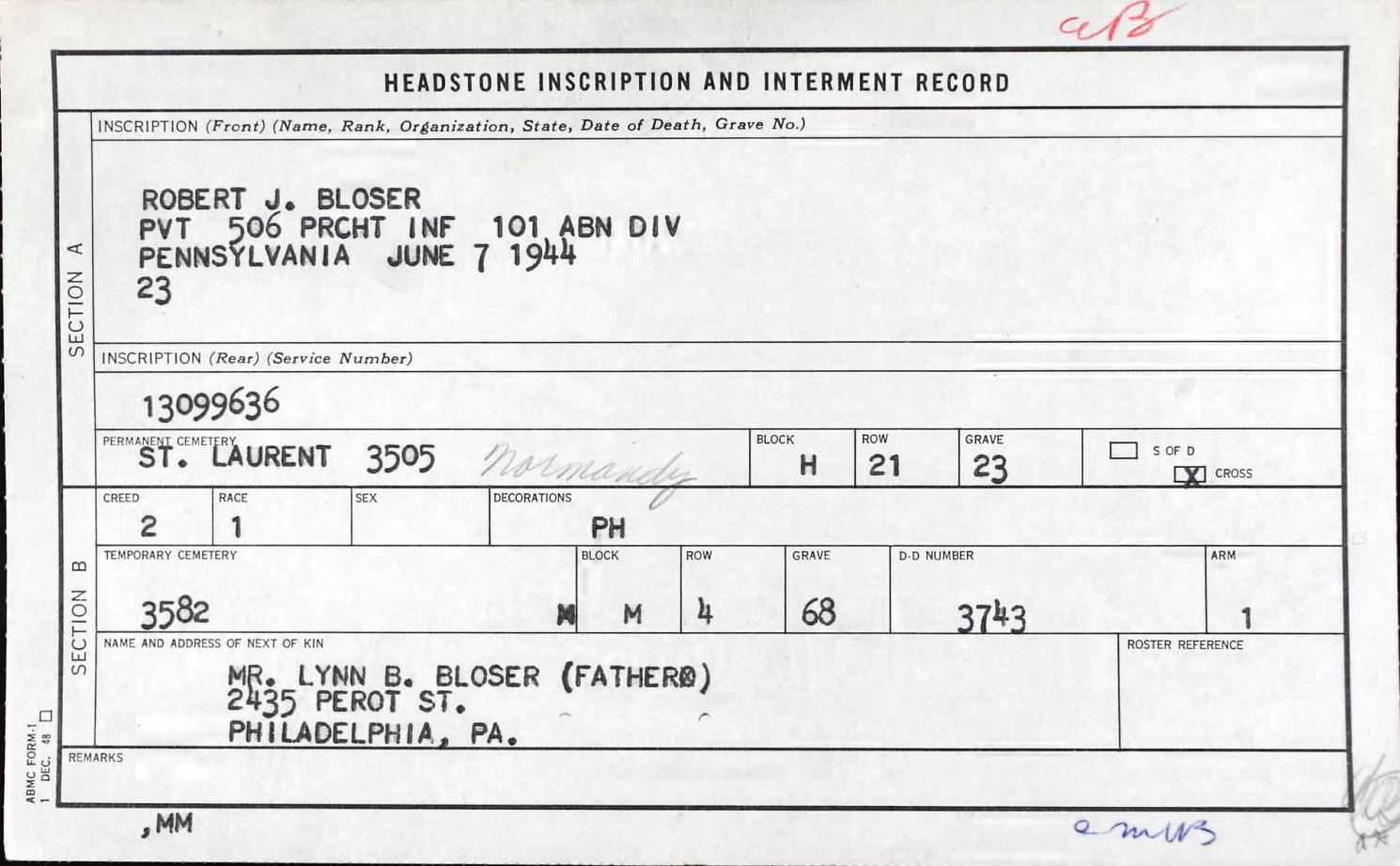
Pvt Bloser’s remains were buried at Temporary Cemetery #3582 (blk M, row 4, grave 68), in Saint Laurent Cemetery Baveux, France. His remains were eventually buried at the Normandy American Cemetery (plot H, row 21, grave 23), Collsville-sur-mer, France Pvt Bloser was awarded the Purple Heart. Added by: smithada_1 | ||||||||||||||||||||||||
|
Source : Randy | ||||||||||||||||||||||||
|
Source : Randy | ||||||||||||||||||||||||





Activated/Activé |
Normandy/Normandie |
| 15 Aug 1942 | Days of Combat/Jour de Combat 214 |
| Casualties/Victimes 9 328 | |
Entered Combat/Entré au combat |
|
| 6 Jun1944 D-Day | |
|
Commanding Generals/Commandants généraux Maj. Gen. William C. Lee (Aug 42 - Mar 44) |
Campaigns/CampagnesNormandy (6 Jun 44 - 24 Jul 44) Rhineland (15 Sep 44 - 21 Mar 45)
|
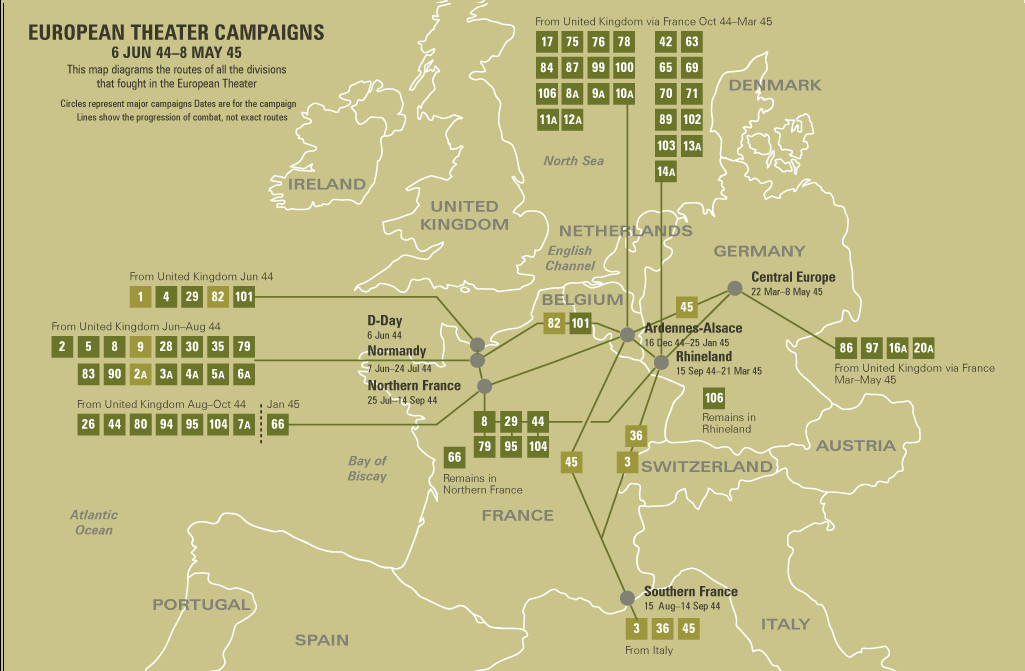
PLAN DE ROUTE DE LA CAMPAGNE - CAMPAIGN ROUTE MAP |
|
 |
|
DIVISION CHRONICLEThe 101st Airborne arrived in England, 15 September 1943, and received additional training in Berkshire and Wiltshire. On 6 June 1944, the Division was dropped into Normandy behind Utah Beach. Against fierce resistance it took Pouppeville, Vierville, and St. Come du Mont. On the 12th, the stronghold of Carentan fell, and after mopping up and maintaining its positions, the Division returned to England, 13 July, for rest and training. On 17 September 1944, taking part in one of the largest of airborne invasions, the 101st landed in Holland, took Vechel and held the Zon bridge. St. Oedenrode and Eindhoven fell after sharp fighting on the 17th and 18th. Opheusden changed hands in a shifting struggle, but the enemy was finally forced to withdraw, 9 October. After extensive patrols, the Division returned to France, 28 November, for further training. On 18 December, it moved to Belgium to stop the German breakthrough. Moving into Bastogne under the acting command of Brig. Gen. Anthony C. McAuliffe, it set up a circular defense and although completely surrounded, refused to surrender on 22 December. Its perimeter held against violent attacks. The 4th Armored Division finally reached the 101st on the 26th and the enemy offensive was blunted. Very heavy fighting continued near Bastogne for the rest of December and January. On 17 January 1945, the Division moved to Drulingen and Pfaffenhoffen in Alsace and engaged in defensive harassing patrols along the Moder River. On 31 January, it crossed the Moder in a three-company raid. After assembling at Mourmelon, France, 26 February 1945, for training, it moved to the Ruhr pocket, 31 March, patrolling and raiding in April and engaging in military government at Rheydt and Munchen-Gladbach. The 101st reached Berchtesgaden by the end of the war and performed occupational duties until inactivation in Germany. |
CHRONIQUE DE DIVISIONLe 101st Airborne est arrivé en Angleterre, le 15 septembre 1943, et a reçu une formation supplémentaire dans le Berkshire et le Wiltshire. Le 6 juin 1944, la division est larguée en Normandie derrière Utah Beach. Contre une résistance féroce, il fallut Pouppeville, Vierville et St. Come du Mont. Le 12, le fief de Carentan est tombé, et après avoir nettoyé et maintenu ses positions, la Division est revenue en Angleterre, le 13 juillet, pour se reposer et s'entraîner. Le 17 septembre 1944, participant à l'une des plus grandes invasions aéroportées, la 101st débarque en Hollande, prend Vechel et tient le pont de Zon. St. Oedenrode et Eindhoven sont tombés après des combats acharnés les 17 et 18. Opheusden a changé de mains dans une lutte changeante, mais l'ennemi a finalement été forcé de se retirer, le 9 octobre. Après de longues patrouilles, la Division revint en France le 28 novembre pour suivre une formation complémentaire. Le 18 décembre, il a déménagé en Belgique pour arrêter la percée allemande. Déménagement à Bastogne sous le commandement de Brig. Général Anthony C. McAuliffe, il a mis en place une défense circulaire et bien que complètement encerclé, a refusé de se rendre le 22 décembre. Son périmètre tenu contre les attaques violentes. La 4e division blindée atteignit finalement la 101e le 26 et l'offensive ennemie fut émoussée. De très violents combats ont continué près de Bastogne pour le reste de décembre et janvier. Le 17 janvier 1945, la division s'est déplacée à Drulingen et à Pfaffenhoffen en Alsace et s'est livrée à des patrouilles de harcèlement défensif le long de la rivière Moder. Le 31 janvier, il a traversé le Moder dans un raid de trois compagnies. Après s'être rassemblé à Mourmelon, France, le 26 février 1945, pour s'entraîner, il s'installa dans la poche de la Ruhr, le 31 mars, patrouillant et faisant des raids en avril et s'engageant dans un gouvernement militaire à Rheydt et Munchen-Gladbach. La 101e a atteint Berchtesgaden à la fin de la guerre et a exercé des fonctions professionnelles jusqu'à l'inactivation en Allemagne. |
| SOURCE INFORMATION & PHOTO | Armydivs.squarespace.com |
|---|
| SOURCE INFORMATION & SOURCE PHOTO | Findagrave.com - Abmc.gov - Fold3 - Aad.archives.gov - Ancestry |
|---|---|
| EDITORS | Victor, Jean-Philippe, Eric, Henri, Garrett, Clive, Frédéric & Renaud |