

|
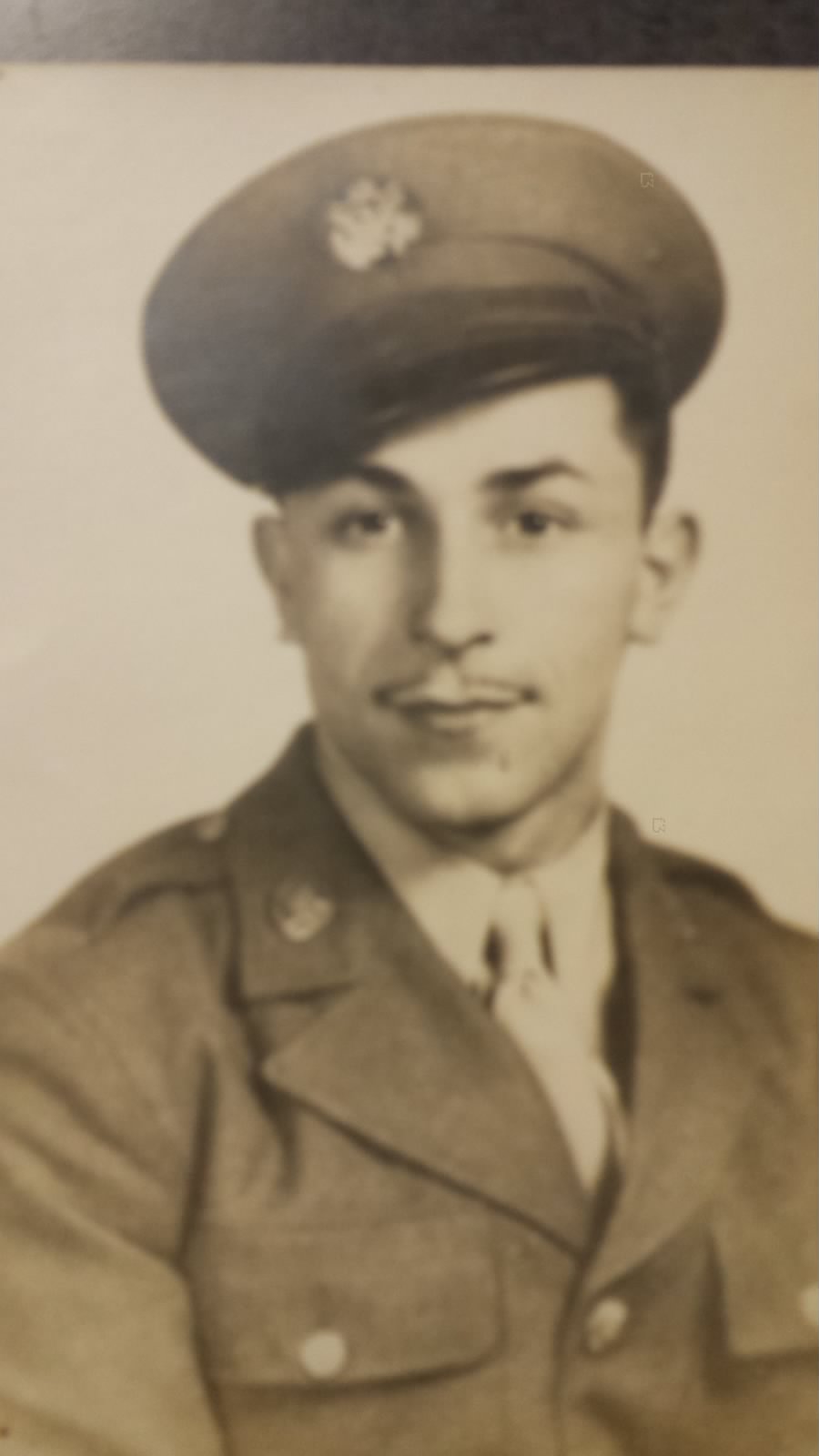
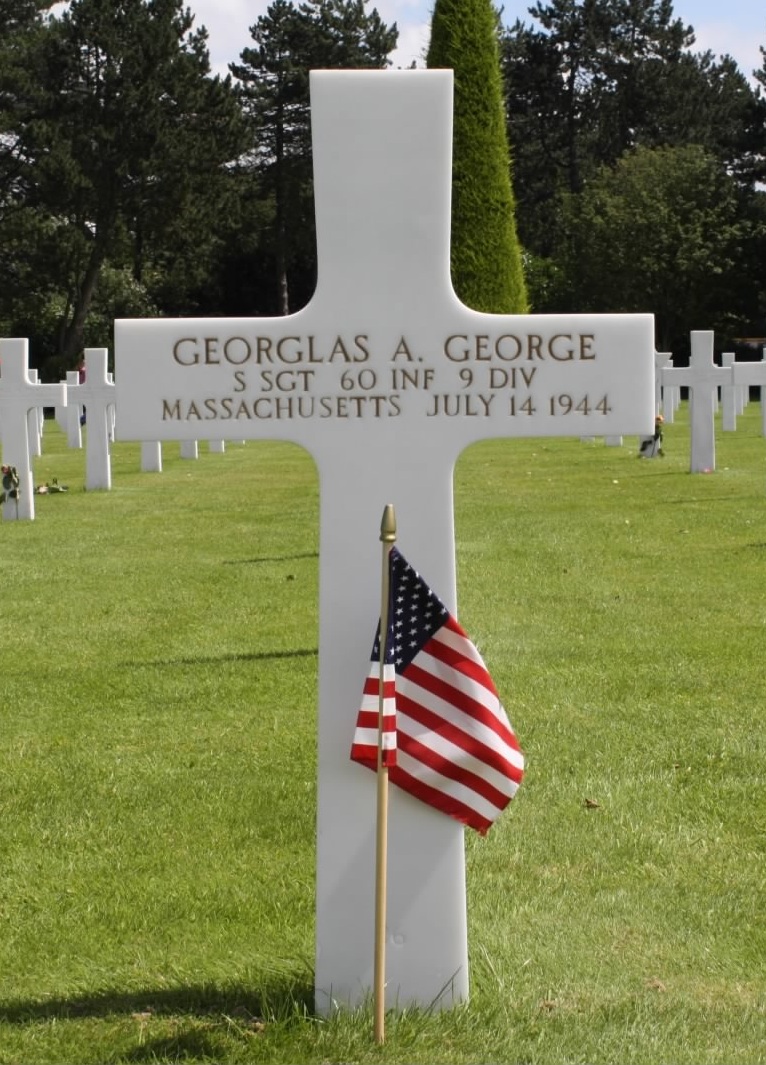
Georglas Alex GEORGE
| ||||||||||||||||||||||||||
|---|---|---|---|---|---|---|---|---|---|---|---|---|---|---|---|---|---|---|---|---|---|---|---|---|---|---|
|
Source : Georgesm03432 Fold3 | ||||||||||||||||||||||||||
| NUMBER OF SERVICE | 31227156 | |||||||||||||||||||||||||
| AGE | 23 yo | |||||||||||||||||||||||||
| DATE OF BIRTH | 1 January 1921 Killingly, Windham County, CONNECTICUT | |||||||||||||||||||||||||
| ENLISTMENT STATE | MASSACHUSETTS | |||||||||||||||||||||||||
| FAMILY | Single | |||||||||||||||||||||||||
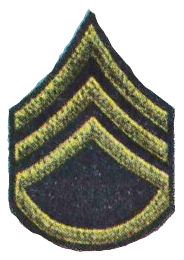
| RANK |
| |||||||||||||||||||||||||
| FONCTION | Infantry Man | |||||||||||||||||||||||||
| JOB BEFORE ENLISTEMENT | Semiskilled linemen and servicemen, telegraph, telephone, and power |  | ||||||||||||||||||||||||
| DATE of ENLISTEMENT | Day Month Year Country STATE | |||||||||||||||||||||||||
| COMPANY | Company I | |||||||||||||||||||||||||
| BATTALION | 3rd Battalion | |||||||||||||||||||||||||
| REGIMENT | 60th Infantry Regiment | |||||||||||||||||||||||||
| DIVISION | 9th Infantry Division | |||||||||||||||||||||||||
| DATE OF DEATH | 14 July 1944 |
Source : Georgesm03432 Fold3 | ||||||||||||||||||||||||
| STATUS | DOW | |||||||||||||||||||||||||
| PLACE OF DEATH | Battle of St Lo | |||||||||||||||||||||||||
| CEMETERY TEMPORARY |
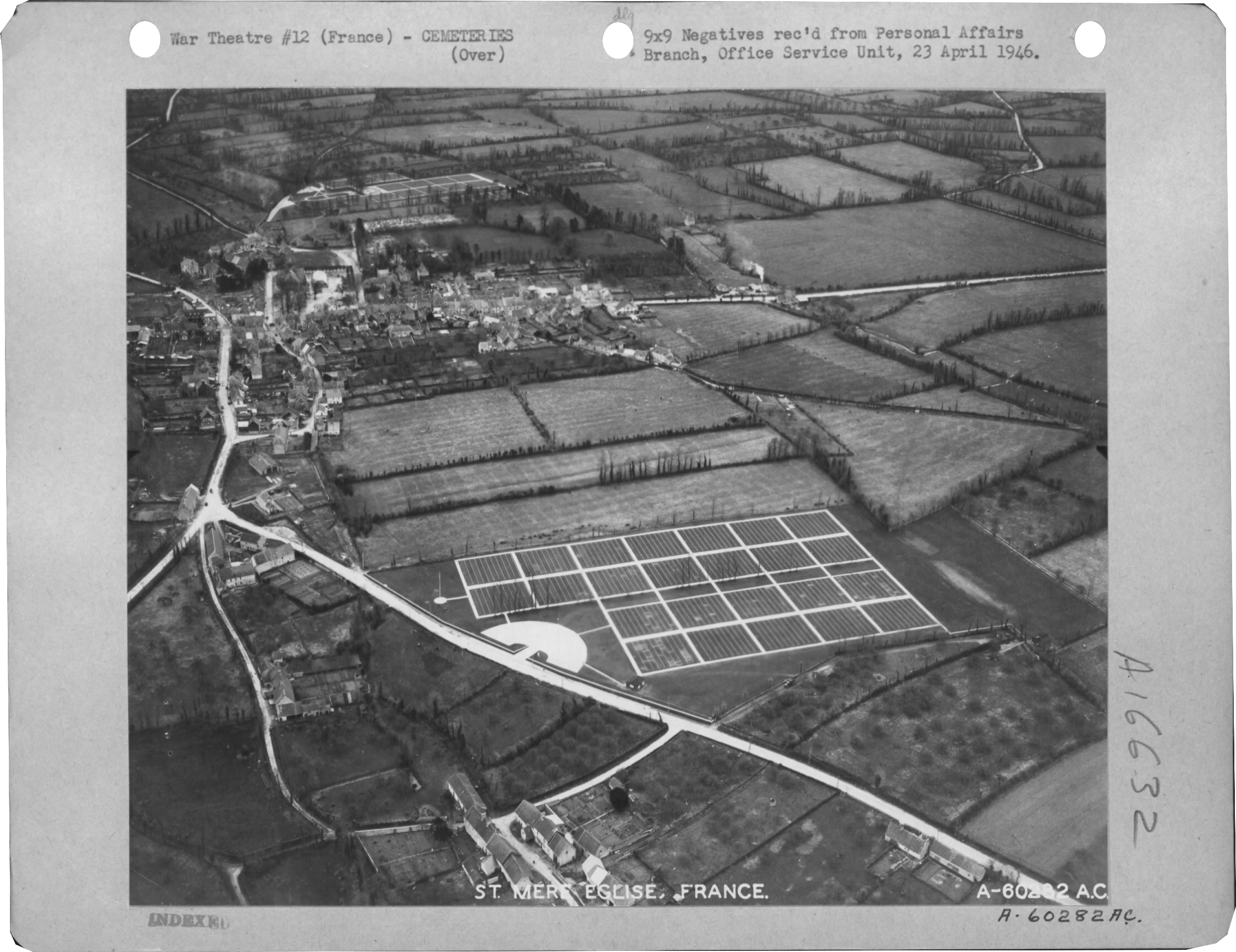
CEMETERY TEMPORARY of Sainte Mère Eglise #2 N°3586
| |||||||||||||||||||||||||
| CEMETERY | NORMANDY AMERICAN CEMETERY of Colleville | |||||||||||||||||||||||||
| GRAVE |
| |||||||||||||||||||||||||
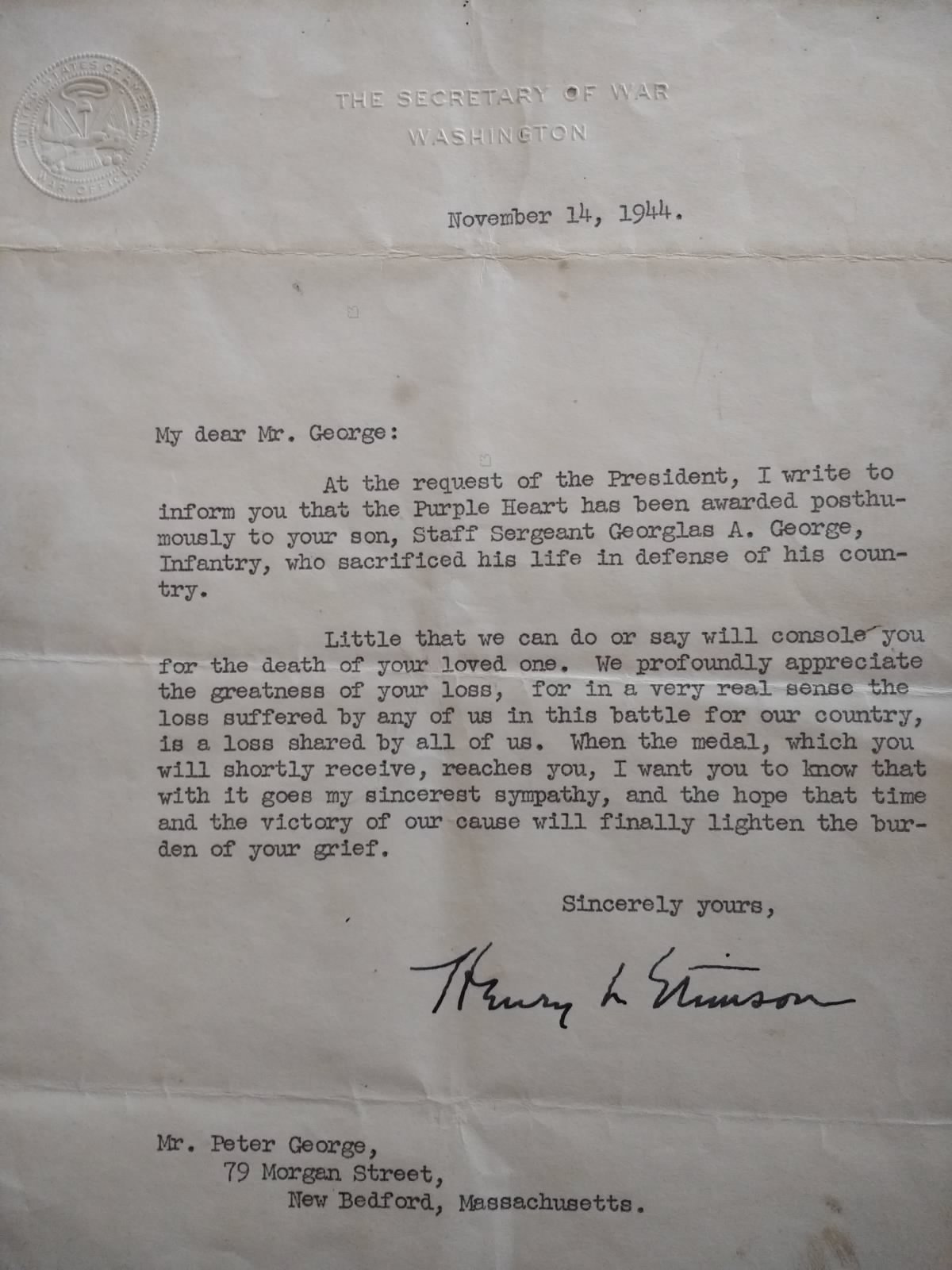
| DECORATION & BREVET |
| |||||||||||||||||||||||||
| ||||||||||||||||||||||||||
| STORY | ||||||||||||||||||||||||||
|
Georglas was drafted in late 1942 and volunteered to fight. After basic training at Fort Dix he was given infantry training at Fort Bragg and assigned to the 9th Infantry Division. He arrived in North Africa in the Spring of 1943. Soon his unit, I Company/3rd Battalion/ 60th Infantry Regiment of the 9th ID was involved in the Invasion of Sicily in the Summer of 1943. After the campaign they were sent to the UK to prepare for invasion of France. Georglas landed on Utah Beach with his unit on June 10, 1944. He saw action across the Normandy peninsula and was sent into the hedgerow fighting by early July, 1944. He received a slight wound, but was soon back in action. On July 14, 1944 Georglas, a squad leader, was severely wounded by German artillery in the legs and abdomen while his unit opposed SS Panzer Lehr Division. He was taken to a field hospital and received exploratory surgery to stop the bleeding vessels in his abdomen. The surgery was unsuccessful and he died of shock. A member of his parish back home, in one of the ironies of war, was a physician (anesthesiologist) on his treatment team. He later informed the family of his experiences that day. He is buried at the U.S. Cemetery overlooking Omaha Beach. | ||||||||||||||||||||||||||
|
Source : Georgesm03432 Fold3 | ||||||||||||||||||||||||||





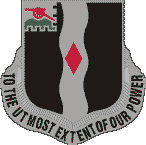
Activated/Activé |
Normandy/Normandie |
| 1 Aug 1940 | Days of Combat/Jour de Combat 304 |
| Casualties/Victimes 23 277 | |
Entered Combat/Entré au combat |
|
| 8 Nov 1942 North Africa | |
|
Commanding Generals/Commandants généraux Maj. Gen. Jacob L. Devers (Oct 40 - Jul 41) |
Campaigns/CampagnesAlgeria-French Morocco (8 Nov 42 - 11 Nov 42)Tunisia (17 Nov 42 - 13 May 43) Sicily (9 Jul - 17 Aug 43) Normandy (6 Jun 44 - 24 Jul 44) Northern France (25 Jul 44 - 14 Sep 44) Rhineland (15 Sep 44 - 21 Mar 45) Ardennes-Alsace (16 Dec 44 - 25 Jan 45) Central Europe (22 Mar 45 - 11 May 45) |
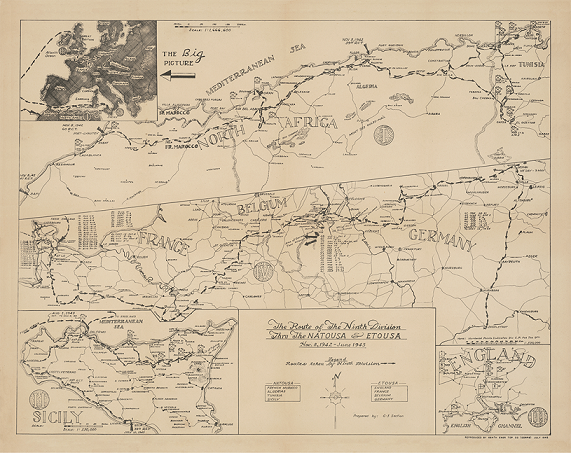
PLAN DE ROUTE DE LA CAMPAGNE - CAMPAIGN ROUTE MAP |
|
|
Cette carte retrace le parcours de la 9ème division d'infanterie en Méditerranée et en Europe pendant la Seconde Guerre mondiale. This maps charts the journey of the 9th Infantry Division throughout the Mediterranean and Europe during World War II. |
|
DIVISION CHRONICLEThe 9th Infantry Division saw its first combat in the North African invasion, 8 November 1942, when its elements landed at Algiers, Safi, and Port Lyautey. With the collapse of French resistance, 11 November 1942, the Division patrolled the Spanish Moroccan border. The 9th returned to Tunisia in February and engaged in small defensive actions and patrol activity. On 28 March 1943 it launched an attack in southern Tunisia and fought its way north into Bizerte, 7 May. In August the 9th landed at Palermo, Sicily, and took part in the capture of Randazzo and Messina. After returning to England for further training, the Division hit Utah Beach on 10 June 1944 (D plus 4) , cut off the Cotentin Peninsula, drove on to Cherbourg and penetrated the port's heavy defenses. After a brief rest in July, the Division took part in the St. Lo break-through and in August helped close the Falaise Gap. Turning east, the 9th crossed the Marne, 28 August, swept through Saarlautern, and in November and December held defensive positions from Monschau to Losheim. Moving north to Bergrath, Germany, it launched an attack toward the Roer, 10 December, taking Echtz and Schlich. From mid-December through January 1945, the Division held defensive positions from Kalterherberg to Elsenborn. On 30 Jannary the Division jumped off from Monschau in a drive across the Roer and to Rhine, crossing at Remagen, 7 March. After breaking out of the Remagen bridgehead, the 9th assisted in the sealing and clearing of the Ruhr Pocket, then moved 150 miles east to Nordhausen and attacked in the Harz Mountains, 14-20 April. On 21 April the Division relieved the 3d Armored along the Mulde River, near Dessau, and held that line until VE-day. |
CHRONIQUE DE DIVISIONLa 9ème division d'infanterie a connu son premier combat lors de l'invasion nord-africaine, le 8 novembre 1942, lorsque ses éléments ont atterri à Alger, Safi et Port Lyautey. Avec l'effondrement de la résistance française, le 11 novembre 1942, la division patrouillait la frontière marocaine espagnole. Le 9 est rentré en Tunisie en février et s'est engagé dans de petites actions de défense et de patrouille. Le 28 mars 1943, il a lancé une attaque dans le sud de la Tunisie et s'est frayé un chemin vers le nord, dans Bizerte, le 7 mai. Le 9 août a atterri à Palerme, en Sicile, et a pris part à la capture de Randazzo et de Messine. Après son retour en Angleterre pour poursuivre sa formation, la Division a frappé Utah Beach le 10 juin 1944 (D + 4), a coupé la péninsule du Cotentin, s'est rendue à Cherbourg et a pénétré dans les lourdes défenses du port. Après un bref repos en juillet, la division a pris part à la percée de St. Lo et a aidé en août à fermer l’écart de Falaise. En tournant à l'est, le 9 a traversé la Marne le 28 août, a balayé Saarlautern et, en novembre et décembre, a occupé des positions défensives de Monschau à Losheim. Se déplaçant au nord de Bergrath, en Allemagne, il a lancé une attaque contre le Roer, le 10 décembre, en prenant Echtz et Schlich. De la mi-décembre à janvier 1945, la division a occupé des positions défensives de Kalterherberg à Elsenborn. Le 30 Jannary, la division a quitté Monschau en traversant la Roer et le Rhin, traversant à Remagen le 7 mars. Après avoir quitté la tête de pont de Remagen, le 9 a aidé à sceller et à dégager la poche de la Ruhr, puis à 150 milles à l’est de Nordhausen et à attaquer dans les montagnes du Harz, du 14 au 20 avril. Le 21 avril, la division a déchargé le 3e blindé le long de la rivière Mulde, près de Dessau, et a détenu cette ligne jusqu'au jour du VE.
|

| SOURCE INFORMATION & PHOTO | Armydivs.squarespace.com |
|---|
| SOURCE INFORMATION & SOURCE PHOTO | Aad.archives.gov - Findagrave.com - Georgesm03432 Fold3 |
|---|---|
| EDITORS | Victor, Jean-Philippe, Eric, Henri, Garrett, Clive, Frédéric & Renaud |