


|
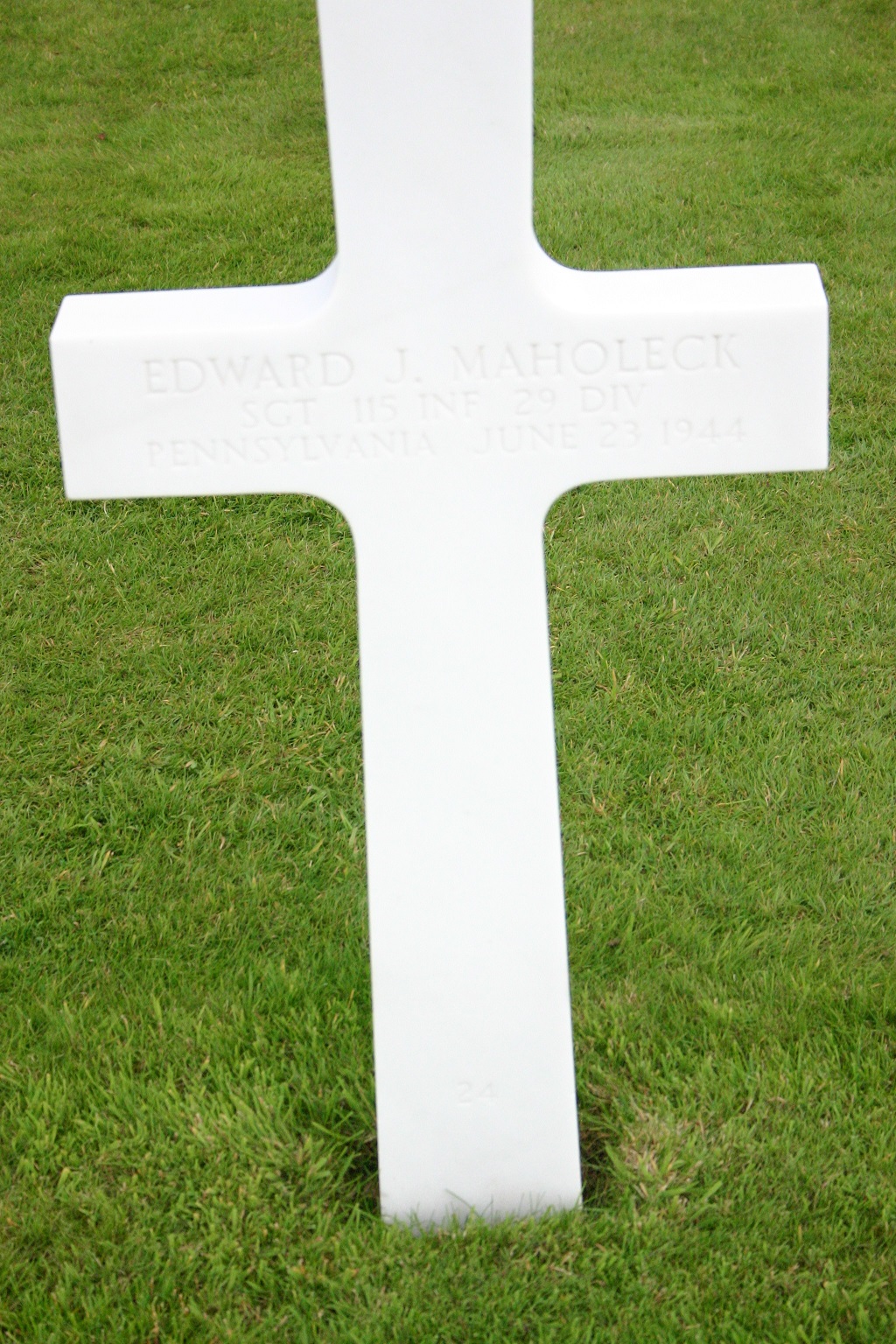
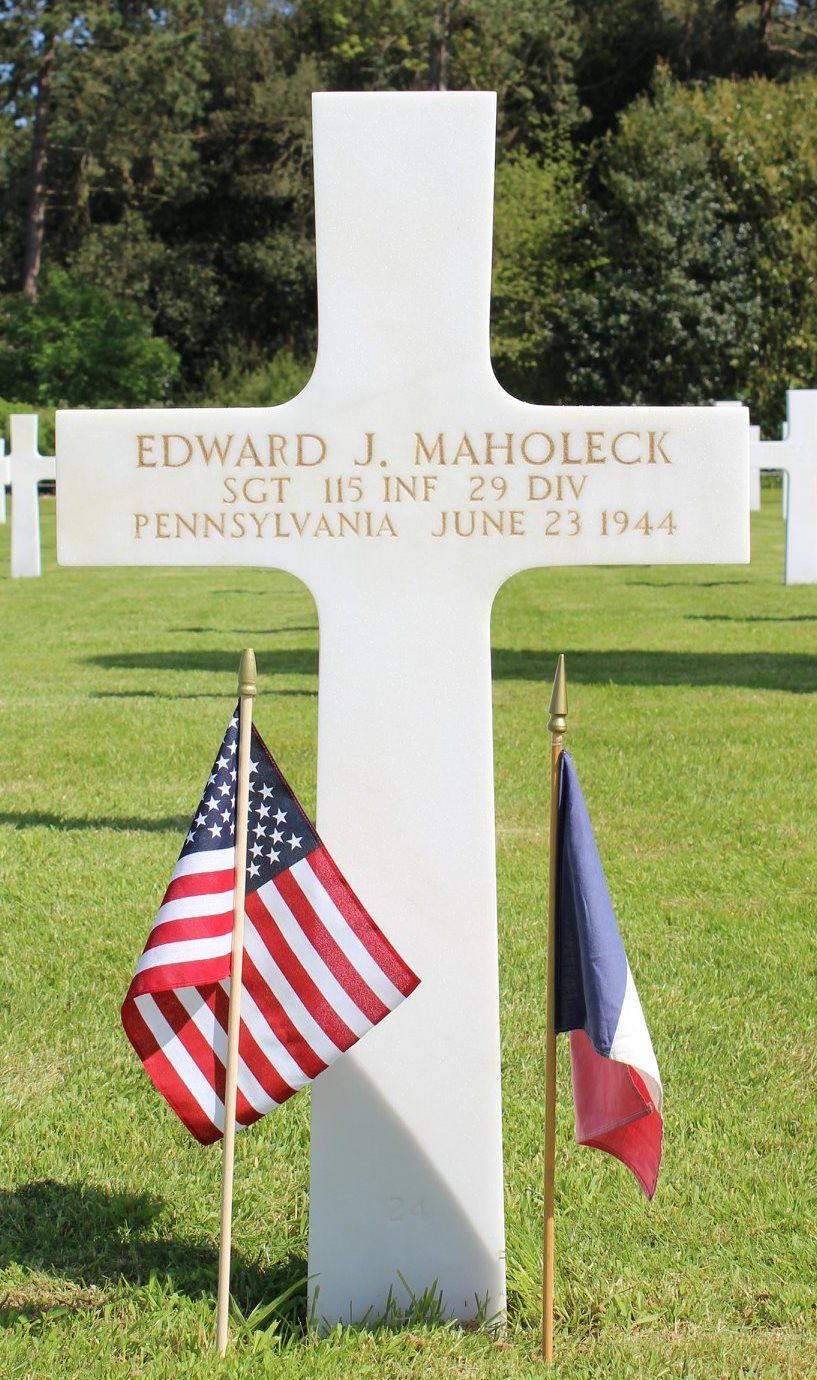
Edward J. MAHOLECK
| ||||||||||||||||||||||||
|---|---|---|---|---|---|---|---|---|---|---|---|---|---|---|---|---|---|---|---|---|---|---|---|---|
|
Source : Arnaud Gaté (Ellen Marchese)
| ||||||||||||||||||||||||
| NUMBER OF SERVICE | 33038366 | |||||||||||||||||||||||
| AGE | 28 yo | |||||||||||||||||||||||
| DATE OF BIRTH | 29 October 1915 Claridge, Westmoreland County, PENNSYLVANIA | |||||||||||||||||||||||
| ENLISTMENT STATE | PENNSYLVANIA | |||||||||||||||||||||||
| FAMILY |
Single | |||||||||||||||||||||||
| RANK | Sergeant | |||||||||||||||||||||||
| FONCTION | Infantry Man | |||||||||||||||||||||||
| JOB BEFORE ENLISTEMENT | Semiskilled miners, and mining-machine operators |  | ||||||||||||||||||||||
| DATE of ENLISTEMENT | 3 May 1941 Pittsburgh PENNSYLVANIA | |||||||||||||||||||||||
| COMPANY | Company | |||||||||||||||||||||||
| BATTALION | Battalion | |||||||||||||||||||||||
| REGIMENT | 115th Infantry Regiment | |||||||||||||||||||||||
| DIVISION | 29th Infantry Division | |||||||||||||||||||||||
| DATE OF DEATH | 23 June 1944 |
Source : Chloé Lavernhe | ||||||||||||||||||||||
| STATUS | DOW | |||||||||||||||||||||||
| PLACE OF DEATH | Saint-Clair-sur-l'Elle | |||||||||||||||||||||||
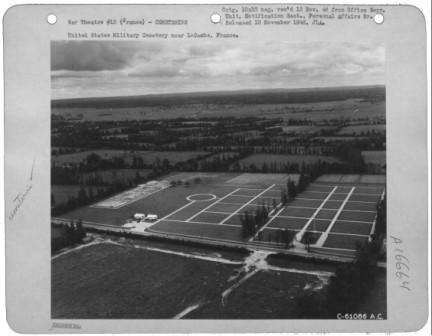
| CEMETERY TEMPORARY |
CEMTERY TEMPORARY of La Cambe N°3539
| |||||||||||||||||||||||
| CEMETERY | NORMANDY AMERICAN CEMETERY of Colleville | |||||||||||||||||||||||
| GRAVE |
| |||||||||||||||||||||||
| DECORATION |
| |||||||||||||||||||||||
| ||||||||||||||||||||||||
| STORY | ||||||||||||||||||||||||
|
Sergeant Edward John Maholeck, born 29 Oct 1915, was the son of Dominick W and Josephine (Hytla) Michalek of Claridge, Westmoreland County, Pennsylvania. Claridge is 25 miles east southeast of Pittsburgh. In the 1920 census 4-year-old Edward is living with his parents and sisters Helen 6, Victoria 5, and Martha 2 in Penn, Westmoreland County, PA. His parents are listed as born in Austria. His father was a coal miner. In the 1940 census 24-year-old Edward is living with his parents, sister Martha 22, and nephew Edward 4, still in Penn. Father and Edward are both working as coal miners. His mother is working as a Janitress. Parents are now listed as born in Poland. From 115th Infantry Regiment After Action Report for June 1944: From the 20th to 30th of June the 115th Infantry was in active defense. There was effected a consolidation of our forces during which time replacements came to the 115th Infantry. There was active night patrolling, and considerable information of value was obtained concerning strength and disposition of enemy forces north of ST. LO. The NARA WWII casualty listings by state and county show Maholeck, Edward J, 33038366, Sgt, from Westmoreland County, Pennsylvania as DOW (Died of Wounds) on 23 Jun 1944. Since Sgt Maholeck died of wounds we dont know when and therefore exactly where the 115th IR was when he was mortally wounded but theyd only been in Normandy for 17 days. |
Source : Andy | |||||||||||||||||||||||







Activated/Activé |
Normandy/Normandie |
| 3 Feb 1941 | Days of Combat/Jour de Combat 242 |
| Casualties/Victimes 20 620 | |
Entered Combat/Entré au combat |
|
| 6 Jun1944 D-Day | |
|
Commanding Generals/Commandants généraux Maj. Gen. Milton A. Reckord (Feb 41 - Jan 42) |
Campaigns/CampagnesNormandy (6 Jun 44 - 24 Jul 44)
|
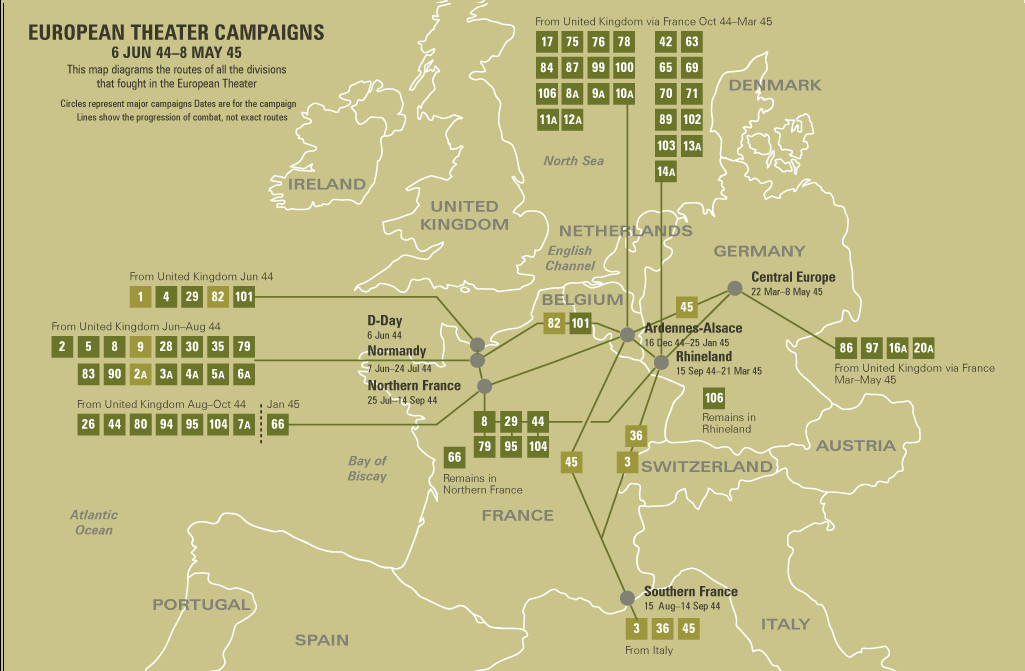
PLAN DE ROUTE DE LA CAMPAGNE - CAMPAIGN ROUTE MAP |
|
 |
|
DIVISION CHRONICLEThe 29th Infantry Division trained in Scotland and England for the crosschannel invasion, October 1942-June 1944. Teamed with the 1st Division, a regiment of the 29th (116th Infantry) was in the first assault wave to hit the beaches at Normandy on D-day, 6 June 1944. Landing on Omaha Beach on the same day in the face of intense enemy fire, the Division soon secured the bluff tops and occupied Isigny, 9 June. The Division cut across the Elle River and advanced slowly toward St. Lo, fighting bitterly in the Normandy hedge rows. After taking St. Lo, 18 July 1944, the Division joined in the battle for Vire, capturing that strongly held city, 7 August. Turning west, the 29th took part in the assault on Brest, 25 August-18 September 1944. After a short rest, the Division moved to defensive positions along the Teveren-Geilenkirchen line in Germany and maintained those positions through October. (In mid-October the 116th Infantry took part in the fighting at the Aachen Gap.) On 16 November the Division began its drive to the Roer, blasting its way through Siersdorf, Setterich, Durboslar, and Bettendorf, and reaching the Roer by the end of the month. Heavy fighting reduced Julich Sportplatz and the Hasenfeld Gut, 8 December. From 8 December 1944 to 23 February 1945, the Division held defensive positions along the Roer and prepared for the offensive. The attack jumped off across the Roer, 23 February, and carried the Division through Julich, Broich, Immerath, and Titz, to Munchen-Gladbach, 1 March 1945. The Division was out of combat in March. In early April the 116th Infantry helped mop up in the Ruhr area. On 19 April 1945 the Division pushed to the Elbe and held defensive positions until 4 May. Meanwhile, the 175th Infantry cleared the Klotze Forest. After VE-day, the Division was on military government duty in the Bremen enclave. |
CHRONIQUE DE DIVISIONLa 29th Infantry Division s'entraîna en Ecosse et en Angleterre pour l'invasion crosschannel, d'octobre 1942 à juin 1944. En équipe avec la 1st Division, un régiment du 29th (116th Infantry) se trouvait dans la première vague d'assaut pour frapper les plages de Normandie. Le 6 juin 1944, débarquant à Omaha Beach, le même jour, face à un feu nourri de l'ennemi, la division s'empara bientôt des falaises et occupa Isigny, le 9 juin. La Division traversa la rivière Elle et s'avança lentement vers Saint-Lô, se battant amèrement dans les rangées de haies de Normandie. Après avoir pris St. Lo, le 18 juillet 1944, la division se joignit à la bataille de Vire pour s'emparer de cette ville fortement occupée, le 7 août. Tournant vers l'ouest, le 29 a pris part à l'assaut sur Brest, 25 août-18 septembre 1944. Après un court repos, la division a déménagé à des positions défensives le long de la ligne Teveren-Geilenkirchen en Allemagne et a maintenu ces positions jusqu'en octobre. (À la mi-octobre, le 116e régiment d'infanterie prit part aux combats à Aix-la-Chapelle.) Le 16 novembre, la division commença sa route vers la Roer, traversant Siersdorf, Setterich, Durboslar et Bettendorf, et atteignant la Roer par la fin du mois. Les combats intenses ont réduit Julich Sportplatz et le Hasenfeld Gut, le 8 décembre. Du 8 décembre 1944 au 23 février 1945, la division occupe des positions défensives le long de la Roer et se prépare à l'offensive. L'attaque a sauté à travers le Roer, le 23 février, et a porté la Division par l'intermédiaire de Julich, Broich, Immerath, et Titz, à Munchen-Gladbach, le 1er mars 1945. La Division était hors combat en mars. Au début du mois d'avril, le 116th Infantry a aidé à nettoyer la région de la Ruhr. Le 19 avril 1945, la division pousse vers l'Elbe et occupe des positions défensives jusqu'au 4 mai. Pendant ce temps, le 175th Infantry a dégagé la forêt de Klotze. Après le jour de la victoire, la division était en service militaire dans l'enclave de Brême. |
| SOURCE INFORMATION & PHOTO | Armydivs.squarespace.com |
|---|
| SOURCE INFORMATION & SOURCE PHOTO | Arnaud Gaté - Abmc.gov - Findagrave.com - Aad.archives.gov |
|---|---|
| PROGRAMMER | Henri, Garrett, Clive, Frédéric & Renaud |