


|
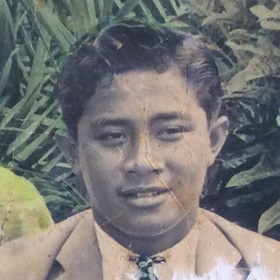
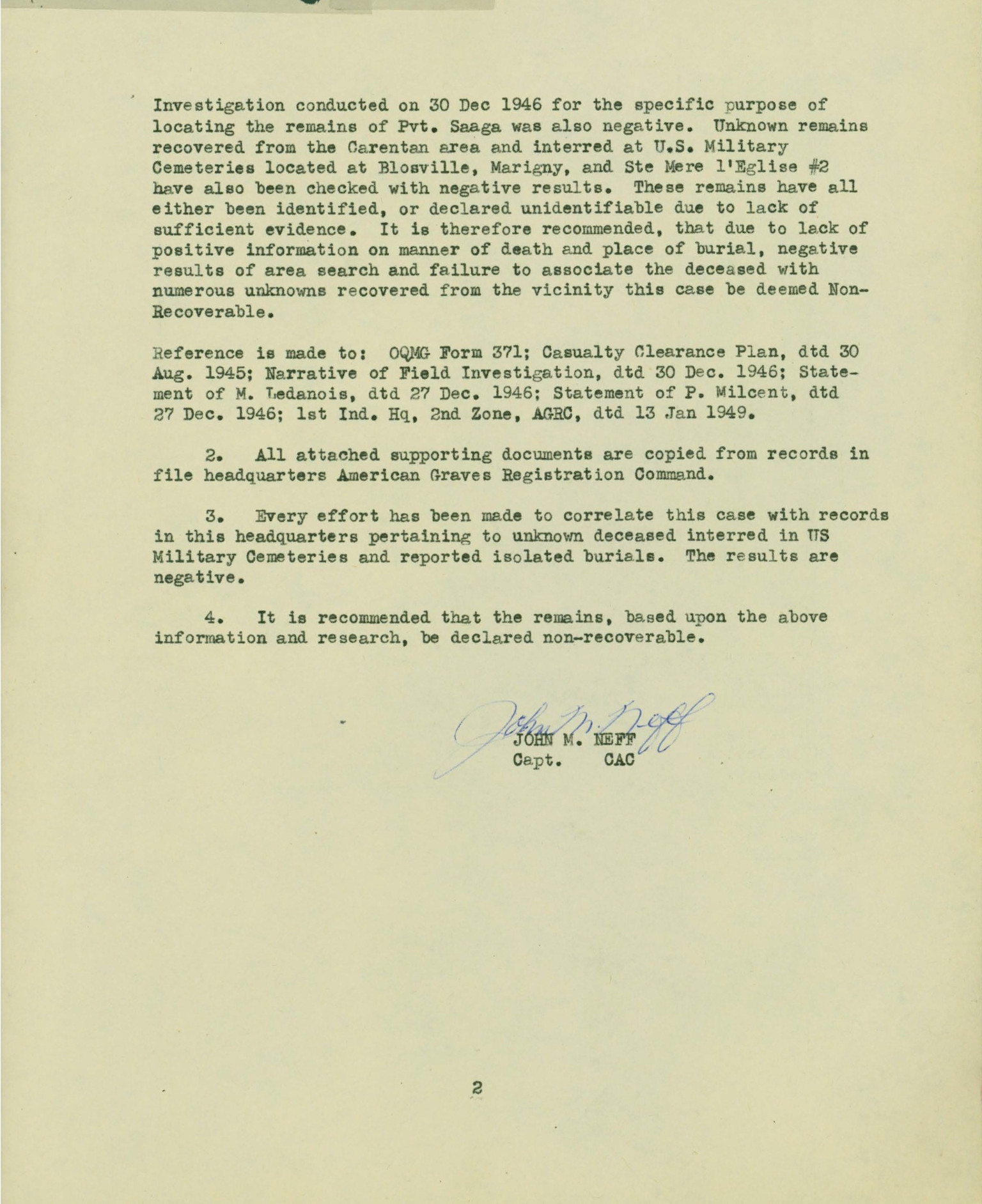
Henry W. SAAGA
| ||||||||||||||||||||||||
|---|---|---|---|---|---|---|---|---|---|---|---|---|---|---|---|---|---|---|---|---|---|---|---|---|
|
Source : Andy | ||||||||||||||||||||||||
| NUMBER OF SERVICE | 10100148 | |||||||||||||||||||||||
| AGE | 18 yo | |||||||||||||||||||||||
| DATE OF BIRTH | 1 mars 1926 SAMOA | |||||||||||||||||||||||
| ENLISTMENT STATE | Honolulu, HAWAII | |||||||||||||||||||||||
| FAMILY |
Parents : Evotia Fefiloi Afoa Saaga Sisters : Elisapeta "Lisa" Williams , Marion Fusipala & Lamala | |||||||||||||||||||||||
| RANK |
| |||||||||||||||||||||||
| FONCTION | Infantry Man | |||||||||||||||||||||||
| JOB BEFORE ENLISTEMENT |  | |||||||||||||||||||||||
| DATE of ENLISTEMENT | ||||||||||||||||||||||||
| COMPANY | Company G | |||||||||||||||||||||||
| REGIMENT | 330th Infantry Regiment | |||||||||||||||||||||||
| DIVISION | 83rd Infantry Division | |||||||||||||||||||||||
| DATE OF DEATH |
MIA 1 July 1944 KIA 2 Jluy 1945 |
Source : Ralph the Cemetery Guy | ||||||||||||||||||||||
| STATUS | ||||||||||||||||||||||||
| PLACE OF DEATH | Carentan Area | |||||||||||||||||||||||
| CEMETERY | NORMANDY AMERICAN CEMETERY of Colleville | |||||||||||||||||||||||
| GRAVE |
| |||||||||||||||||||||||
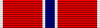
| DECORATION |
| |||||||||||||||||||||||
| ||||||||||||||||||||||||
| STORY | ||||||||||||||||||||||||
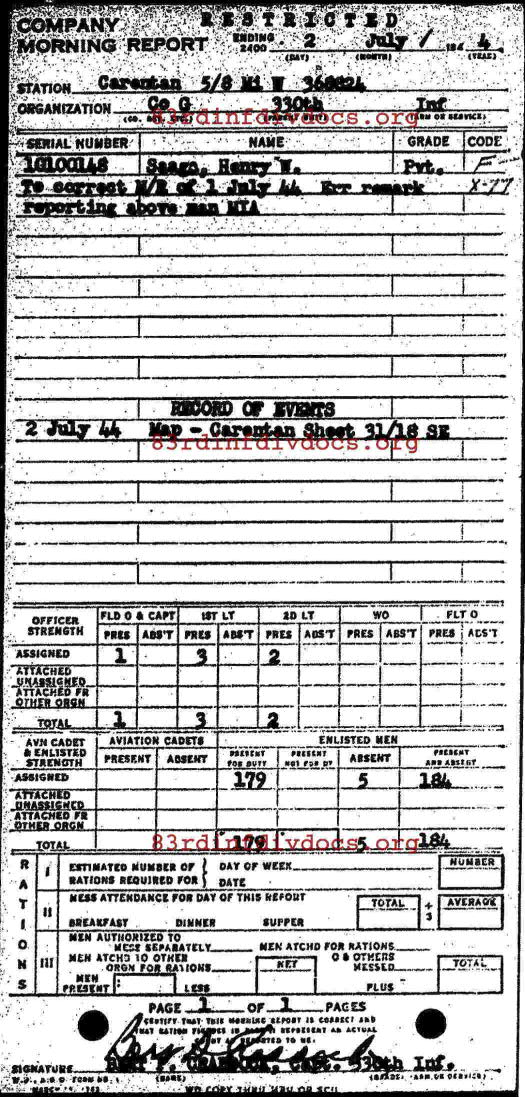
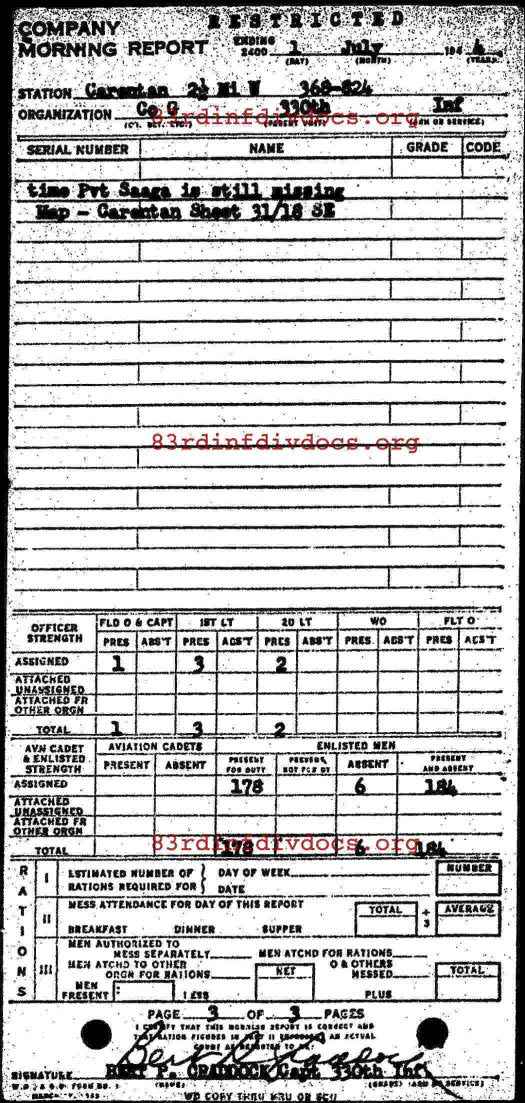
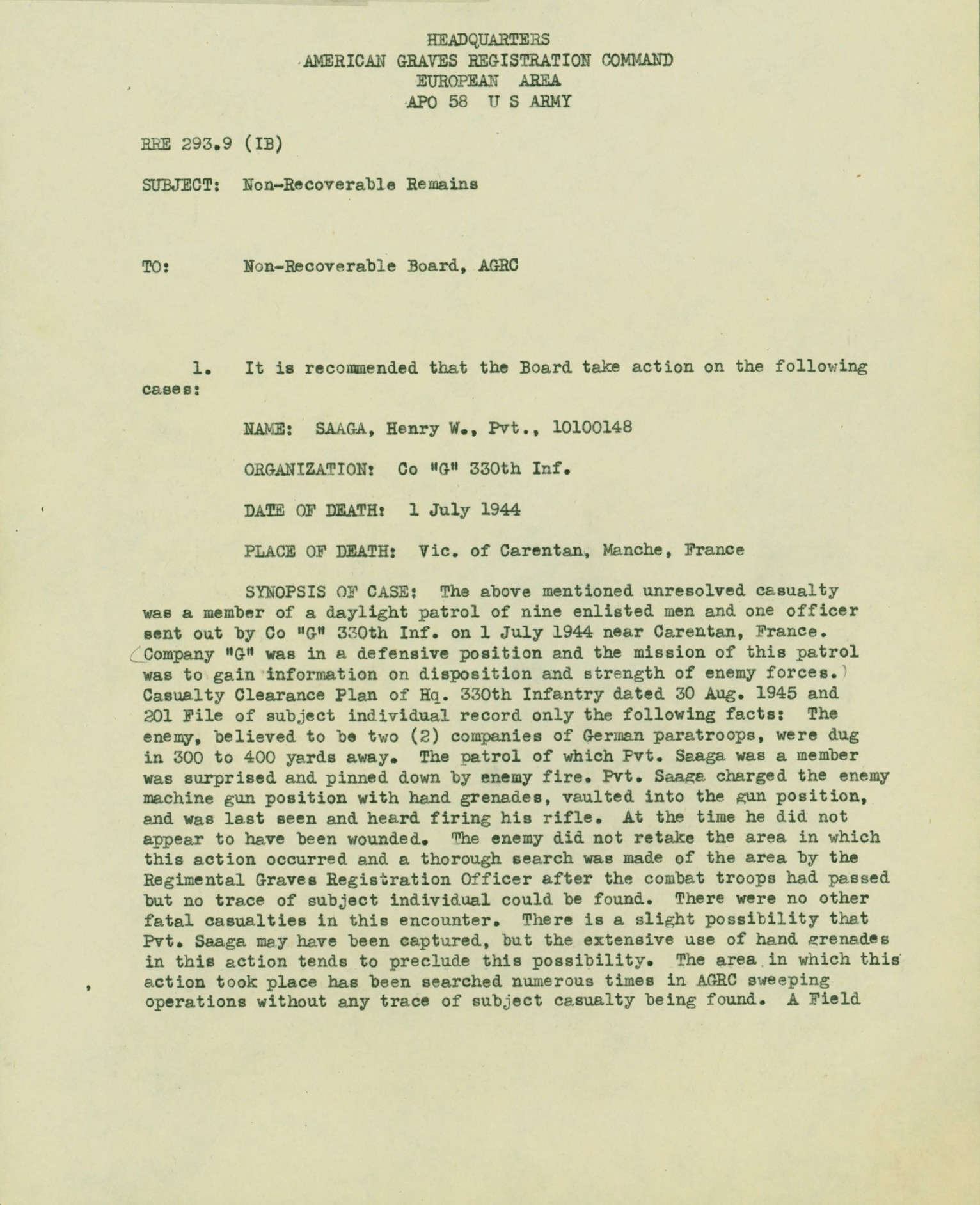
| PFC Henry W. Saaga, Co G, 330th Infantry, 83rd Division. He was awarded a Bronze Star and a Purple Heart. He was born in American Samoa and grew up in Hawaii. He enlisted from Hawaii in 1942. Shortly after the 83rd landed on Omaha beach in late June 1944 they started pushing inland and began the process of replacing the 101st Airborne Division in the Carentan sector, which was heavily defended by elite German SS, panzer, and paratroops. Before the 83rd went on the offensive they began sending out reconnaissance patrols. The result of one of these is recorded on the Company Morning Report of 1 July 1944 by the Company Commander, Captain William P. Buhrman; It reads: "…Co sent out first daylight patrol at 1230 led by Capt Buhrman the Co Commander. The members of this patrol were all volunteers and were Pvt Saaga, who displayed extraordinary courage and bravery without respect for his own life when he vaulted an enemy occupied hedge row to attack, alone, an enemy MG position whose fire was pinning the patrol down. As a result of his act, the patrol was able to move out and return to their own lines. When last heard of Pvt Saaga was throwing hand grenades and firing his rifle. At this time Pvt Saaga's whereabouts remain unknown." |
Source : 83rdinfdivdocs.org | |||||||||||||||||||||||
|
Source : 83rdinfdivdocs.org |
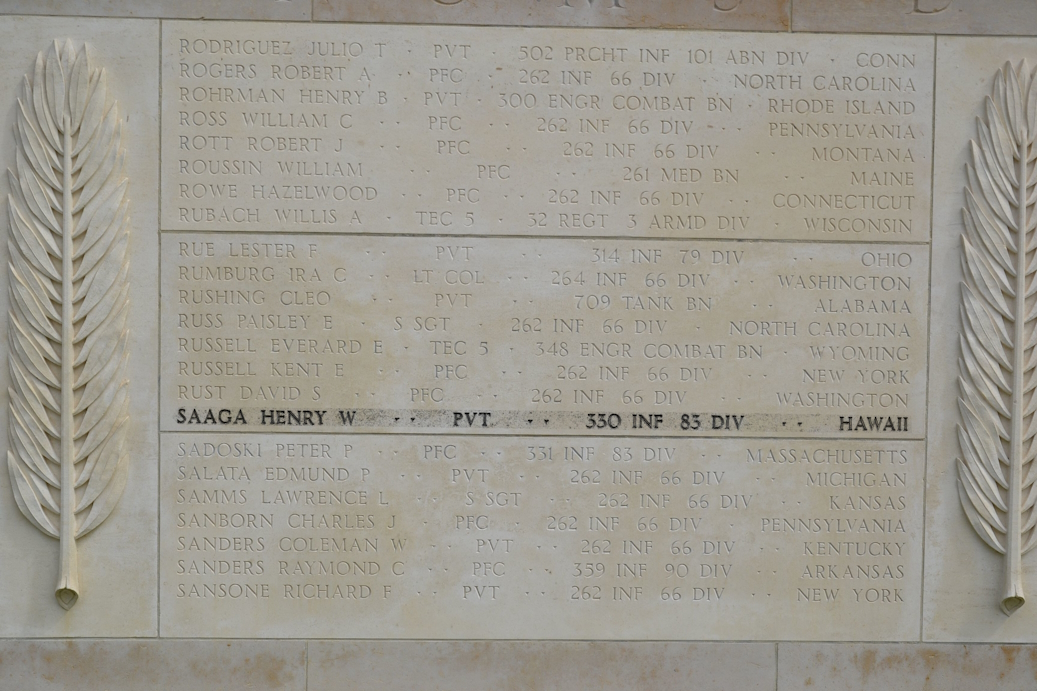
Three days later Capt Buhrman was himself KIA attempting to climb over a hedgerow when the 83rd launched their attack. The others may very well have suffered a similar fate. Henry Saaga's extraordinary act was lost to history, never to be officially recognized accept for a paragraph in a morning report. His body was never recovered and after the one year waiting period the Army declared him KIA. His name is included on the Tablet of the Missing at the Normandy American Cemetery and Memorial at Colleville-sur-Mer. Before the WarHenry Saaga was born in Utulei, Tutuila, Samoa, the second child of Lilia Willie Saaga and Evotia Afoa. In 1931, the Saaga family emigrated from Samoa to what was then the Territory of Hawaii when Henry was five years old. A large number of Samoans migrated to the Hawaiian Islands at this time, due to their conversion to the Church of Jesus Christ of Latter-Day Saints (LDS), or Mormon faith. An LDS temple was constructed in Laie, Hawaii on the North Shore of the island of Oahu in 1919. Many Samoans of the LDS faith, including the Saaga family, immigrated to Hawaii to be near the temple. In addition to his parents, Saaga had an older sister, Elizabeth, and four younger sisters, Marion, Matilda, Lamala, and Emaline (who died when she was a year old). A brother, Don, was born after the family moved to Hawaii. | |||||||||||||||||||||||
|
Military ExperiencePearl Harbor Changed EverythingThe attack on Pearl Harbor marked the official entry of the United States into World War II. In addition, it radically changed the Territory of Hawaii and this change was felt strongly at Iolani, Saagas school. A large majority of the faculty and staff at the school enlisted in the Army. School hours were modified, and all athletic programs were suspended. The drastically shortened yearbook from spring of 1942 lists those students who left the school to join the Hawaii Territorial Guard (HTG). Saaga was one of those students. Father Kenneth Bray, a teacher and coach at the school who founded the athletic program at Iolani, influenced many students who joined the HTG. Bray also left the school to join the HTG. Saaga was inspired by Brays actions. Although only 15 years old, he was restless and wanted to be where the action was, according to Don Saaga, his younger brother. He signed up and was stationed to the North Shore of Oahu in Kahuku. The last time his family saw him was in the spring of 1942, shortly before he was sent to basic training. Basic TrainingSaagas 83rd Infantry Division was sent to basic training at Camp Atterbury, Indiana. Atterbury was a segregated camp, and many did not know what to make of the Samoan boy from Hawaii. Saagas sister Matilda recalls that Saaga wrote home of race-based conflicts with the locals. But Saaga took it in stride, entertaining his fellow troops by singing and playing the Stars and Stripes on his ukulele. A single photo of Saaga exists from his time in training, after the division moved to Camp Breckenridge, Kentucky. In it, Saaga is shown with the bare feet befitting an island-boy, kicking a football 60 yards down the field. Struggle in the HedgerowsSaaga's division left the United States for foreign duty on April 6, 1944. After intensive training in England and in the northern part of Wales, the Division landed at Omaha Beach on June 18 and entered the hedgerow struggle south of Carentan, France on June 27. According to a Morning Report filed on July 1, 1944, members of Saagas company were sent on a daylight patrol led by their company commander, Captain William P. Buhrman. The members of the patrol were all volunteers. During this time, the patrol was pinned down by enemy fire. From the Morning Report:
| ||||||||||||||||||||||||
| ||||||||||||||||||||||||
| | ||||||||||||||||||||||||





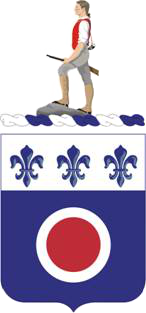

Activated/Activé |
Normandy/Normandie |
| 15 Aug 1942 | Days of Combat/Jour de Combat 244 |
| Casualties/Victimes 15 910 | |
Entered Combat/Entré au combat |
|
| 27 June 1944 Normandy | |
|
Commanding Generals/Commandants généraux Maj. Gen. Frank W. Milburn (Aug 42 - Dec 43) |
Campaigns/CampagnesNormandy (6 Jun 44 - 24 Jul 44) |
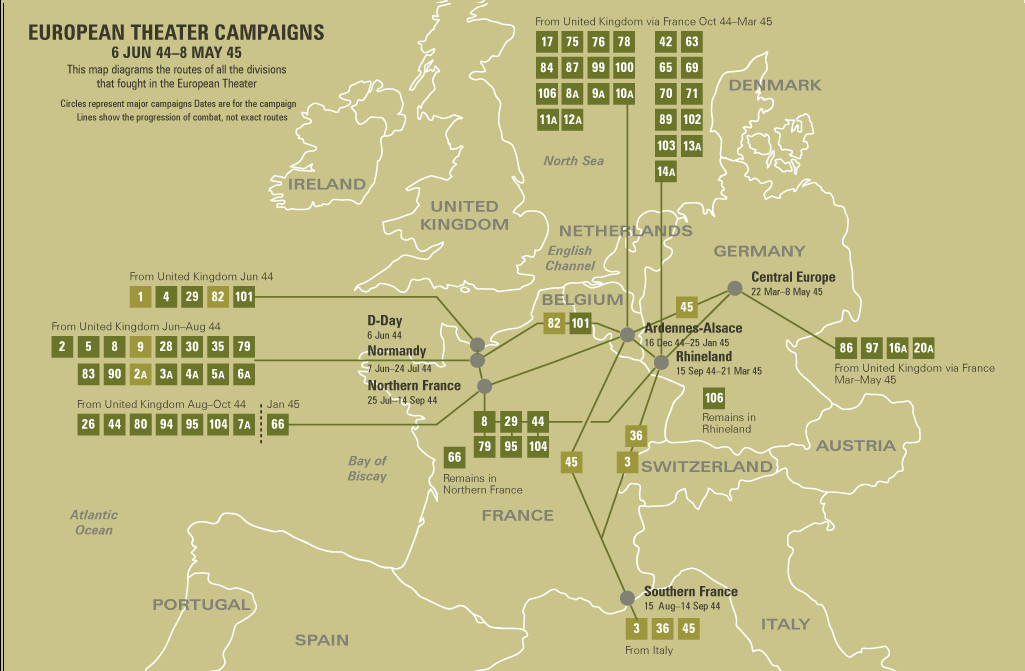
PLAN DE ROUTE DE LA CAMPAGNE - CAMPAIGN ROUTE MAP |
|
 |
|
DIVISION CHRONICLEThe 83rd Infantry Division arrived in England on 16 April 1944. After training in Wales, the Division landed at Omaha Beach, 18 June 1944, and entered the hedgerow struggle south of Carentan, 27 June. Taking the offensive, the 83d reached the St. Lo-Periers Road, 25 July, and advanced 8 miles against strong opposition as the Normandy campaign ended. After a period of training, elements of the Division took Chateauneuf, 5 August, and Dinard, 7 August, and approached the heavily fortified area protecting St. Malo. Intense fighting reduced enemy strong points and a combined attack against the Citadel Fortress of St. Servan caused its surrender, 17 August. While elements moved south to protect the north bank of the Loire River, the main body of the Division concentrated south of Rennes for patrolling and reconnaissance activities. Elements reduced the garrison at Ile de Cezembre, which surrendered, 2 September. The movement into Luxembourg was completed on 25 September. Taking Remich on the 28th and patrolling defensively along the Moselle, the 83d resisted counterattacks and advanced to Siegfried Line defenses across the Sauer after capturing Grevenmacher and Echternach, 7 October. As the initial movement in operation "Unicorn," the Division took Le Stromberg Hill in the vicinity of Basse Konz against strong opposition, 5 November, and beat off counterattacks. Moving to the Hurtgen Forest, the 83d thrust forward from Gressenich to the west bank of the Roer. It entered the Battle of the Bulge, 27 December, striking at Rochefort and reducing the enemy salient in a bitter struggle. The Division moved back to Belgium and Holland for rehabilitation and training, 22 January 1945. On 1 March, the 83d advanced toward the Rhine in the operation "Grenade," and captured Neuss. The west bank of the Rhine from North of Oberkassell to the Erft Canal was cleared and defensive positions established by 2 March and the Division renewed its training. The 83d crossed the Rhine south of Wesel, 29 March, and advanced across the Munster Plain to the Weser, crossing it at Bodenwerder. As opposition disintegrated, Halle fell on 6 April. The Division crossed the Leine, 8 April, and attacked to the east, pushing over the Harz Mountain region and advancing to the Elbe at Barby. That city was taken on the 13th. The 83d established a bridgehead over the river but evacuated the area to the Russians on 6 May 1945. |
CHRONIQUE DE DIVISIONLa 83rd Infantry Division arriva en Angleterre le 16 avril 1944. Après s'être entraîné au Pays de Galles, la Division débarqua à Omaha Beach, le 18 juin 1944, et entra dans la lutte des haies au sud de Carentan, le 27 juin. Prenant l'offensive, le 83d atteint la route de St. Lo-Periers, le 25 juillet, et avance de 8 milles contre une forte opposition à la fin de la campagne de Normandie. Après une période d'entraînement, des éléments de la division prirent Châteauneuf le 5 août et Dinard le 7 août, et approchèrent de la zone fortement fortifiée qui protégeait Saint-Malo. Les combats intenses ont réduit les points forts de l'ennemi et une attaque combinée contre la citadelle de Saint-Servan a provoqué sa reddition, le 17 août. Tandis que les éléments se déplaçaient vers le sud pour protéger la rive nord de la Loire, le gros de la division se concentrait au sud de Rennes pour des activités de patrouille et de reconnaissance. Les éléments ont réduit la garnison à l'île de Cezembre, qui s'est rendue, le 2 septembre. L'entrée au Luxembourg s'est achevée le 25 septembre. Prenant Remich le 28 et patrouillant défensivement le long de la Moselle, le 83d a résisté aux contre-attaques et a avancé aux défenses de Siegfried Line à travers la Sauer après avoir capturé Grevenmacher et Echternach, le 7 octobre. En tant que mouvement initial de l'opération "Unicorn", la division a pris le Stromberg Hill à proximité de Basse Konz contre une forte opposition, le 5 novembre, et a battu les contre-attaques. En se déplaçant à la forêt de Hurtgen, le 83d s'est propulsé de Gressenich à la rive ouest du Roer. Il est entré dans la Bataille des Ardennes, le 27 décembre, frappant à Rochefort et réduisant le saillant ennemi dans une lutte acharnée. La Division est retournée en Belgique et en Hollande pour y être réhabilitée et entraînée, le 22 janvier 1945. Le 1er mars, la 83e s'est avancée vers le Rhin dans l'opération "Grenade" et a capturé Neuss. La rive ouest du Rhin, du nord d'Oberkassell au canal Erft, a été défrichée et des positions défensives ont été établies le 2 mars et la division a renouvelé son entraînement. La 83e traversa le Rhin au sud de Wesel, le 29 mars, et s'avança à travers la plaine de Munster jusqu'à la Weser, la traversant à Bodenwerder. Alors que l'opposition se désintégrait, Halle tomba le 6 avril. La Division traversa la Leine, le 8 avril, et attaqua à l'est, repoussant la région du Harz et s'avançant vers l'Elbe à Barby. Cette ville a été prise le 13. La 83e établit une tête de pont au-dessus de la rivière mais évacue la région vers les Russes le 6 mai 1945. |
| SOURCE INFORMATION & PHOTO | Armydivs.squarespace.com |
|---|
| SOURCE INFORMATION & SOURCE PHOTO | Nathalie Ladouce - Findagrave.com - Abmc.gov - Honorstates.org - 83rdinfdivdocs.org |
|---|---|
| REDACTEURS | Victor, Jean-Philippe, Eric, Henri, Garrett, Clive, Frédéric & Renaud |