|
Donald Edward SCHINKOETH
| ||||||||||||||||||||||||
|---|---|---|---|---|---|---|---|---|---|---|---|---|---|---|---|---|---|---|---|---|---|---|---|---|
|
Source : Randy & Ellen Marchese | ||||||||||||||||||||||||
| NUMBER OF SERVICE | 36715947 | |||||||||||||||||||||||
| AGE | 23 | |||||||||||||||||||||||
| DATE OF BIRTH | 13 December 1920 Chicago, Cook, ILLINOIS | |||||||||||||||||||||||
| ENLISTMENT STATE | ILLINOIS | |||||||||||||||||||||||
| FAMILY |
Father's Name: Charles SCHINKOETH Mother's Name: Freida K KIEFFER | |||||||||||||||||||||||
| RANK |
| |||||||||||||||||||||||
| FONCTION | Fonction | |||||||||||||||||||||||
| JOB BEFORE ENLISTEMENT | Salesman |  | ||||||||||||||||||||||
| DATE of ENLISTEMENT | 16 Febraury 1942 | |||||||||||||||||||||||
| COMPANY | Company F | |||||||||||||||||||||||
| BATTALION | 2nd Battalion | |||||||||||||||||||||||
| REGIMENT | 501st Parachute Infantry Regiment | |||||||||||||||||||||||
| DIVISION | 101st Airborne Division | |||||||||||||||||||||||
| DATE OF DEATH | 6 June 1944 |
Source : F Lavernhe | ||||||||||||||||||||||
| STATUS | KIA | |||||||||||||||||||||||
| PLACE OF DEATH | ||||||||||||||||||||||||
| CEMETERY TEMPORARY |
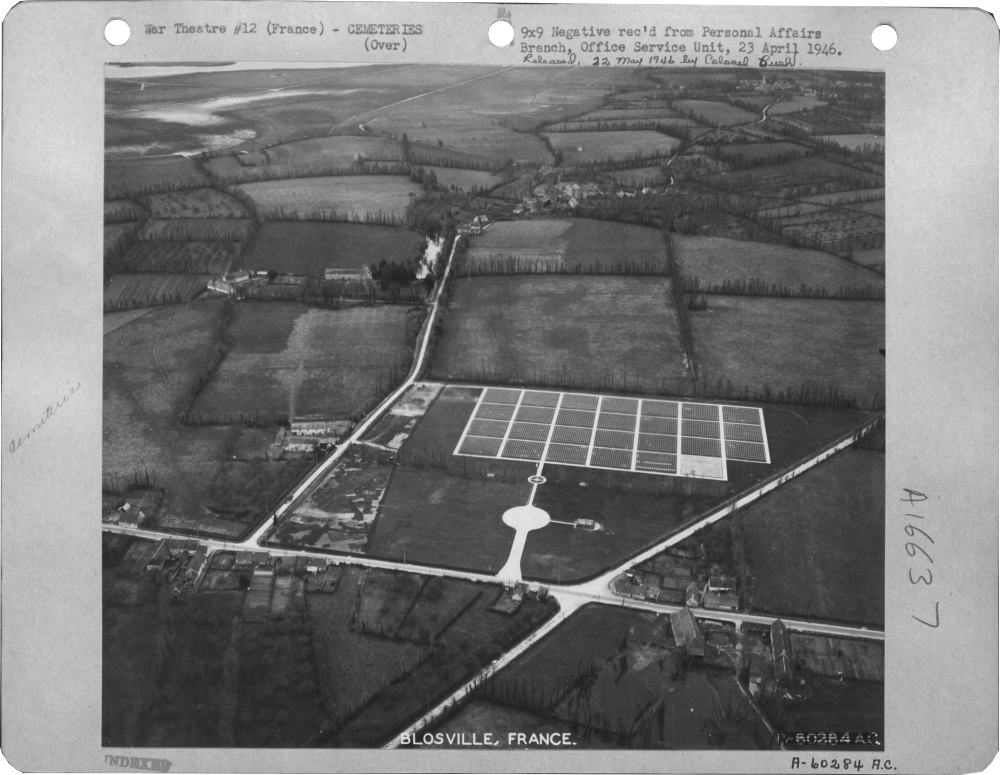
CEMETERY TEMPORARY of Blosville N°3508
| |||||||||||||||||||||||
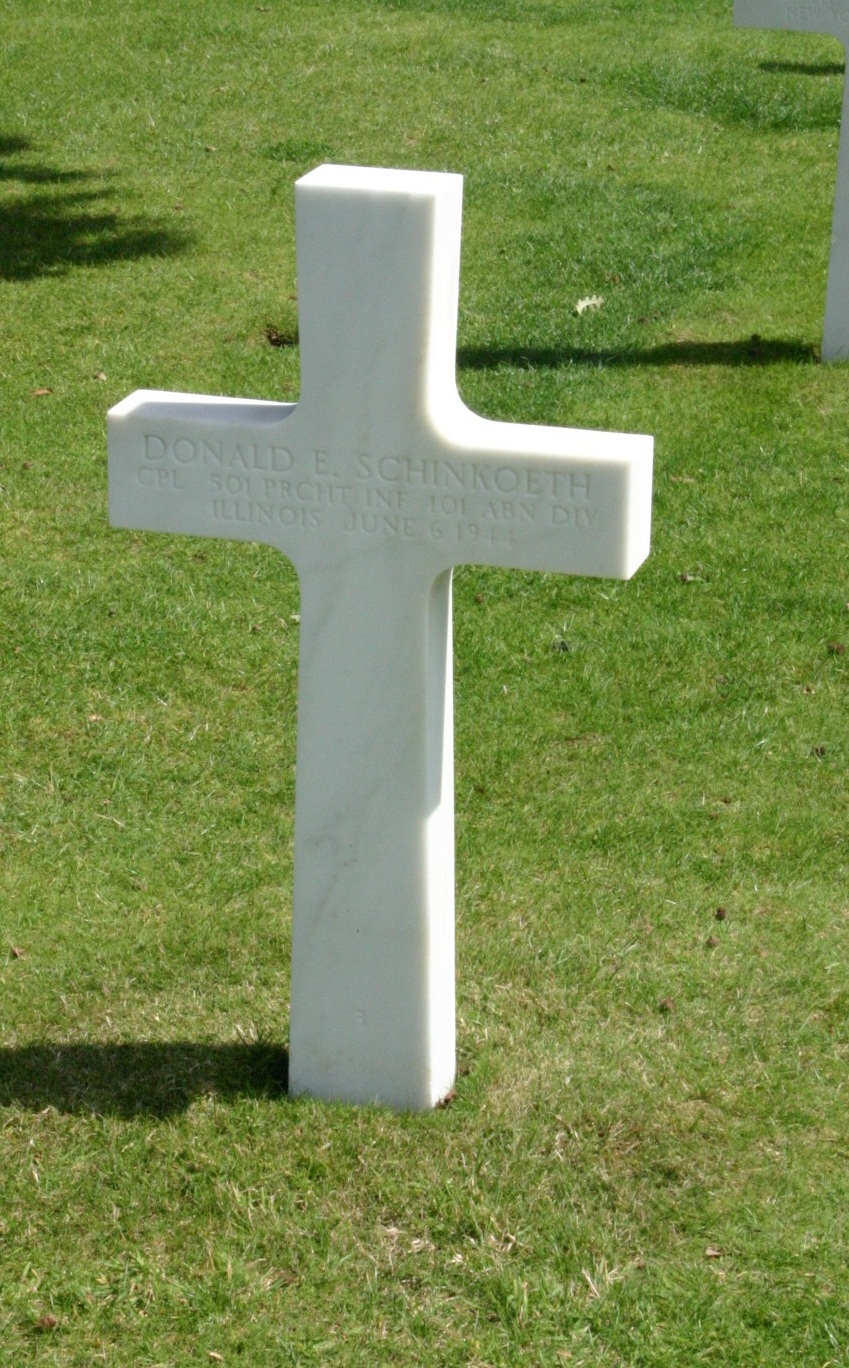
| CEMETERY | NORMANDY AMERICAN CEMETERY of Colleville | |||||||||||||||||||||||
| GRAVE |
| |||||||||||||||||||||||
| DECORATION & BADGE |
| |||||||||||||||||||||||
| ||||||||||||||||||||||||
| STORY | ||||||||||||||||||||||||
|
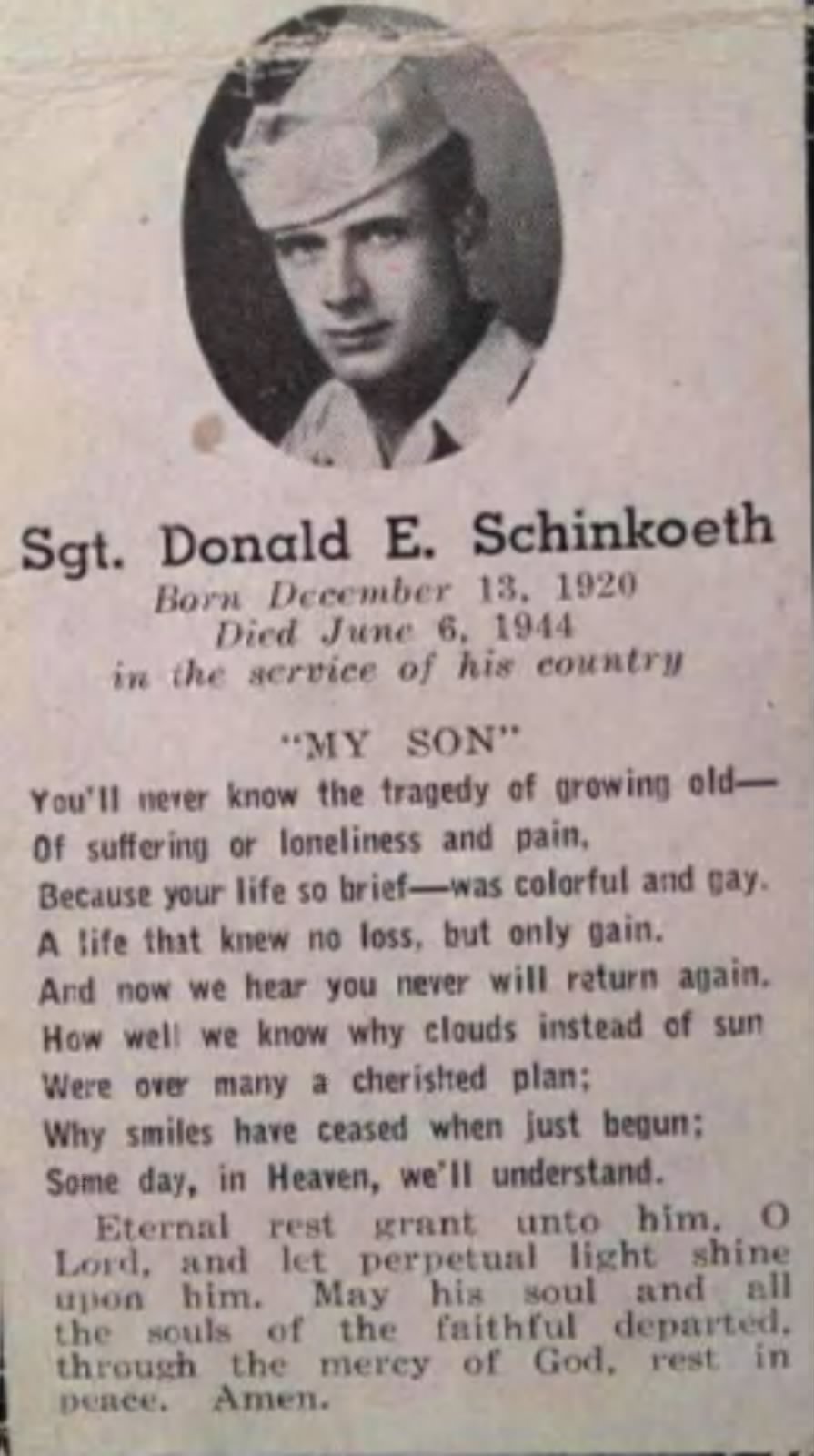
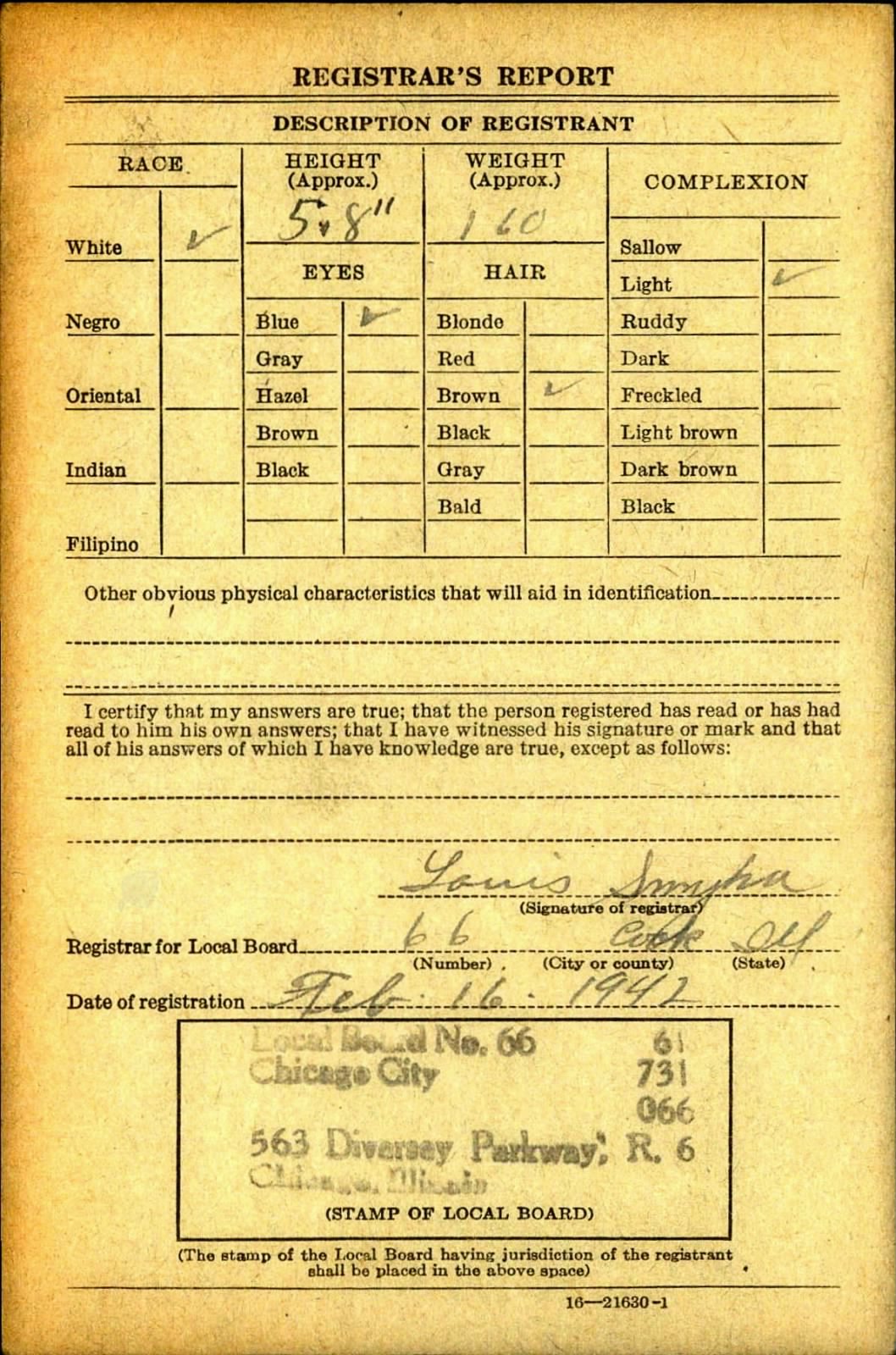
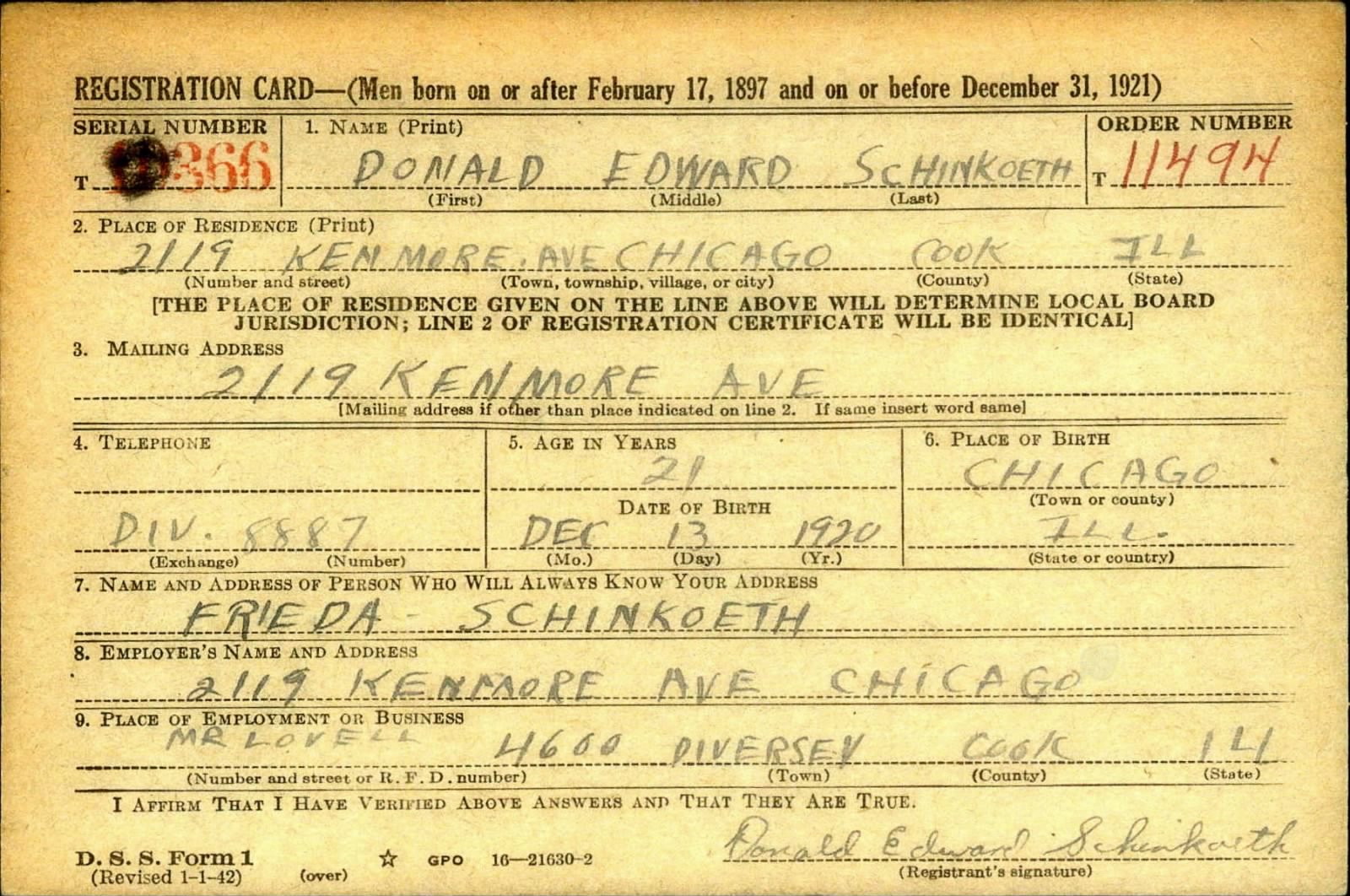
Donald was born on December 13, 1920 to Charles, Jr. and Frieda Kieffer Schinkoeth in Chicago Illinois. They owned a family poultry store. He was the 6th of 10 children and had four brothers and five sisters. His younger brother Leonard J. Shinkoeth also served in the Army WWII. In 1940 he also worked as an inspector for a radio manufacturing company. He enlisted in the Army on February 16, 1942 and was assigned to the 501st Parachute Regiment Company E/F. He was 5'8” tall, weighed 160 pounds and had brown hair and blue eyes. The 501st Parachute Infantry Regiment (501st PIR) was activated in Toccoa, Georgia in November 1942 where the young paratroopers to be were given basic Infantry training. In May 1943 they earned their jump wings at Fort Benning. Shortly after Jump School and throughout the summer the Regiment undertook Company, Battalion and Regimental training at Camp MaCall, North Carolina, and participated in the Tennessee maneuvers. The 501stPIR, commanded by Colonel Howard Johnson (Jumpy Johnson), was attached to the 101st Airborne Division just before the Regiment departed for England in December of 1943. They made their first jump into Normandy in the early morning hours of D-Day, June 6, 1944. The 501st PIR took off on June 5th, 1944 at 10:45 p.m. from Merryfield Airport. | ||||||||||||||||||||||||
|
Source : Fold3 |
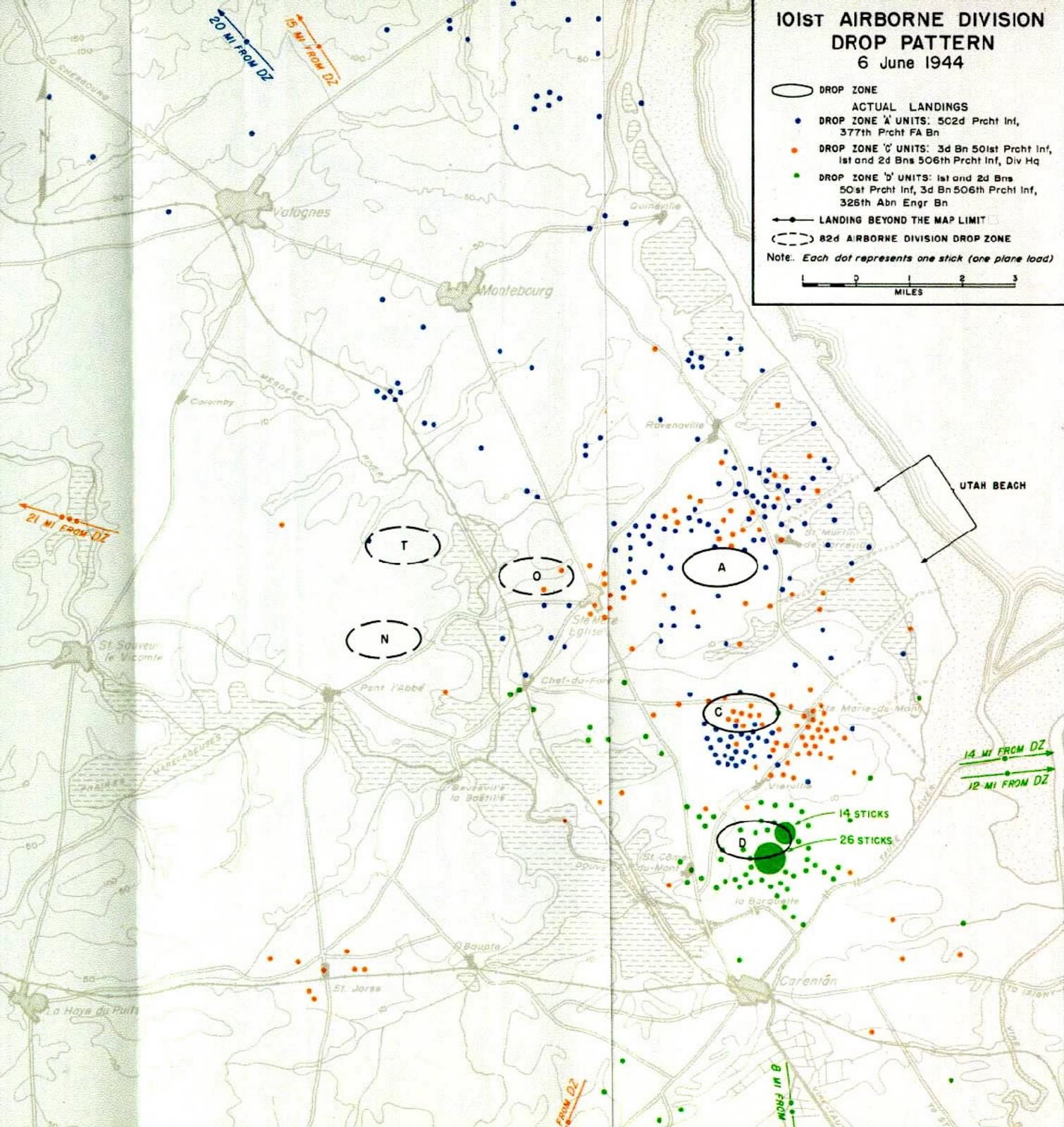
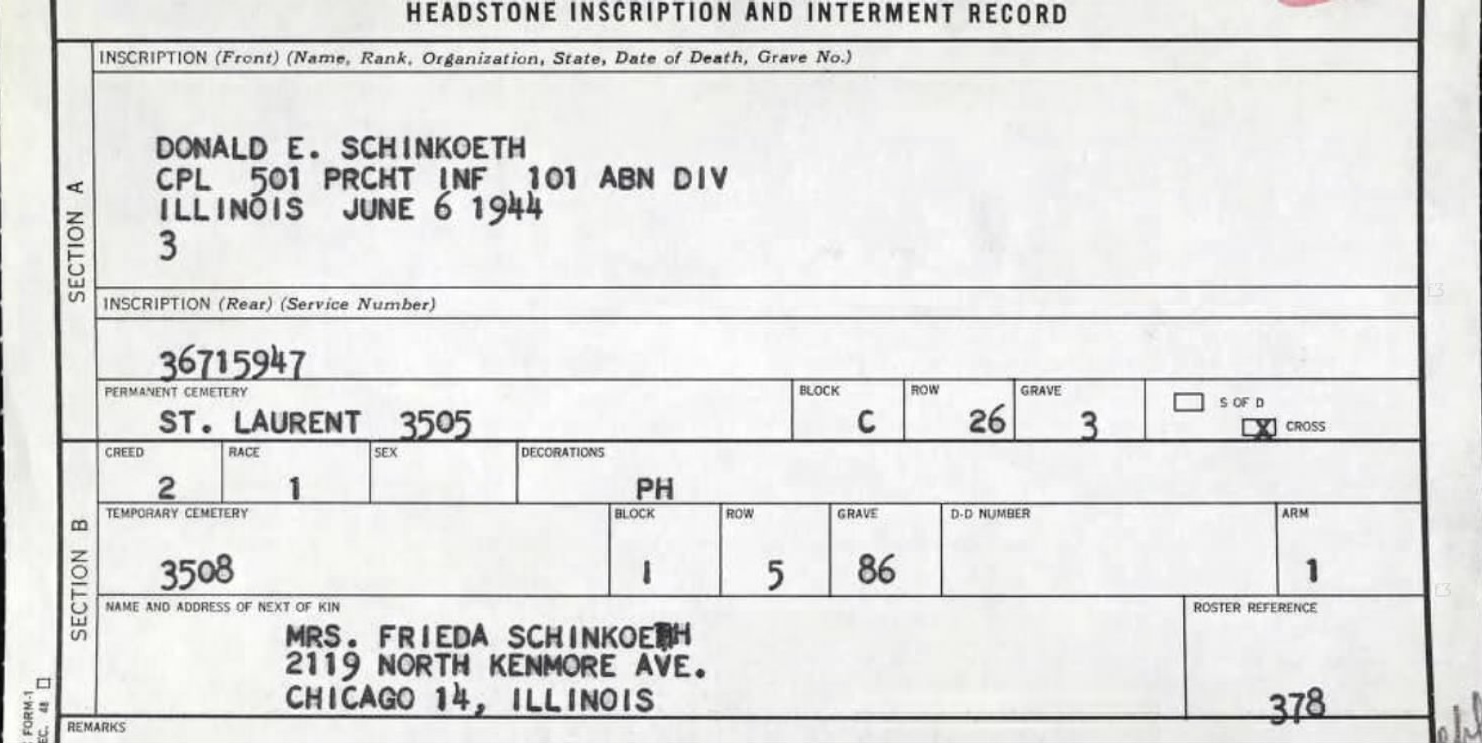
They were to be dropped to the North and the East of Carantan. The task of both battalions was the control of the road junction at La Barquette and the destruction of bridges crossing the Douve River while the 3rd battalion stayed in reserve there. A few hours before the jump, a combination of clouds and AAA resulted in a dispersion of the C-47 formation. Consequently, the men were seriously scattered, landing far from their DZ (Drop Zone) and were mixed with men of other units. Therefore they had to fight to regroup and to make a success of their mission. Surprisingly, this "chaos" also confused a lot the Germans. The success of the mission depended upon the courage and the initiative of each paratrooper, each one having to evaluate his own situation at landing and to decide how to carry out his mission in the best possible way. Cpl Donald Edward Schinkoeth was killed on D-Day in Normandy. He was first buried in the tempoary cemetery 3508, Blosville, Carentan, France Block 1 Row 5 Plot 86 and later moved to the St. Laurent Cemetery 26 miles away, Plot C, Row 26, Grave 3 | |||||||||||||||||||||||
|
The Normandy American Cemetery and Memorial in France is located in Colleville-sur-Mer, on the site of the temporary American St. Laurent Cemetery, established by the U.S. First Army on June 8, 1944 as the first American cemetery on European soil in World War II. The cemetery site, at the north end of its half mile access road, covers 172.5 acres and contains the graves of 9,385 of our military dead, most of whom lost their lives in the D-Day landings and ensuing operations. On the Walls of the Missing, in a semicircular garden on the east side of the memorial, are inscribed 1,557 names. Rosettes mark the names of those since recovered and identified. |
Source : michelinesmith387 (Fold3) | |||||||||||||||||||||||
|
Source : Fold3 |
Source : Fold3 | |||||||||||||||||||||||
|
Source : Fold3 | ||||||||||||||||||||||||





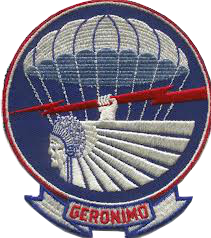
Activated/Activé |
Normandy/Normandie |
| 15 Aug 1942 | Days of Combat/Jour de Combat 214 |
| Casualties/Victimes 9 328 | |
Entered Combat/Entré au combat |
|
| 6 Jun1944 D-Day | |
|
Commanding Generals/Commandants généraux Maj. Gen. William C. Lee (Aug 42 - Mar 44) |
Campaigns/CampagnesNormandy (6 Jun 44 - 24 Jul 44) Rhineland (15 Sep 44 - 21 Mar 45)
|
PLAN DE ROUTE DE LA CAMPAGNE - CAMPAIGN ROUTE MAP |
|
 |
|
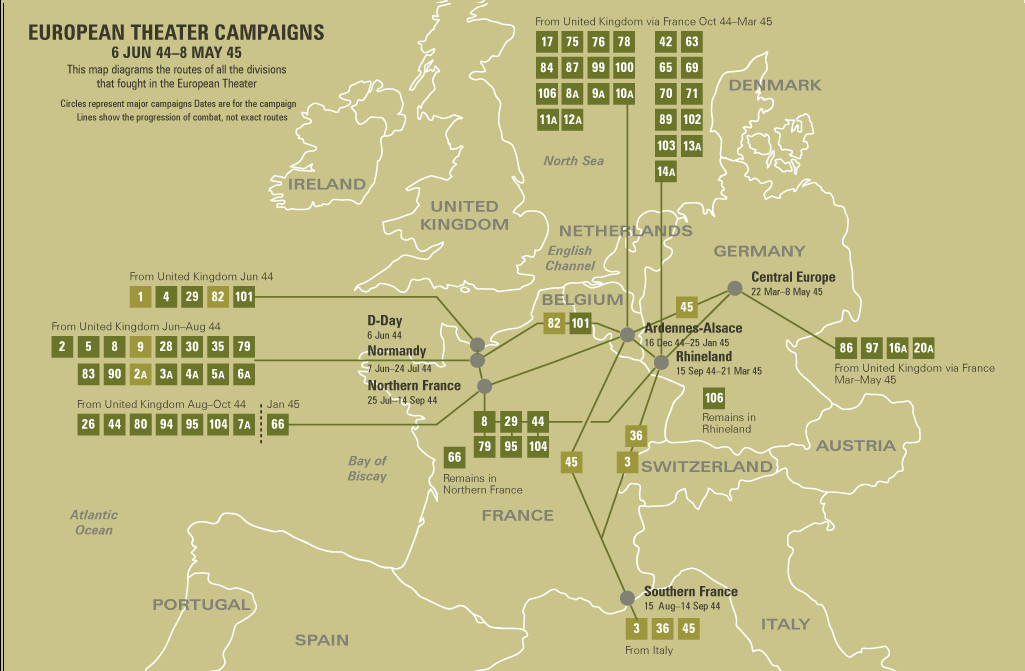
DIVISION CHRONICLEThe 101st Airborne arrived in England, 15 September 1943, and received additional training in Berkshire and Wiltshire. On 6 June 1944, the Division was dropped into Normandy behind Utah Beach. Against fierce resistance it took Pouppeville, Vierville, and St. Come du Mont. On the 12th, the stronghold of Carentan fell, and after mopping up and maintaining its positions, the Division returned to England, 13 July, for rest and training. On 17 September 1944, taking part in one of the largest of airborne invasions, the 101st landed in Holland, took Vechel and held the Zon bridge. St. Oedenrode and Eindhoven fell after sharp fighting on the 17th and 18th. Opheusden changed hands in a shifting struggle, but the enemy was finally forced to withdraw, 9 October. After extensive patrols, the Division returned to France, 28 November, for further training. On 18 December, it moved to Belgium to stop the German breakthrough. Moving into Bastogne under the acting command of Brig. Gen. Anthony C. McAuliffe, it set up a circular defense and although completely surrounded, refused to surrender on 22 December. Its perimeter held against violent attacks. The 4th Armored Division finally reached the 101st on the 26th and the enemy offensive was blunted. Very heavy fighting continued near Bastogne for the rest of December and January. On 17 January 1945, the Division moved to Drulingen and Pfaffenhoffen in Alsace and engaged in defensive harassing patrols along the Moder River. On 31 January, it crossed the Moder in a three-company raid. After assembling at Mourmelon, France, 26 February 1945, for training, it moved to the Ruhr pocket, 31 March, patrolling and raiding in April and engaging in military government at Rheydt and Munchen-Gladbach. The 101st reached Berchtesgaden by the end of the war and performed occupational duties until inactivation in Germany. |
CHRONIQUE DE DIVISIONLe 101st Airborne est arrivé en Angleterre, le 15 septembre 1943, et a reçu une formation supplémentaire dans le Berkshire et le Wiltshire. Le 6 juin 1944, la division est larguée en Normandie derrière Utah Beach. Contre une résistance féroce, il fallut Pouppeville, Vierville et St. Come du Mont. Le 12, le fief de Carentan est tombé, et après avoir nettoyé et maintenu ses positions, la Division est revenue en Angleterre, le 13 juillet, pour se reposer et s'entraîner. Le 17 septembre 1944, participant à l'une des plus grandes invasions aéroportées, la 101st débarque en Hollande, prend Vechel et tient le pont de Zon. St. Oedenrode et Eindhoven sont tombés après des combats acharnés les 17 et 18. Opheusden a changé de mains dans une lutte changeante, mais l'ennemi a finalement été forcé de se retirer, le 9 octobre. Après de longues patrouilles, la Division revint en France le 28 novembre pour suivre une formation complémentaire. Le 18 décembre, il a déménagé en Belgique pour arrêter la percée allemande. Déménagement à Bastogne sous le commandement de Brig. Général Anthony C. McAuliffe, il a mis en place une défense circulaire et bien que complètement encerclé, a refusé de se rendre le 22 décembre. Son périmètre tenu contre les attaques violentes. La 4e division blindée atteignit finalement la 101e le 26 et l'offensive ennemie fut émoussée. De très violents combats ont continué près de Bastogne pour le reste de décembre et janvier. Le 17 janvier 1945, la division s'est déplacée à Drulingen et à Pfaffenhoffen en Alsace et s'est livrée à des patrouilles de harcèlement défensif le long de la rivière Moder. Le 31 janvier, il a traversé le Moder dans un raid de trois compagnies. Après s'être rassemblé à Mourmelon, France, le 26 février 1945, pour s'entraîner, il s'installa dans la poche de la Ruhr, le 31 mars, patrouillant et faisant des raids en avril et s'engageant dans un gouvernement militaire à Rheydt et Munchen-Gladbach. La 101e a atteint Berchtesgaden à la fin de la guerre et a exercé des fonctions professionnelles jusqu'à l'inactivation en Allemagne. |
| SOURCE INFORMATION & PHOTO | Armydivs.squarespace.com |
|---|
| SOURCE INFORMATION & SOURCE PHOTO | Arnaud Gaté - Findagrave.com - Abmc.gov - Airborne-museum.org |
|---|---|
| EDITORS | Victor, Jean-Philippe, Eric, Henri, Garrett, Clive, Frédéric & Renaud |
| Brother of Donald E |
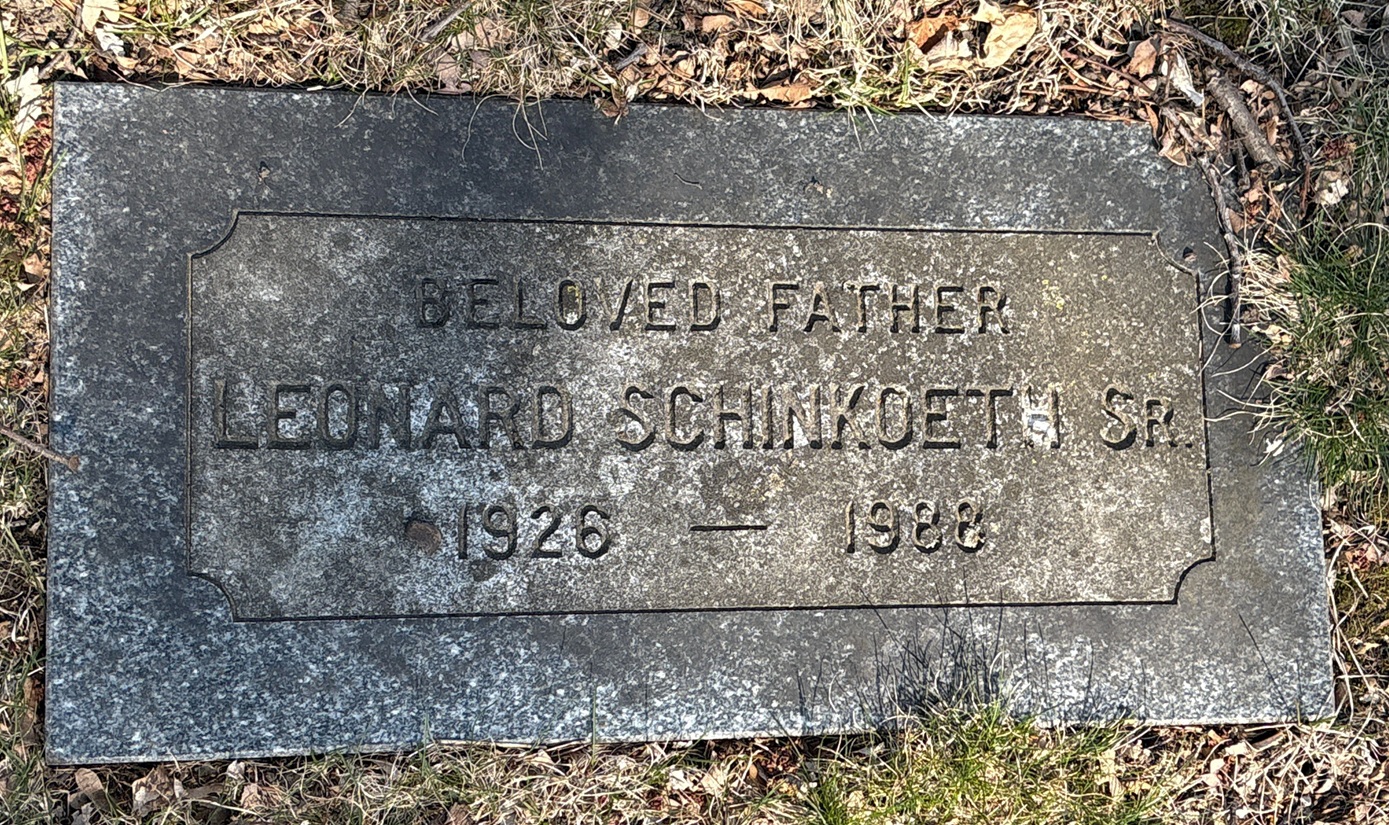
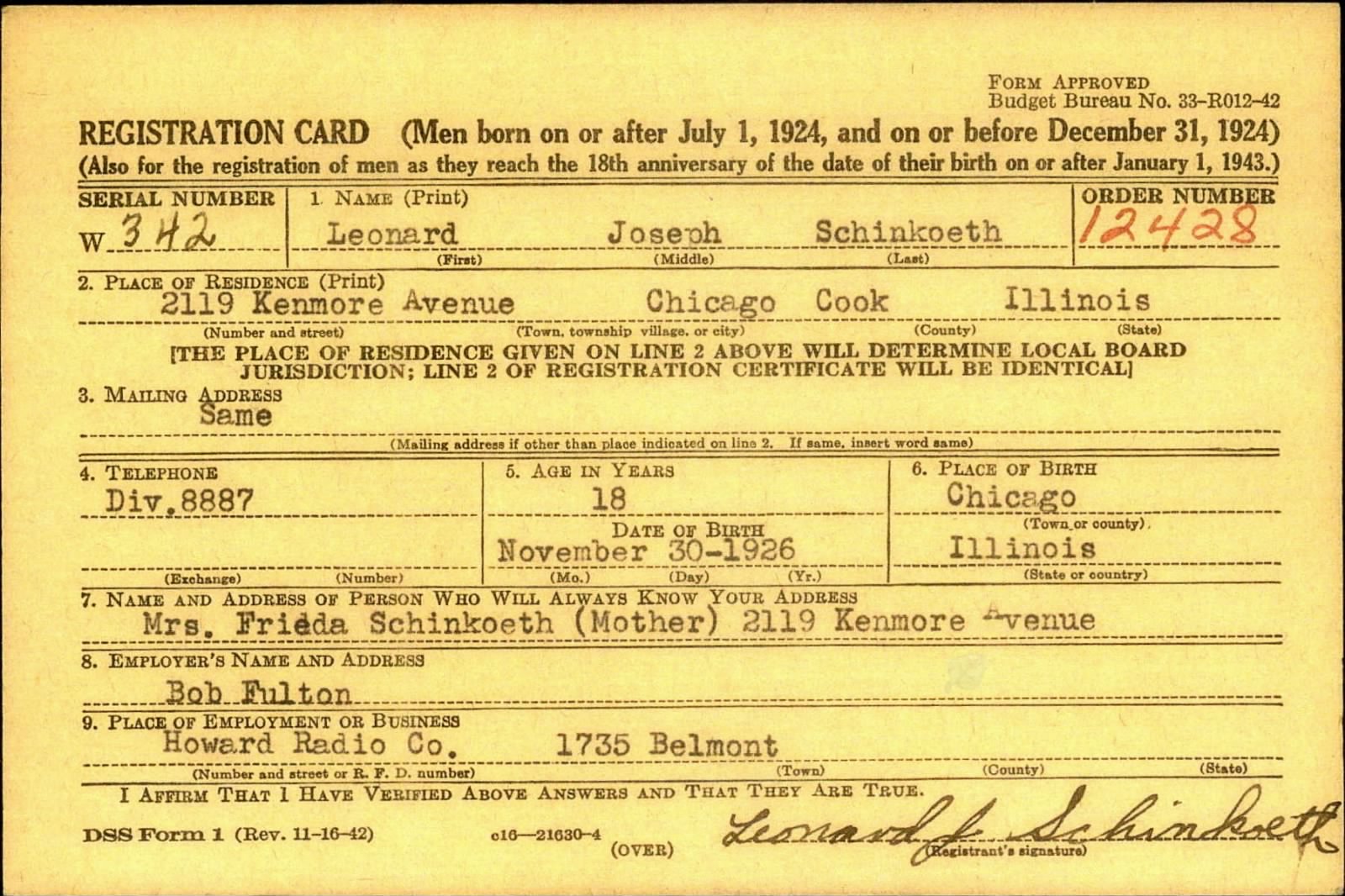
Leonard Joseph SCHINKOETH
| ||
|---|---|---|---|
| NUMBER OF SERVICE |
Rosehill Cemetery Chicago, Cook, ILLINOIS Source : Scott Plummer | ||
| DATE OF BIRTH | 30 novembre 1926 ILLINOIS | ||
| ENLISTMENT STATE | ILLINOIS | ||
| FAMILY |
Father's Name: Charles SCHINKOETH Mother's Name: Freida K KIEFFER | ||
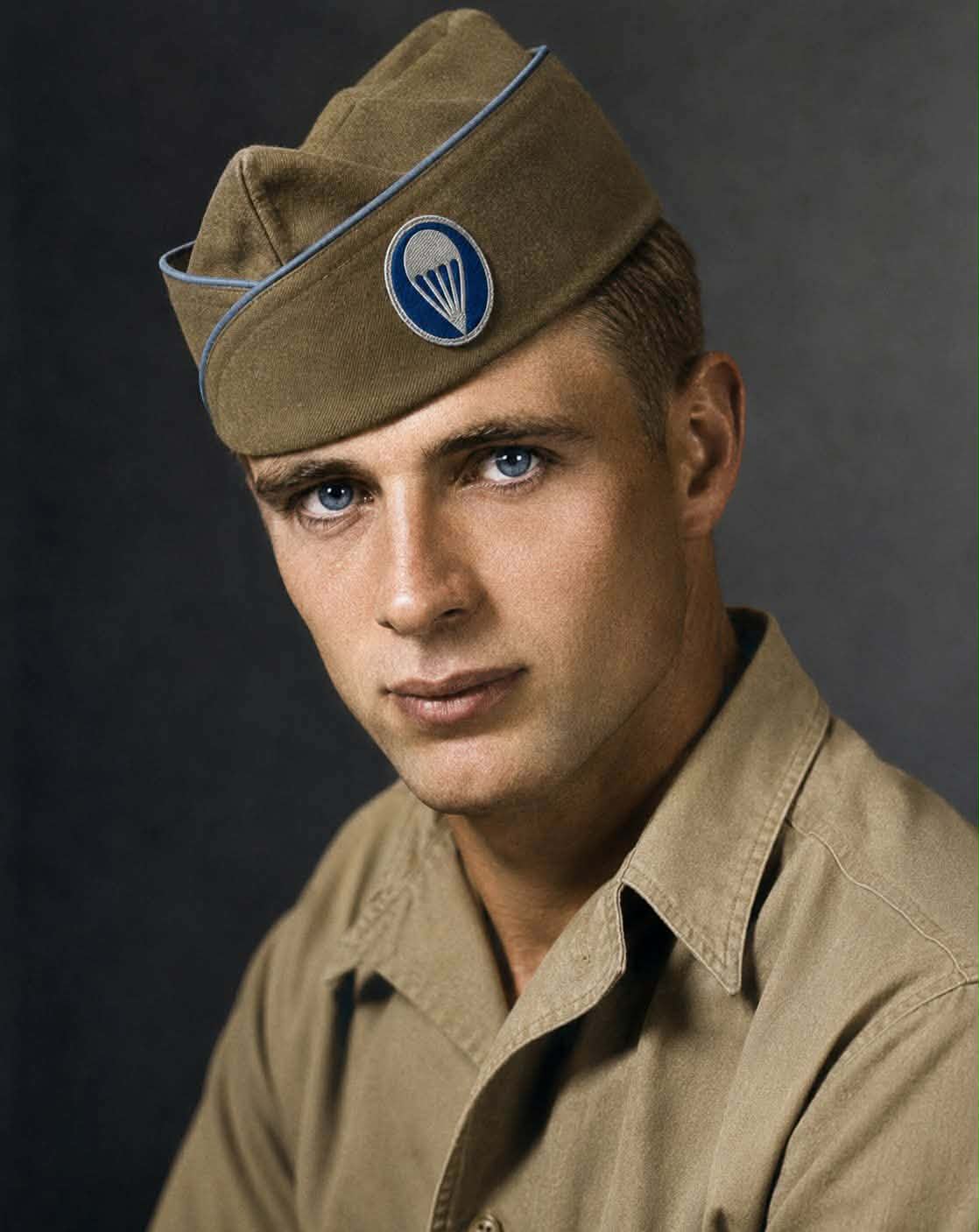
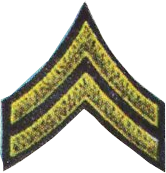
| RANK |
| ||
| JOB BEFORE ENLISTEMENT | Salesman |  | |
| DATE of ENLISTEMENT | |||
| UNIT | WW 2 | ||
|
Source : Fold3 | |||
| SOURCE INFORMATION & SOURCE PHOTO | Findagrave.com - Ancestry | ||