


|
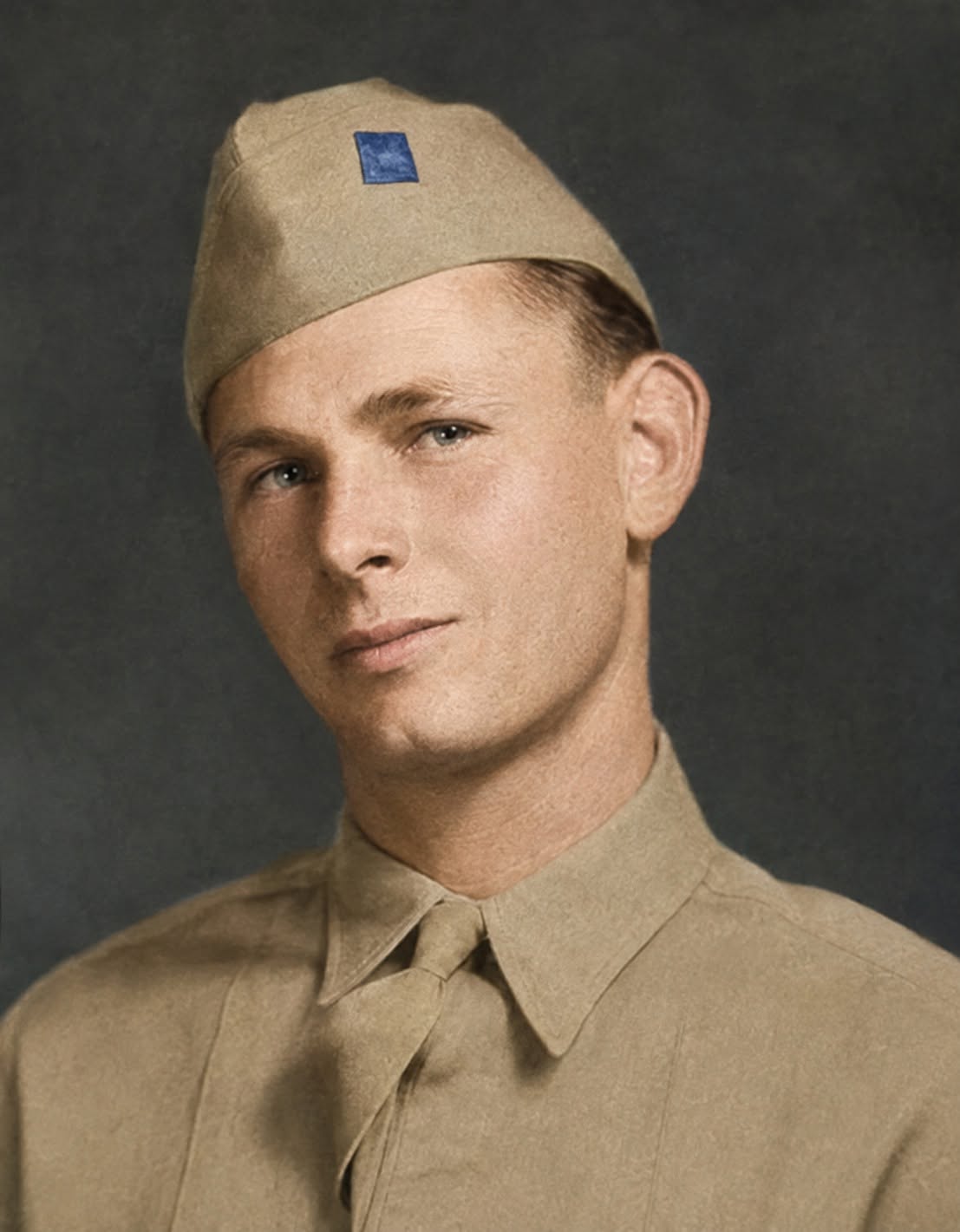
Homer David WYNN
| ||||||||||||||||||||||||
|---|---|---|---|---|---|---|---|---|---|---|---|---|---|---|---|---|---|---|---|---|---|---|---|---|
|
Source : Northman & Ellen Marchese | ||||||||||||||||||||||||
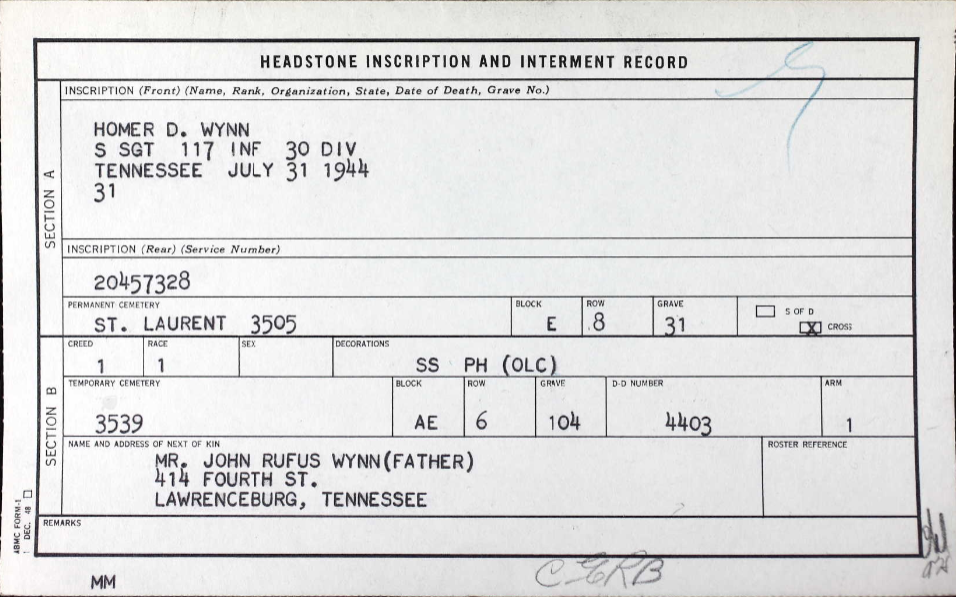
| NUMBER OF SERVICE | 20457328 | |||||||||||||||||||||||
| AGE | 26 | |||||||||||||||||||||||
| DATE OF BIRTH | 18 August 1917 ALABAMA | |||||||||||||||||||||||
| ENLISTMENT STATE | TENNESSEE | |||||||||||||||||||||||
| FAMILY |
Parents : John Rufus & Alice Thompson Lee WYNN Sister : Hattie Izora Lee Half Siblings : Fleming Farley & Luin Bartoe | |||||||||||||||||||||||
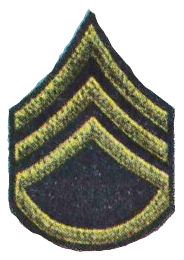
| RANK |
| |||||||||||||||||||||||
| FONCTION | Infantry Man | |||||||||||||||||||||||
| JOB BEFORE ENLISTEMENT |  | |||||||||||||||||||||||
| DATE of ENLISTEMENT | ||||||||||||||||||||||||
| COMPANY | ||||||||||||||||||||||||
| BATTALION | ||||||||||||||||||||||||
| REGIMENT | 117th Infantry Regiment | |||||||||||||||||||||||
| DIVISION | 30th Infantry Division | |||||||||||||||||||||||
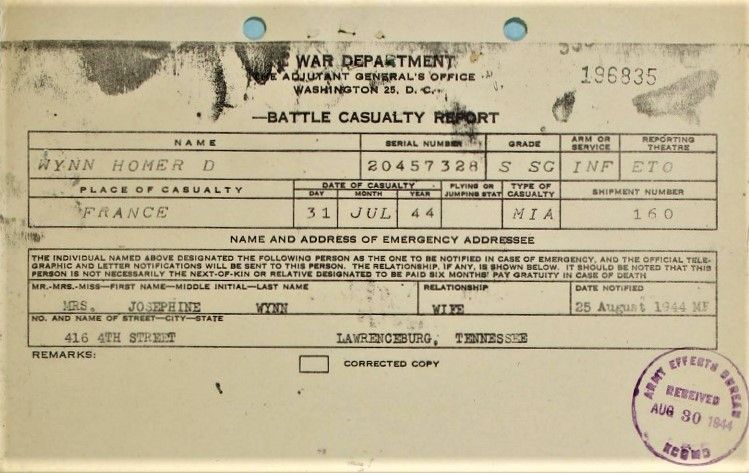
| DATE OF DEATH | 31 July 1944 |
Source : Northman | ||||||||||||||||||||||
| STATUS | KIA | |||||||||||||||||||||||
| PLACE OF DEATH | Le Mesnil-Opac | |||||||||||||||||||||||
| CEMETERY TEMPORARY |
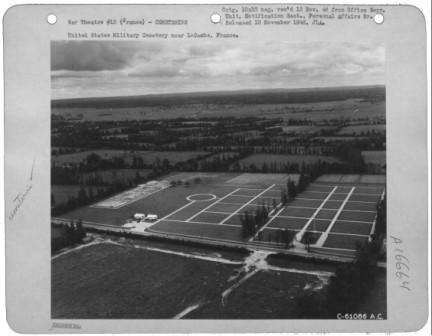
CEMETERY TEMPORARY of La Cambe N°3539
| |||||||||||||||||||||||
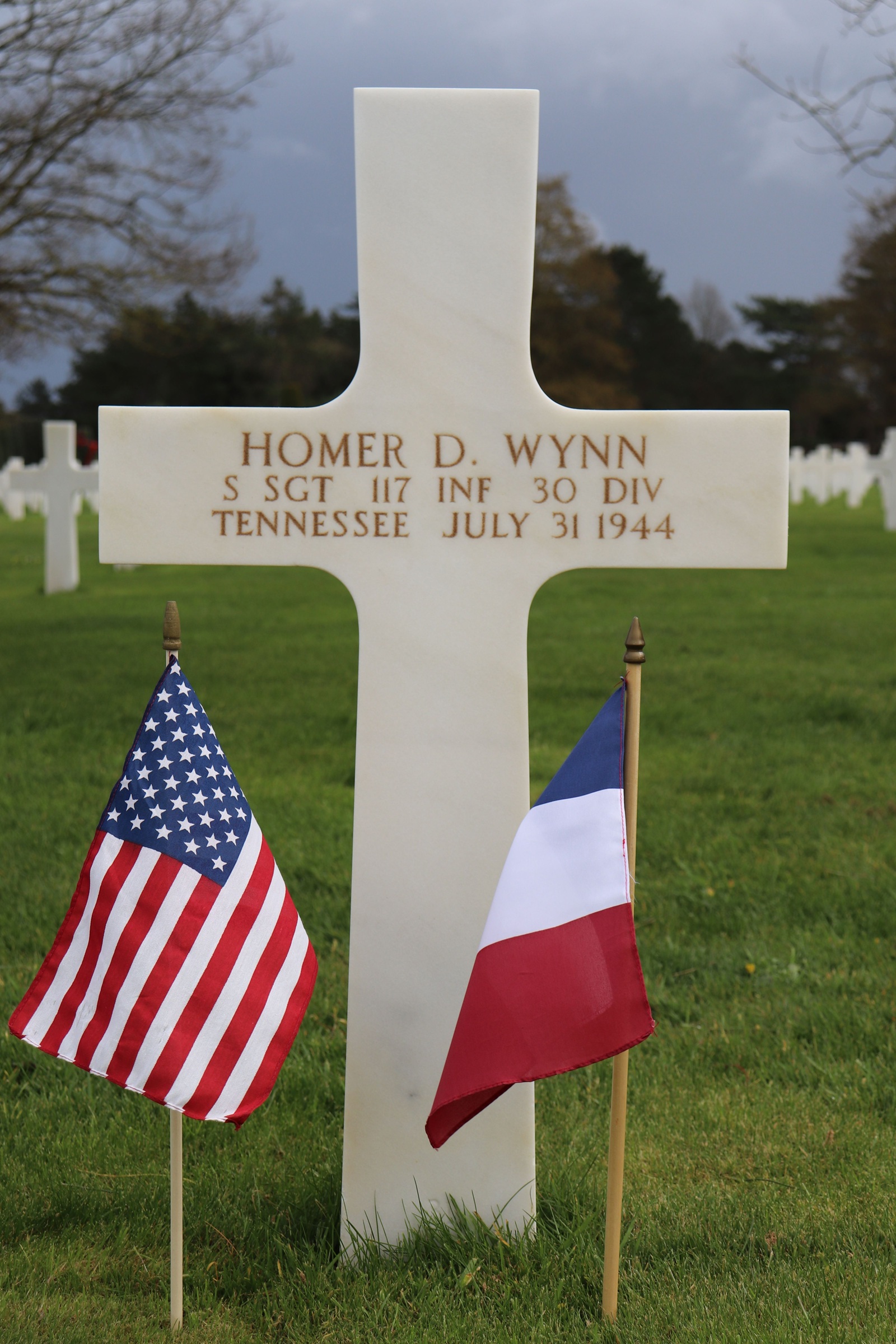
| CEMETERY | NORMANDY AMERICAN CEMETERY of Colleville | |||||||||||||||||||||||
| GRAVE |
| |||||||||||||||||||||||
| DECORATION & BADGE |
| |||||||||||||||||||||||
|
| ||||||||||||||||||||||||
| STORY | ||||||||||||||||||||||||
|
1930 United States Federal Census Source : Ancestry | ||||||||||||||||||||||||
|
This Soldier was killed in action in the Breakout of the Normandy Beachhead in France. May his legacy endure and his sacrifice inspire others.
Remembering and Honoring this Soldier of World War II and his supreme sacrifice for his country
STAFF SERGEANT
•. HOMER DAVID WYNN of Leoma, Lawrence County, Tennessee.
He was born in 1917 in Alabama and fell in battle on 31 July 1944 near Saint Lô, Normandy, France.
He is the son of John & Alice Thompson Wynn.
When answering his country’s call Homer Wynn was working on the family farm in Lawrence County, Tennessee. He entered the service on 15 September 1940 at Lawrenceburg, Tennessee.
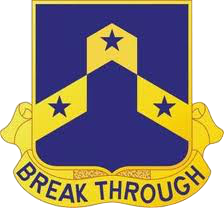
 Staff Sergeant Wynn is a member of the 117th Infantry Regiment, 30th Infantry Division. Staff Sergeant Wynn is a member of the 117th Infantry Regiment, 30th Infantry Division. The 30th was nicknamed the "Old Hickory" division, in honor of President Andrew Jackson. The Germans nicknamed this division "Roosevelt's SS". The 30th was nicknamed the "Old Hickory" division, in honor of President Andrew Jackson. The Germans nicknamed this division "Roosevelt's SS".After training in the United States for just over two years, the 30th Infantry Division, under the command of Major General Leland Hobbs, arrived in England, 22 February 1944, and trained for the Allied invasion of Normandy until June.
It landed at Omaha Beach, Normandy, on 11 June 1944, five days after the initial D-Day landings of 6 June 1944, secured the Vire-et-Taute Canal, crossed the Vire River on 7 July.
Beginning on 25 July, the 30th Division spearheaded the Saint-Lô break-through of Operation Cobra, which was intended to break out of the Normandy beachhead, thus ending the stalemate that had occurred.
| ||||||||||||||||||||||||
|
Source : Northman | ||||||||||||||||||||||||
|
Source : Northman | ||||||||||||||||||||||||
|
Source : Ancestry | ||||||||||||||||||||||||
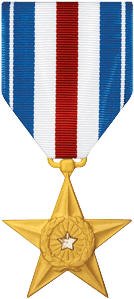 |
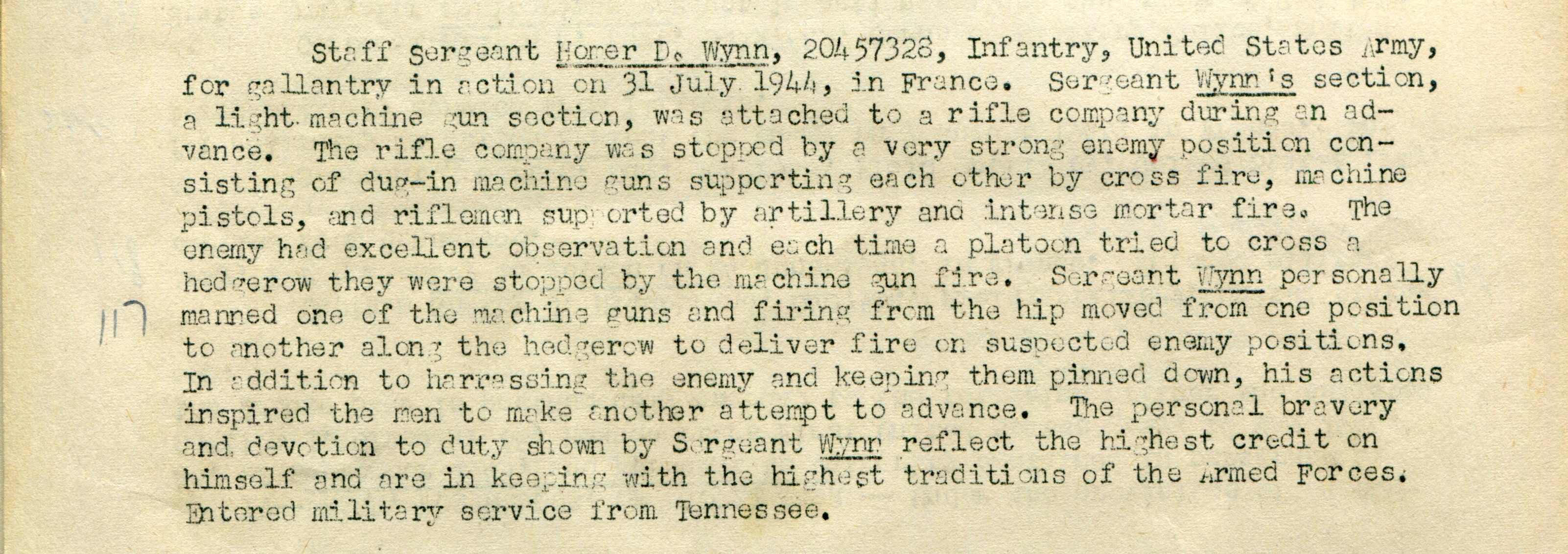
SILVER STAR MEDAL CITATIONStaff Sergeant Homer D Wynn,
20457328,
Infantry, United States Army, for gallantry in action 31 July 1944, in France.
Sergeant Wynn’s light machine section, was attached to a rifle company during an advance.
The rifle company was stopped by very strong enemy position consisting of dug-in machine guns supporting ench other by cross fire, machine pistols, and riflemen supported by artillery and intense mortar fire.
The enemy had excellent observation and each time a platoon tried to cross a
hedgerow they were stopped by the mechine gun Fire.
Sergeant Wynn personally manned one of the machine guns and firing from the hip moved from one position to another along the hedgerow to deliver fire on suspected enemy positions. In addition to harassing the enemy and keeping them pinned down, his actions inspired the men to make another attempt to advance.
The personal bravery and devotion to duty shown by Sergeant Wynn reflect the highest credit on himself and are in keeping with the highest traditions of the Armed Forces.
| |||||||||||||||||||||||
|
This honored Soldier is at rest today in the hallowed grounds of the Normandy American Cemetery Plot E Row 8 Grave 31, Colleville-sur-Mer, France.
“A man is not dead until he is forgotten” | ||||||||||||||||||||||||








Activated/Activé |
Normandy/Normandie |
| 16 Sep 1940 | Days of Combat/Jour de Combat 282 |
| Casualties/Victimes 18 446 | |
Entered Combat/Entré au combat |
|
| 11 Jun 44 Normandy | |
|
Commanding Generals/Commandants généraux Maj. Gen. Henry D. Russell (Sep 40 - Apr 42) |
Campaigns/CampagnesNormandy (6 Jun 44 - 24 Jul 44) |
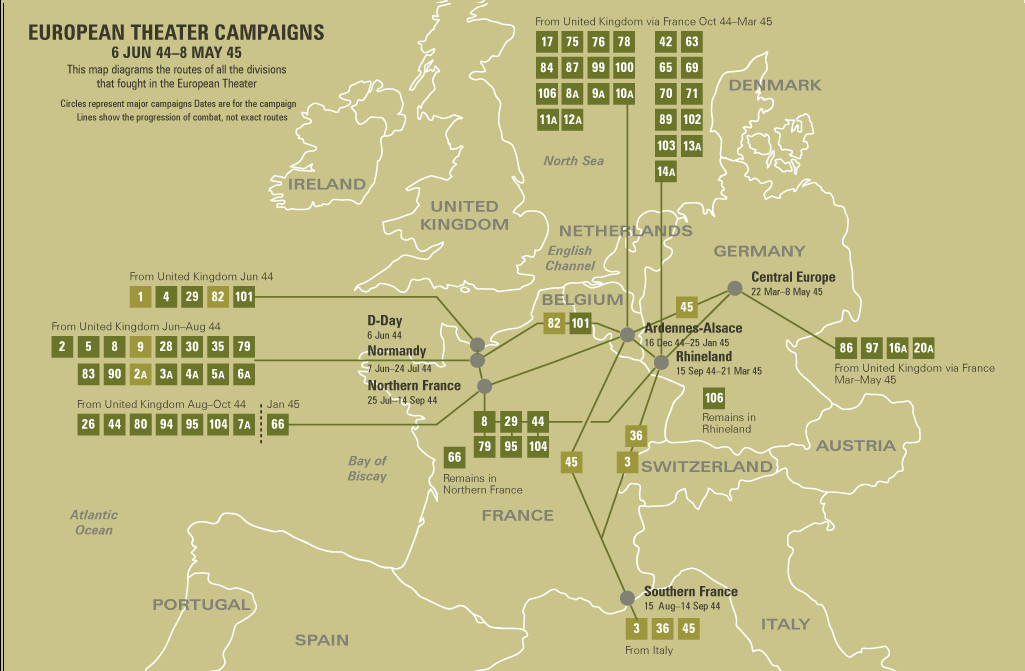
PLAN DE ROUTE DE LA CAMPAGNE - CAMPAIGN ROUTE MAP |
|
 |
|
DIVISION CHRONICLEThe 30th Infantry Division arrived in England, 22 February 1944, and trained until June. It landed at Omaha Beach, Normandy, 15 June 1944, secured the Vire-et-Taute Canal, crossed the Vire River, 7 July, and, beginning on 25 July spearheaded the St. Lo break-through. The day after the Division relieved the 1st Infantry Division near Mortain on 6 August, the German drive to Avranches began. Fighting in place with all available personnel, the 30th frustrated enemy plans and broke the enemy spearhead in a week of violent struggle, 7 to 12 August. The Division drove east through Belgium, crossing the Meuse River at Vise and Liege, 10 September. Elements entered Holland on the 12th, and Maastricht fell the next day. Taking up positions along the Wurm River, the 30th launched its attack on the Siegfried Line, 2 October 1944, and succeeded in contacting the 1st Division, 16 October, and encircling Aachen. After a rest period, the Division eliminated an enemy salient northeast of Aachen, 16 November, pushed to the Inde River at Altdorf, 28 November, then moved to rest areas. On 17 December the Division rushed south to the Malmedy-Stavelot area to help block the powerful enemy drive in the Battle of the Ardennes. It launched a counteroffensive on 13 January 1945 and reached a point 2 miles south of St. Vith, 26 January, before leaving the Battle of the Bulge and moving to an assembly area near Lierneux, 27 January, and to another near Aachen to prepare for the Roer offensive. The Roer River was crossed, 23 February 1945, near Julich. The 30th moved back for training and rehabilitation, 6 March, and on 24 March made its assault crossing of the Rhine. It pursued the enemy across Germany, mopping up enemy pockets of resistance, took Hamelin, 7 April, Braunschweig on the 12th, and helped reduce Magdeburg on the 17th. The Russians were contacted at Grunewald on the Elbe River. After a short occupation period, the 30th began moving for home, arriving 19 August 1945. |
CHRONIQUE DE DIVISIONLa 30th Infantry Division arrive en Angleterre le 22 février 1944 et s'entraîne jusqu'en juin. Il débarqua à Omaha Beach, en Normandie, le 15 juin 1944, sécurisa le canal de Vire-et-Taute, traversa la Vire, le 7 juillet, et, à partir du 25 juillet, fut le fer de lance de la percée de Saint-Lo. Le lendemain de la relève de la 1re division d'infanterie près de Mortain, le 6 août, la division allemande a commencé à Avranches. Combattant avec tout le personnel disponible, le 30ème ennemi frustré projette et brise le fer de lance ennemi dans une semaine de lutte violente, du 7 au 12 août. La Division a traversé la Belgique en traversant la Meuse à Vise et Liège, le 10 septembre. Les éléments sont entrés en Hollande le 12 et Maastricht est tombé le lendemain. Prenant position le long de la rivière Wurm, le 30 a lancé son attaque sur la ligne Siegfried, le 2 octobre 1944, et a réussi à contacter la 1re Division, le 16 octobre, et à encercler Aix-la-Chapelle. Après une période de repos, la Division a éliminé un saillant ennemi au nord-est d'Aix-la-Chapelle, le 16 novembre, a été poussée sur l'Inde à Altdorf, le 28 novembre, puis s'est déplacée vers des aires de repos. Le 17 décembre, la Division s'est précipitée vers le sud, dans la région de Malmedy-Stavelot, pour bloquer la puissante campagne ennemie de la bataille des Ardennes. Il lança une contre-offensive le 13 janvier 1945 et atteignit un point situé à 2 milles au sud de Saint-Vith, le 26 janvier, avant de quitter la bataille des Ardennes et de se rendre dans une zone de rassemblement près de Lierneux le 27 janvier. l'offensive Roer. La rivière Roer fut traversée, le 23 février 1945, près de Julich. Le 30 mars est revenu à l'entraînement et à la réhabilitation, le 6 mars, et le 24 mars, il a effectué son assaut en traversant le Rhin. Il a poursuivi l'ennemi à travers l'Allemagne, nettoyé les poches de résistance ennemies, pris Hamelin, le 7 avril, Braunschweig le 12, et aidé à réduire Magdeburg le 17. Les Russes ont été contactés à Grunewald sur l'Elbe. Après une courte période d'occupation, le 30 a commencé à déménager pour la maison, arrivant le 19 août 1945. |
| SOURCE INFORMATION & PHOTO | Armydivs.squarespace.com |
|---|
| SOURCE INFORMATION & SOURCE PHOTO | William Kuner - Findagrave.com - Abmc.gov - Ancestry - N Alabama • Middle Tennessee, NW Georgia and NE Mississippi War Memorials |
|---|---|
| EDITORS | Victor, Jean-Philippe, Eric, Henri, Garrett, Clive, Frédéric & Renaud |