

|
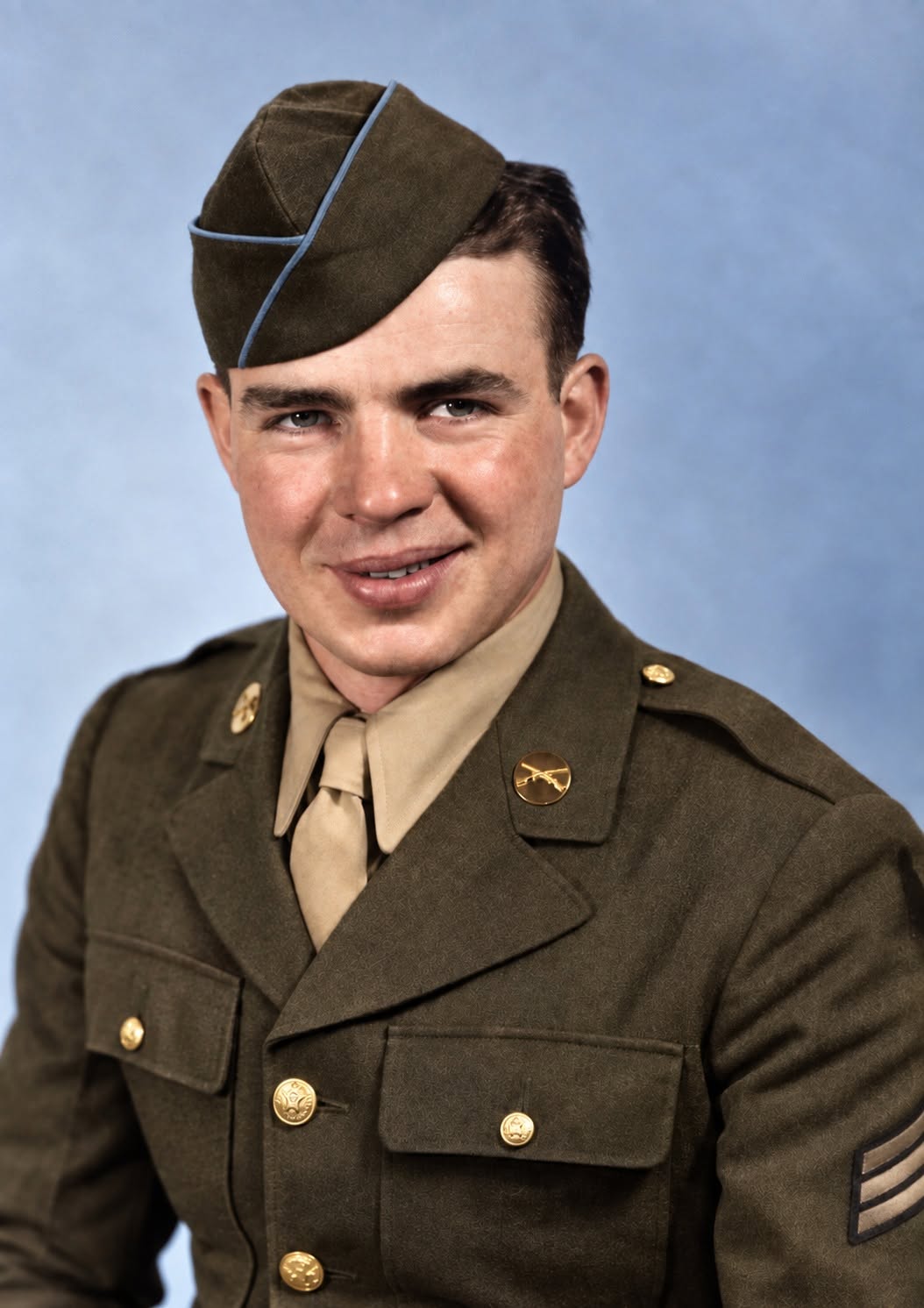
John Bradford CUMMINGS
| ||||||||||||||||||||||||
|---|---|---|---|---|---|---|---|---|---|---|---|---|---|---|---|---|---|---|---|---|---|---|---|---|
|
Source : usafdo & Ellen Marchese | ||||||||||||||||||||||||
| NUMBER OF SERVICE | 36275466 | |||||||||||||||||||||||
| AGE | 22 | |||||||||||||||||||||||
| DATE OF BIRTH | 14 May 1922 Fond du Lac, Fond du Lac, WISCONSIN | |||||||||||||||||||||||
| ENLISTMENT STATE | WISCONSIN | |||||||||||||||||||||||
| FAMILY |
Parents : Leo Bradford & Helen Alice Crosby CUMMINGS Sœur : Mary Ellen | |||||||||||||||||||||||
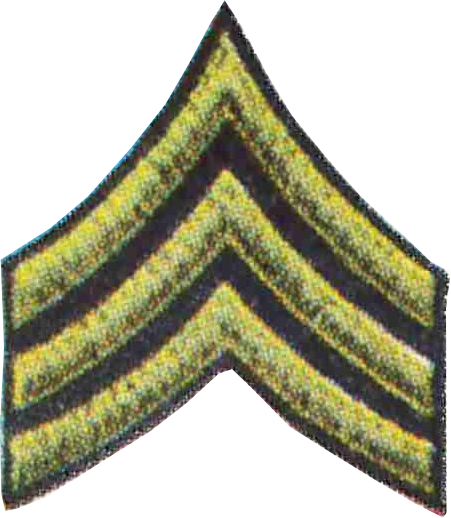
| RANK |
| |||||||||||||||||||||||
| FONCTION | Infantry Man | |||||||||||||||||||||||
| JOB BEFORE ENLISTEMENT |  | |||||||||||||||||||||||
| DATE of ENLISTEMENT | ||||||||||||||||||||||||
| COMPANY | Company A | |||||||||||||||||||||||
| REGIMENT | 1st Battalion | |||||||||||||||||||||||
| DIVISION | 276th Infantry Regiment | |||||||||||||||||||||||
| ARMY | 70th Infantry Division | |||||||||||||||||||||||
| DATE OF DEATH | 31 Decembre 1944 |
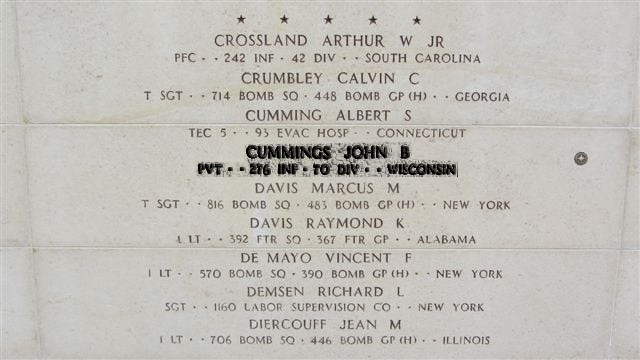
Rosette placed next to name indicates individual has been accounted for Source : Crosby Schrap
Unknown grave, where Jack rested for nearly 70 years Source : Crosby Schrap | ||||||||||||||||||||||
| STATUS | KIA | |||||||||||||||||||||||
| PLACE OF DEATH | Neuhaeusel, Département du Bas-Rhin | |||||||||||||||||||||||
| CEMETERY | EPINAL AMERICAN CEMETERY of Epinal (Dinoze-Quèquement) France | |||||||||||||||||||||||
| GRAVE |
| |||||||||||||||||||||||
| DECORATION & BADGE |
| |||||||||||||||||||||||
| ||||||||||||||||||||||||
| STORY | ||||||||||||||||||||||||
|
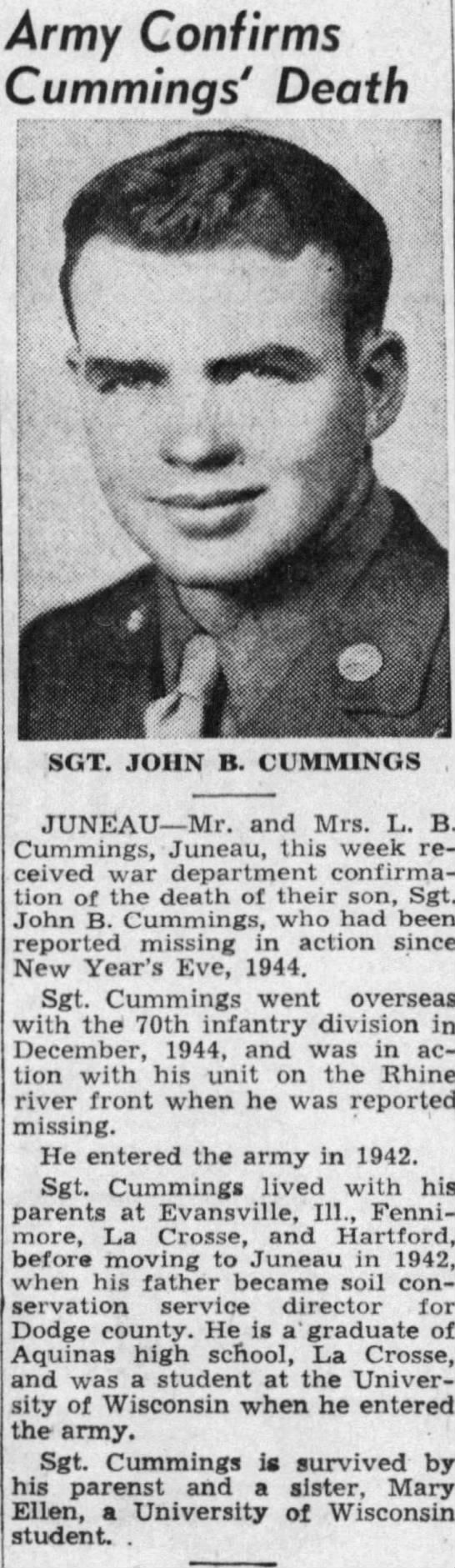
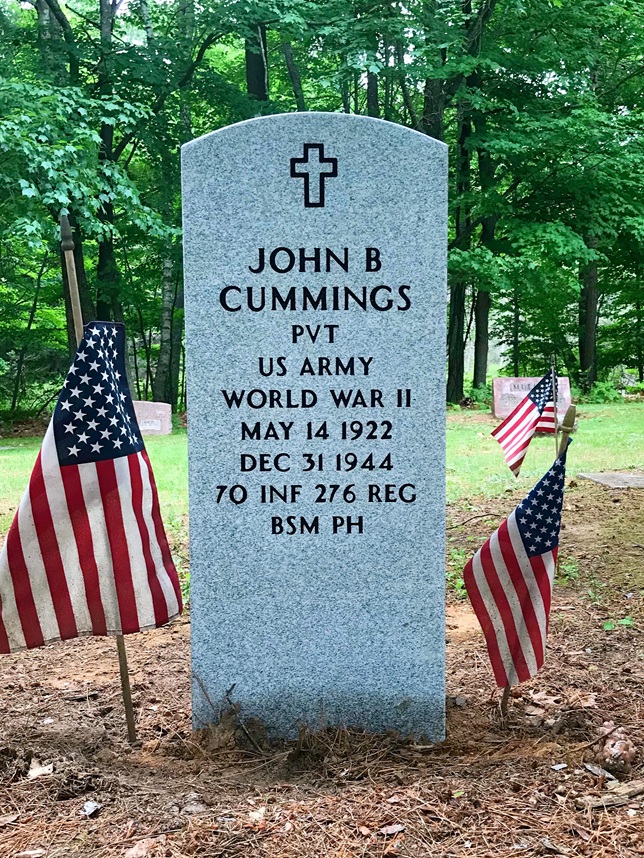
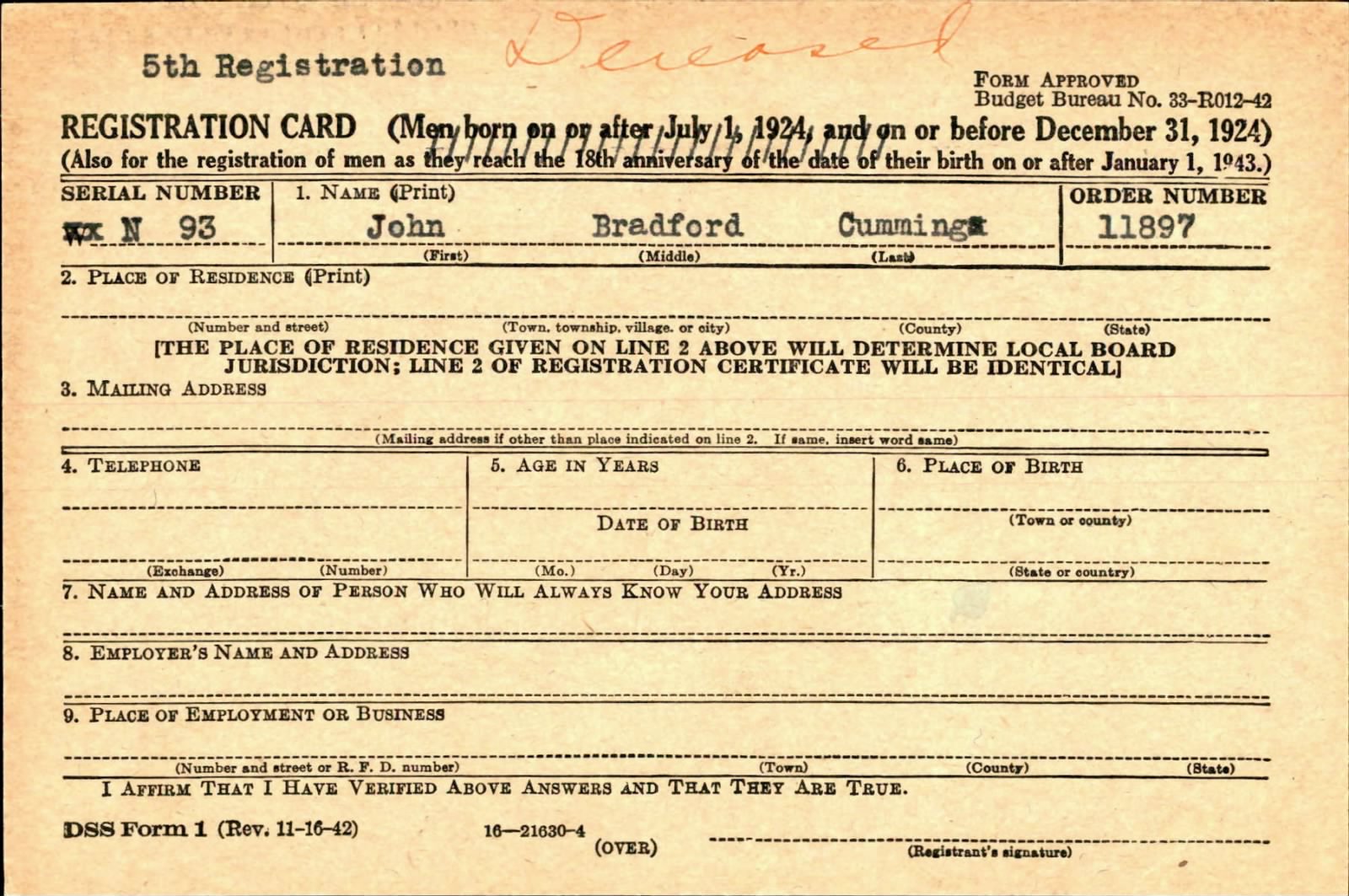
Source : Andy | On the final night of 1944, German soldiers crossed the Rhine into Alsace and reached an American defensive line. John Cummings was alone in his foxhole when the attack reached him. After the shooting stopped, his body was gone. John Bradford Cummings was born on May 14, 1922, in Fond du Lac, Wisconsin, to Leo Bradford Cummings and Helen Alice Crosby. Records place him in Wisconsin throughout his youth and show that he registered for military service in 1942. He eventually entered the U.S. Army and was assigned to Company A, 276th Infantry Regiment, 70th Infantry Division. The 70th Infantry Division was entering combat in northeastern France during the winter of 1944–45. Cummings's regiment was positioned in the Alsace region near the Rhine, opposite German territory, during a period when enemy forces were still capable of aggressive raids and counterattacks despite Allied advances elsewhere in Europe. On the night of December 31, 1944, German troops crossed the Rhine and penetrated the sector where Cummings's unit was defending the line. According to DPAA's reconstructed case history, the 22-year-old soldier was manning a foxhole alone when enemy gunfire struck him. German troops subsequently removed his body from the position and carried it back across the river. For the Americans, Cummings had effectively vanished. There was no body in his fighting position to recover, and postwar records initially could not establish exactly where his remains had been taken. His case therefore became one of the unresolved losses left behind when the European war ended. The first major break came after the war. American Graves Registration personnel questioned the mayor of Iffezheim, Germany, across the Rhine from the area of Cummings's loss. The mayor directed them to an isolated burial near the riverbank where an American serviceman had been interred. The remains were recovered on May 10, 1946, but investigators could not establish an identity. Without a name, the soldier was designated an unknown and eventually buried at the American cemetery at St. Avold, France. Records later associated the remains with the unknown designation X-6454. Meanwhile, Cummings remained officially missing, his name appearing on the Walls of the Missing at Epinal American Cemetery. | |||||||||||||||||||||||
|
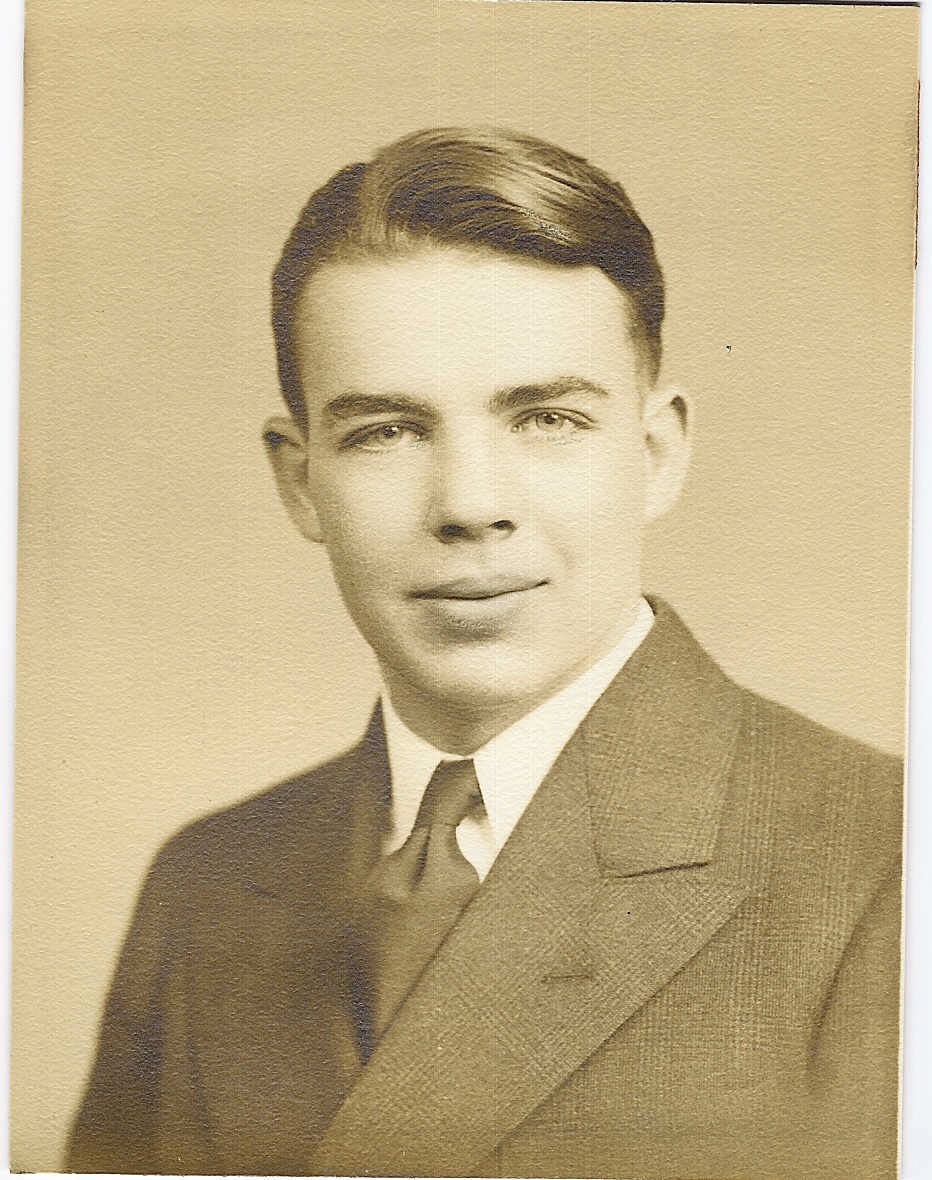
High school graduation portrait. La Crosse Aquinas (WI) High School, 1940. Source : Crosby Schrap |
Decades passed before historical researchers revisited the connection between the unidentified remains and the December 1944 Rhine fighting. The remains were eventually disinterred for renewed examination, allowing modern forensic methods and the accumulated historical evidence to be applied to a case that investigators in the 1940s had been unable to solve.
| |||||||||||||||||||||||
|
High school graduation portrait. La Crosse Aquinas (WI) High School, 1940. Source : Crosby Schrap | ||||||||||||||||||||||||
|
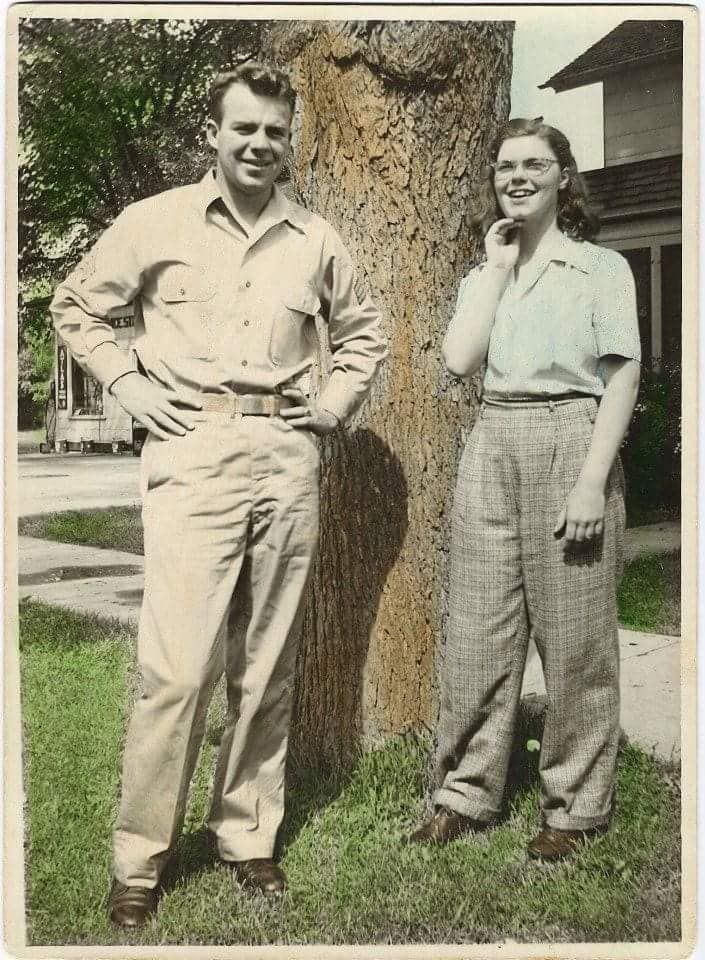
November 2, 1944: The last evening of furlough before Jack left to rejoin his unit for upcoming overseas deployment. He would be killed 59 days later. Source : Crosby Schrap | ||||||||||||||||||||||||
|
Lakeside Cemetery Hazelhurst, Oneida, WISCONSIN Source : Crosby Schrap | ||||||||||||||||||||||||
|
Source : Fold3 | ||||||||||||||||||||||||
| | ||||||||||||||||||||||||






Activated/Activé |
Normandy/Normandie |
| 15 Jun 1943 | Days of Combat/Jour de Combat 83 |
| Casualties/Victimes 3,919 | |
Entered Combat/Entré au combat |
|
| 3 Feb 1945 | |
|
Commanding Generals/Commandants généraux Maj. Gen. John E. Dahlquist (Jun 43 - Jul 44) |
Campaigns/CampagnesRhineland (15 Sep 44 - 21 Mar 45) |
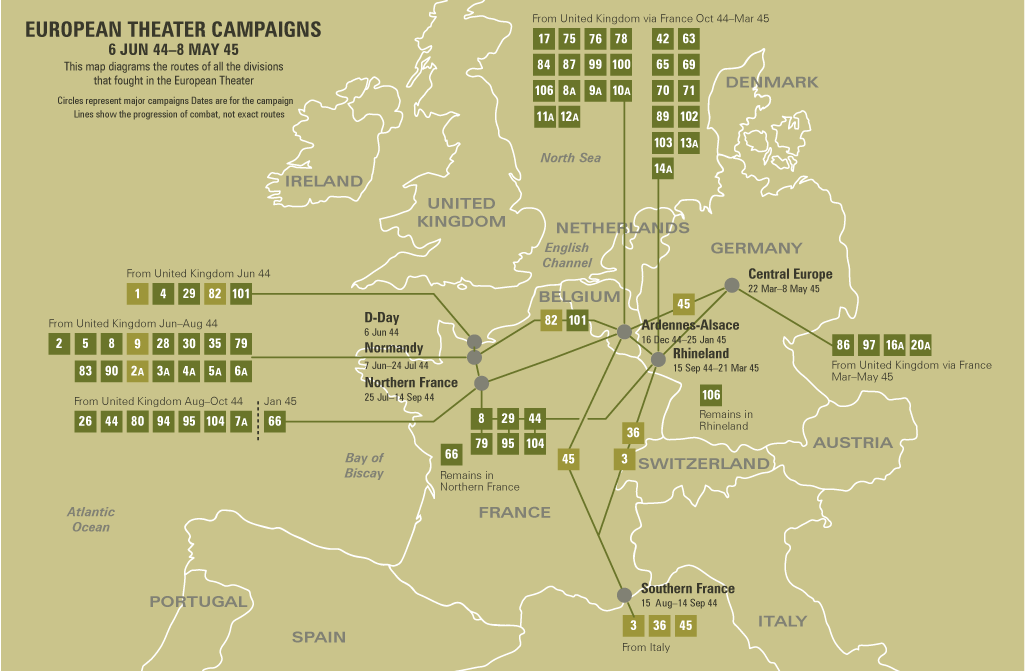
PLAN DE ROUTE DE LA CAMPAGNE - CAMPAIGN ROUTE MAP |
|
 |
|
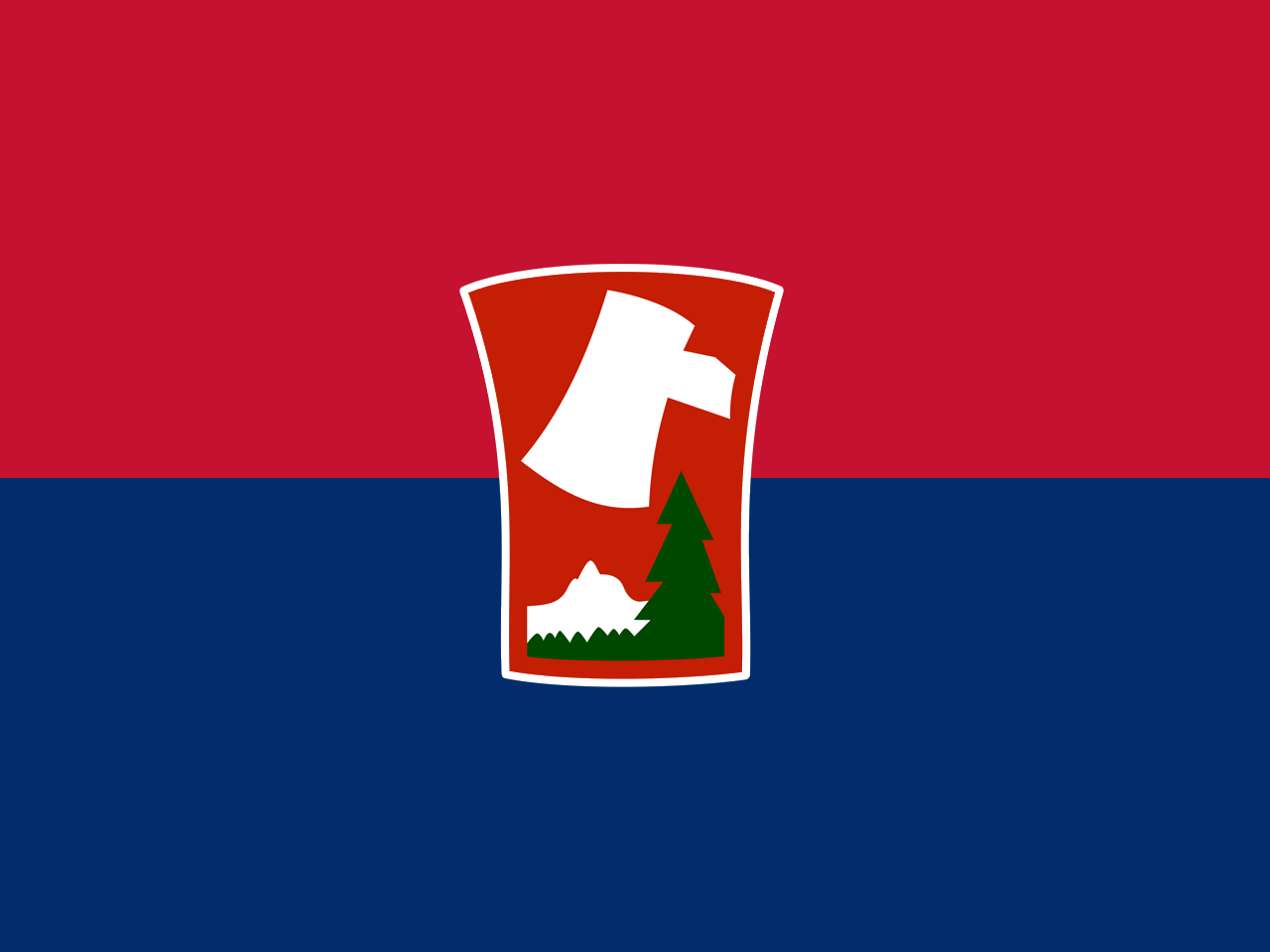
DIVISION CHRONICLEThe three infantry regiments of the 70th Infantry Division landed at Marseille, France, 10-15 December 1944, and were formed into Task Force Herren before the arrival of the remainder of the Division on 18 January 1945. Task Force Herren took over defensive positions along the west bank of the Rhine, 28 December 1944, in the vicinity of Bischweiler, south of Haguenau Forest. Elements took part in the fight to stop the German winter offensive, and struck at the enemy at Phillipsbourg and at Wingen. In mid-January 1945, the Task Force moved to an area directly south of Saarbrucken, where it carried out reconnaissance and combat patrols, and improved defensive positions. Upon the arrival of the remainder of the Division, Task Force Herren was dissolved. Patrolling and combat raids continued as preparations were made for an offensive drive in mid-February. On 17 February 1945, the attack jumped off just below the Saar River. The 70th drove onto high ground overlooking Saarbrucken, smashed into Forbach, took Stiring-Wendel, and continued across the Saar to take Saarbrucken, 20 March 1945. Pushing through Siegfried Line defenses along the north bank of the Saar, the Division took Volklingen and other Saarland cities and towns. In April it took part in the reduction of the Saar Basin, and after VE-day was engaged in occupational duties, with CP's at Otterberg, Bad Kreuznach, Frankfurt, and Oranienstein. |
CHRONIQUE DE DIVISION
Les éléments prennent part au combat pour arrêter l’offensive allemande de l’hiver, et frappent l’ennemi à Phillipsbourg et à Wingen. À la mi-janvier 1945, la Task Force s’est déplacée dans une zone située directement au sud de Sarrebruck, où elle a effectué des patrouilles de reconnaissance et de combat et amélioré ses positions défensives. À l’arrivée du reste de la Division, le Task Force Herren a été dissous. Les patrouilles et les raids de combat se sont poursuivis alors que des préparatifs étaient en cours pour une offensive à la mi-février. Le 17 février 1945, l’attaque a sauté juste en dessous de la Sarre. Le 70e a conduit sur des hauteurs surplombant Sarrebruck, s’est écrasé dans Forbach, a pris Stiring-Wendel et a continué à travers la Sarre pour prendre Sarrebruck, 20 mars 1945. En poussant à travers les défenses de la ligne Siegfried le long de la rive nord de la Sarre, la division prend Volklingen et d’autres villes et villages de la Sarre. En avril, il a participé à la réduction du bassin de la Sarre et, après le jour VE, s’est engagé dans des tâches professionnelles, avec des postes de commandement à Otterberg, Bad Kreuznach, Francfort et Oranienstein. |
| SOURCE INFORMATION & PHOTO | Armydivs.squarespace.com |
|---|
| SOURCE INFORMATION & SOURCE PHOTO | Findagrave.com - abmc.gov - Findagrave.com - Legacy of World War 2 - Fold3 - Ancestry - JP Gentil |
|---|---|
| EDITORS | Victor, Jean-Philippe, Eric, Henri, Garrett, Clive, Frédéric & Renaud |