


|
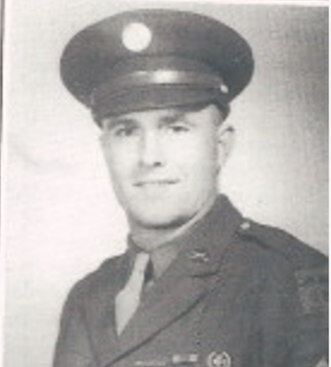
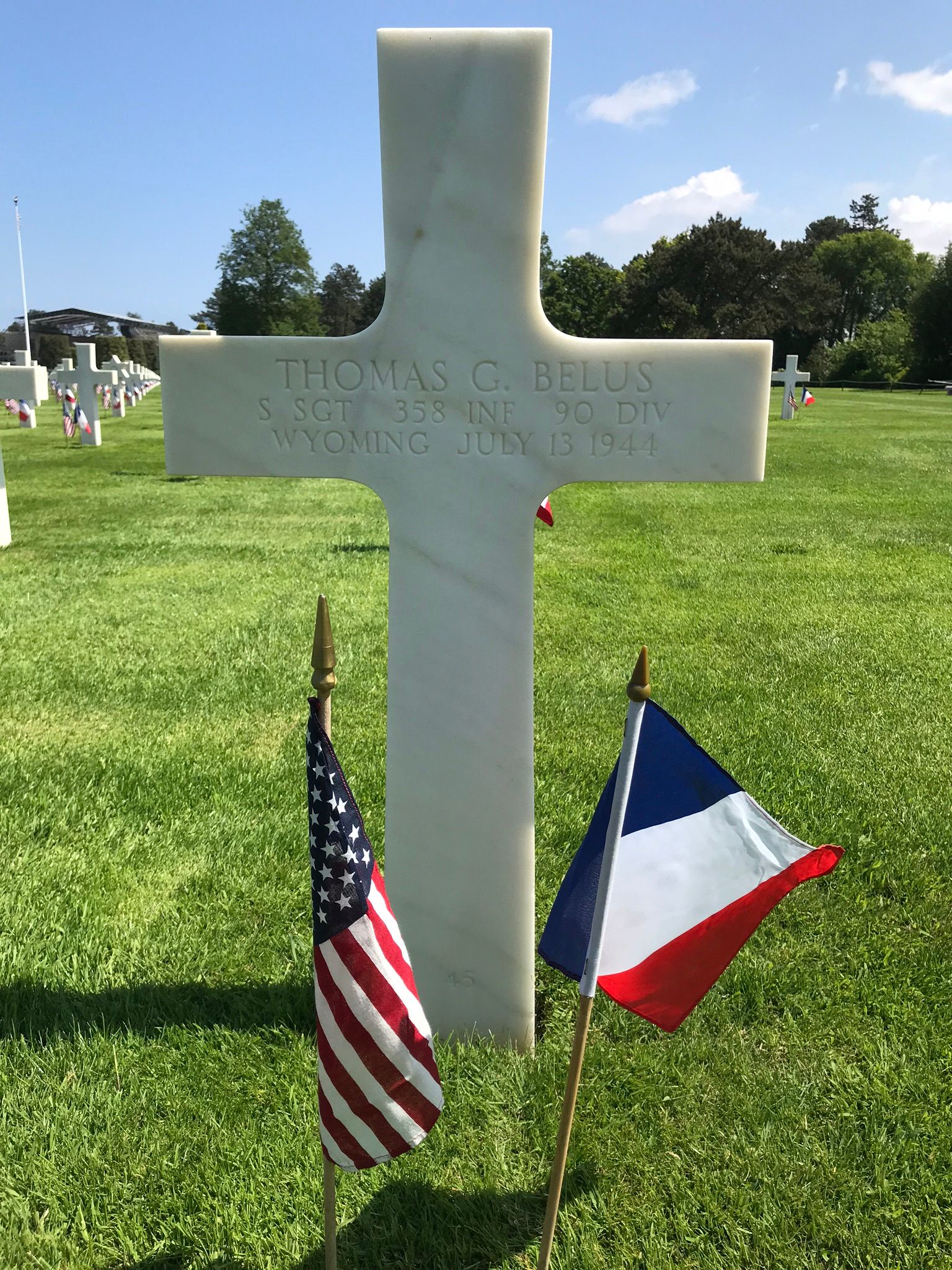
Thomas George BELUS
| ||||||||||||||||||||||||
|---|---|---|---|---|---|---|---|---|---|---|---|---|---|---|---|---|---|---|---|---|---|---|---|---|
|
Source : Nhdsilentheroes.org
| ||||||||||||||||||||||||
| NUMBER OF SERVICE | 37156045 | |||||||||||||||||||||||
| AGE | 31 yo | |||||||||||||||||||||||
| DATE OF BIRTH | 20 Decembre 1912 WYOMING | |||||||||||||||||||||||
| ENLISTMENT STATE | Sheridan WYOMING | |||||||||||||||||||||||
| FAMILY | Parents : John Paul & Dorothy Mary Mikula BELUS Siblings : John George, Stephan Michael, Joseph Paul, Martin L., Andrew Anthony & Jacob Peter | |||||||||||||||||||||||
| RANK | Staff Sergeant | |||||||||||||||||||||||
| FONCTION | Infantry Man | |||||||||||||||||||||||
| JOB BEFORE ENLISTEMENT |  | |||||||||||||||||||||||
| DATE of ENLISTEMENT | ||||||||||||||||||||||||
| COMPANY | Company | |||||||||||||||||||||||
| REGIMENT | 358th Infantry Regiment | |||||||||||||||||||||||
| DIVISION | 90th Infantry Division | |||||||||||||||||||||||
| DATE OF DEATH | 13 July 1944 |
Source : Jason Kahne | ||||||||||||||||||||||
| STATUS | KIA | |||||||||||||||||||||||
| PLACE OF DEATH | Near Pont-l'Abbé | |||||||||||||||||||||||
| CEMETERY TEMPORARY |
CEMTERY TEMPORARY of -- N°--
| |||||||||||||||||||||||
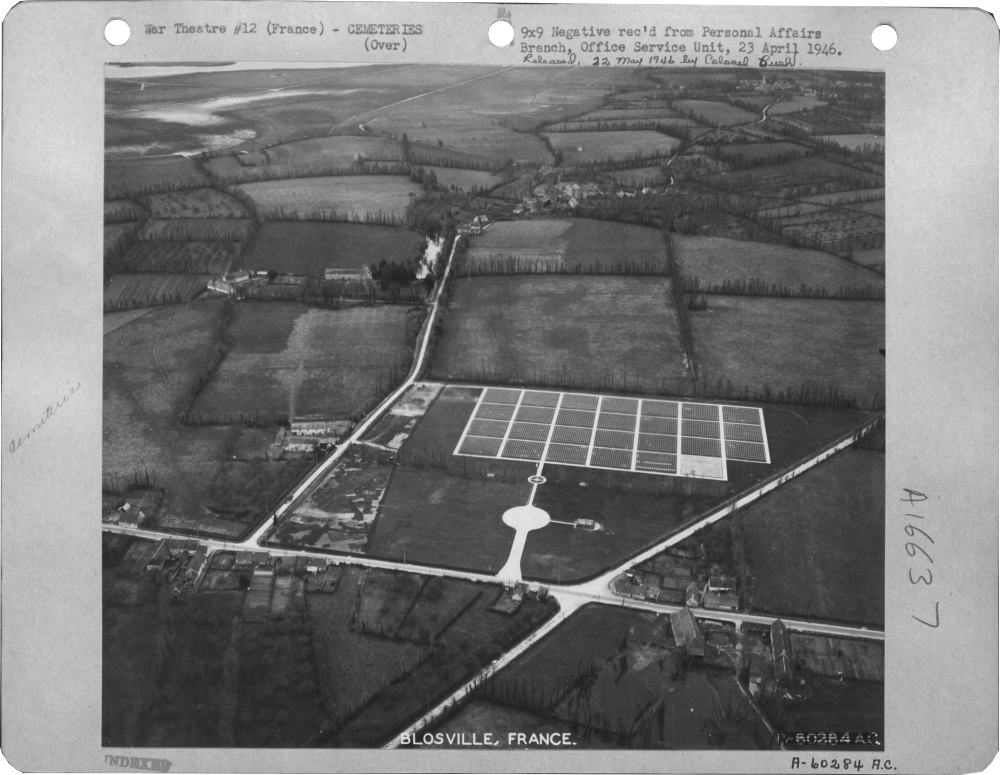
| CEMETERY | NORMANDY AMERICAN CEMETERY of Colleville | |||||||||||||||||||||||
| GRAVE |
| |||||||||||||||||||||||
| DECORATION |
| |||||||||||||||||||||||
| ||||||||||||||||||||||||
| STORY | ||||||||||||||||||||||||
|
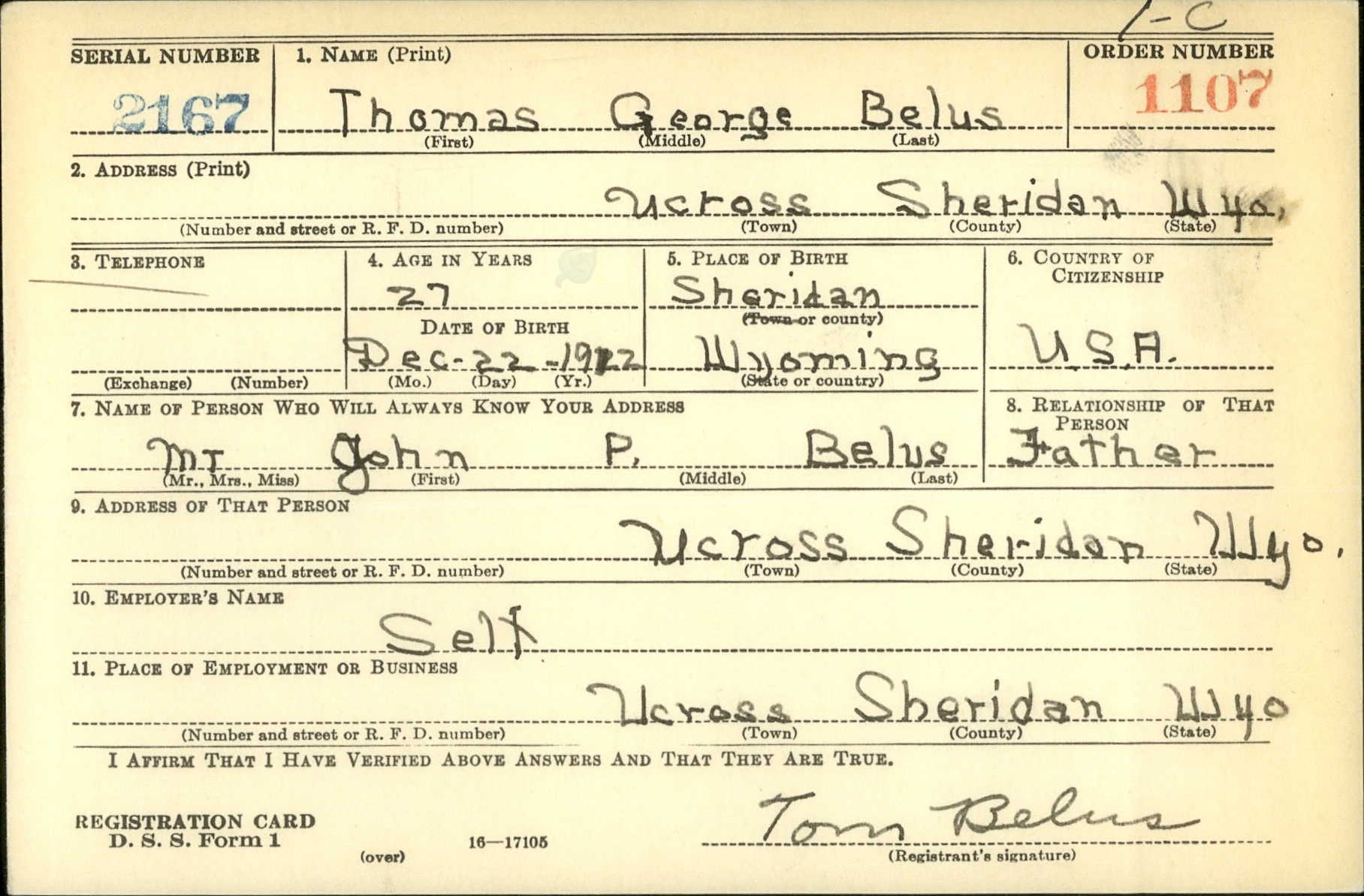
Thomas Belus was born on December 22, 1912. The Belus family were homesteaders who farmed a plot of land just outside of Sheridan, Wyoming. The family attended St. John the Baptist Catholic Church in Buffalo, Wyoming. Thomas G. Belus was one of five brothers who served in the military, but he came from a family of 15. The 1940 U.S. Census reveals the size of his large family, with seven other siblings ranging in age from 13 to 30, and lists his occupation as a ranch hand.
Railroads The Chicago, Burlington & Quincy Railroad (also known as the Burlington Route or CB&Q), Wyoming’s second transcontinental railroad, completed just before Thomas Belus’ birth, was instrumental for years to come. During the Second World War, according to the Wyoming State Historical Society, “troop transport brought a flood of military-related travel, and CB&Q traffic increased dramatically. The Burlington salvaged 30,000 tons of steel for the war effort by consolidating 87 miles of its line west of Casper with the Chicago and Northwestern.”
The Eastern Dude Ranchers Association (1943) was created to promote tourism to Wyoming. Ranching was key to Wyoming as a source of revenue but was equally crucial to war efforts in providing food products. |
Source : Nhdsilentheroes.org | |||||||||||||||||||||||
Thomas Belus enlisted in the U.S. Army. He began training at Camp Barkeley, Texas, in 1942. He received an award for his expert bayonet skills. These skills would later carry Belus throughout his two years and seven months in war. On June 6, 1944, Staff Sergeant Thomas G. Belus landed on Utah Beach and the 358th Infantry Regiment. The majority of the 90th Infantry Division arrived the following day. From here, Belus had the same goal as the rest of the division, to survive, and go deep inland, and secure the southern flank of Cherbourg. Their bloodiest battles came in the hedgerows, heavily fortified lines of defense laid by the Germans, the strongest of which was in Normandy itself. For the next month and five days, Belus moved throughout the Cotentin peninsula toward the town of La Haye-du-Puits. After fighting in hand-to-hand combat throughout France, Belus’s battalion executed a courageous flanking maneuver two days before his death near Pont-l’Abbé. This maneuver resulted in significant casualties but allowed American forces to cross the Mahlman line. Shortly after crossing this line, Belus was shot in the abdomen. Staff Sergeant Thomas Belus died at age 31, on July 13, 1944.
On June 6, 1944, Brigadier General Theodore Roosevelt Jr. led the first wave of American forces on Utah Beach starting at 6:30 a.m. Earlier, a majority of the 13,000 paratroopers missed their targets. Despite the confusion, their objectives were seized, and ultimately over 600 Airborne troops died. With great sacrifice and strategy, forces were ultimately successful in isolating the seaborne invasion force from German units. At the end of D-Day, the landing on Utah Beach was considered a success because of the sacrifice and dedication that the Allied troops gave to overcome the obstacles they faced at Utah Beach. On June 6, 1944, Brigadier General Theodore Roosevelt Jr. led the first wave of American forces on Utah Beach starting at 6:30 a.m. Earlier, a majority of the 13,000 paratroopers missed their targets. Despite the confusion, their objectives were seized, and ultimately over 600 Airborne troops died. With great sacrifice and strategy, forces were ultimately successful in isolating the seaborne invasion force from German units. At the end of D-Day, the landing on Utah Beach was considered a success because of the sacrifice and dedication that the Allied troops gave to overcome the obstacles they faced at Utah Beach. On June 6, 1944, the 4th Infantry Division landed on Utah Beach. The first men landed around two kilometers away from their target. Despite this mistake, Brigadier General Theodore Roosevelt Jr. famously quoted that “We’ll start the war from here!” This allowed the men to move forward from here despite the great confusion among the beach as paratroopers missed their drop zones and were scattered throughout the Cotentin peninsula. The goal of the landing was to cross the beach and seize control of the coastal roads, meet up with airborne troops and prepare to attack Cherbourg. However, throughout the landing, the beach attack presented several obstacles that made this very difficult. Due to this, Utah Beach forces were not able to gain all planned objectives. Still, it is with great luck and fewer German defenses compared to Omaha Beach that allowed this attack to be considered a success ultimately. Thomas Belus landed on Utah Beach, in the afternoon, on June 6. Although it took two days for the 90th Infantry Division to gather near the beach area, the division was instrumental in its success on Utah Beach and the capture of Cherbourg. Staff Sergeant Thomas George Belus, a patriot, brother, son, and hero, lost his life on July 13, 1944. Belus was a man who worked 52 weeks a year to help provide for his family of 15. He was a man who received only an eighth-grade education yet knew the actual value of sacrifice. These core values shaped Staff Sergeant Belus and compelled him to enlist in the military alongside five of his brothers. Staff Sergeant Belus served in the U.S. Army for two years and seven months, but in his final days, he fought as a part of the 90th Infantry Division, 358th Infantry Regiment for just over a month. After arriving on D-Day, his regiment moved throughout Normandy with rain pouring and casualties surrounding his every move. When the 358th Infantry Regiment moved from Utah Beach inland towards La Haye-du-Puits, great efforts were made to persevere and move onward. We must therefore remember Staff Sergeant Belus for these courageous sacrifices and honor his death. Of his brothers, Staff Sergeant Belus was the only one that did not return home. With a heavy heart, we honor him today for the sacrifices that he made and remember his life for the Belus family that never got to see him again. We know today that he is with the Lord in Heaven, and I imagine he is among his family, looking down among those serving today in hopes that they will return safely to their families, as he never did. By Ms. Gayla Hammer | ||||||||||||||||||||||||







Activated/Activé |
Normandy/Normandie |
| 25 Mar 1942 | Days of Combat/Jour de Combat 308 |
| Casualties/Victimes 19 200 | |
Entered Combat/Entré au combat |
|
| 9 Jun 1944 Normandy | |
|
Commanding Generals/Commandants généraux Maj. Gen. Henry Terrell, Jr. (Mar 42 - Jan 44) |
Campaigns/CampagnesNormandy (6 Jun 44 - 24 Jul 44)
|
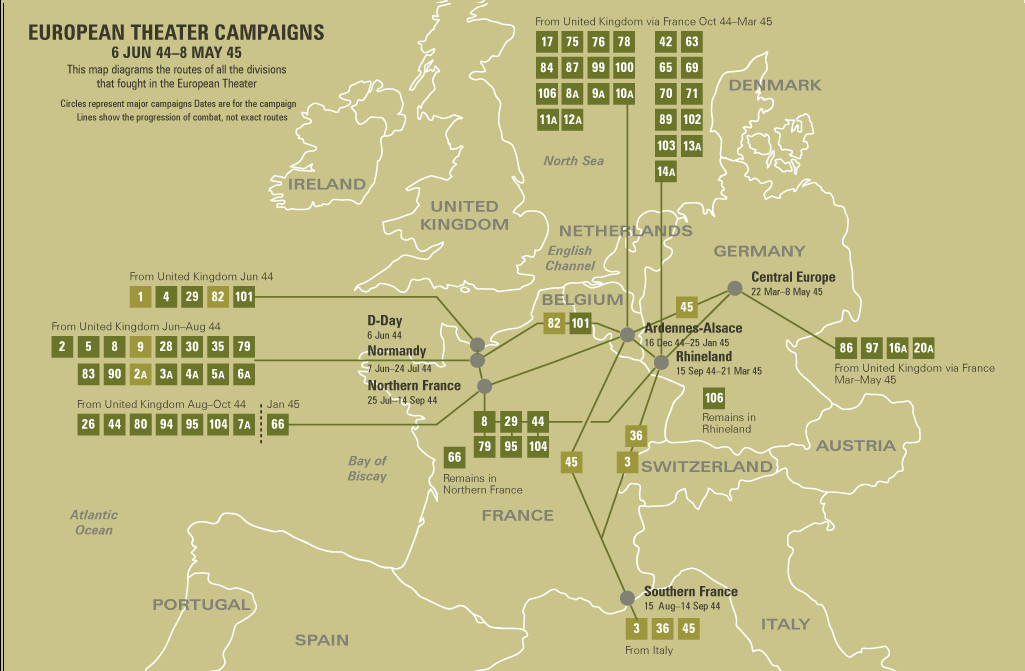
PLAN DE ROUTE DE LA CAMPAGNE - CAMPAIGN ROUTE MAP |
|
 |
|
DIVISION CHRONICLEThe 90th Infantry Division landed in England, 5 April 1944, and trained from 10 April to 4 June. First elements of the Division saw action on Dday, 6 June, on Utah Beach, Normandy, the remainder entering combat, 10 June, cutting across the Merderet River to take Pont l'Abbe in heavy fighting. After defensive action along the Douve, the Division attacked to clear the Foret de Mont Castre, clearing it by 11 July, in spite of fierce resistance. An attack on the island of Seves failing, 23 July, the 90th bypassed it and took Periers, 27 July. On 12 August, the Division drove across the Sarthe River, north and east of Le Mans, and took part in the closing of the Falaise Gap, taking Chambois, 19 August. It then raced across France, through Verdun, 6 September, to participate in the siege of Metz, 14 September - 19 November, capturing Maizieres les Metz, 30 October, and crossing the Moselle at Koenigsmacker, 9 November. On. 6 December 1944, the Division pushed across the Saar and established a bridgehead north of Saarlautern, 618 December, but with the outbreak of the Von Rundstedt drive, withdrew to the west bank on 19 December, and went on the defensive until 5 January 1945, when it shifted to the scene of the Ardennes struggle. It drove across the Our, near Oberhausen, 29 January, to establish and expand a bridgehead. In February, the Division smashed through Siegfried fortifications to the Prum River. After a short rest, the 90th continued across the Moselle to take Mainz, 22 March, and crossed the Rhine, the Main, and the Werra in rapid succession. Pursuit continued to the Czech border, 18 April 1945, and into the Sudeten hills. The Division was en route to Prague when the war in Europe ended.
|
CHRONIQUE DE DIVISIONLa 90th Infantry Division débarque en Angleterre le 5 avril 1944 et s'entraîne du 10 avril au 4 juin. Les premiers éléments de la Division ont combattu le 6 juin à Utah Beach, en Normandie, le reste étant entré en combat, le 10 juin, traversant la rivière Merderet pour prendre Pont l'Abbe dans de violents combats. Après une action défensive le long de la Douve, la Division attaqua la Foret de Mont Castre, la défrichant le 11 juillet, malgré une résistance féroce. Une attaque sur l'île de Seves échoua, le 23 juillet, le 90ème la contourna et s'empara de Periers, le 27 juillet. Le 12 août, la Division traverse la Sarthe, au nord et à l'est du Mans, et prend part à la fermeture du Falaise Gap en prenant Chambois le 19 août. Il a ensuite couru à travers la France, à travers Verdun, le 6 septembre, pour participer au siège de Metz, 14 septembre - 19 novembre, capturant Maizières les Metz, le 30 octobre, et traversant la Moselle à Koenigsmacker, le 9 novembre. Sur. Le 6 décembre 1944, la division traverse la Sarre et établit une tête de pont au nord de Saarlautern, 618 décembre, mais avec le déclenchement de la promenade Von Rundstedt, se retire sur la rive ouest le 19 décembre et continue la défensive jusqu'au 5 janvier 1945, quand il s'est déplacé sur la scène de la lutte ardennaise. Il a traversé l'Our, près d'Oberhausen, le 29 janvier, pour établir et agrandir une tête de pont. En février, la Division a défoncé les fortifications de Siegfried jusqu'à la rivière Prum. Après un court repos, le 90e a continué à travers la Moselle pour prendre Mainz, 22 mars, et a traversé le Rhin, le Main et le Werra dans la succession rapide. Pursuit a continué à la frontière tchèque, le 18 avril 1945, et dans les collines des Sudètes. La division était en route pour Prague quand la guerre en Europe a fini. |
| SOURCE INFORMATION & PHOTO | Armydivs.squarespace.com |
|---|
| SOURCE INFORMATION & SOURCE PHOTO | Nhdsilentheroes.org - Abmc.gov - Findagrave.com - Gayla Hammer (Lander Valley High School) |
|---|---|
| PROGRAMMER | Henri, Garrett, Clive, Frédéric & Renaud |