

|
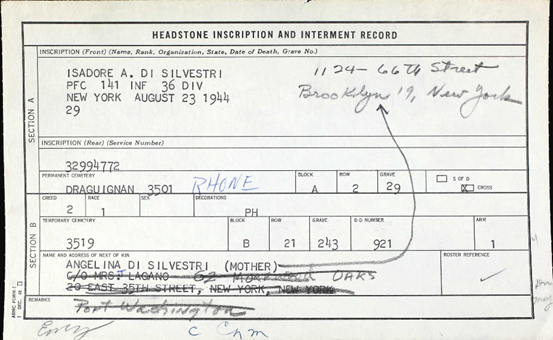
Isadore A. DI SILVESTRI
| ||||||||||||||||||||||||||
|---|---|---|---|---|---|---|---|---|---|---|---|---|---|---|---|---|---|---|---|---|---|---|---|---|---|---|
|
Source : Andy | ||||||||||||||||||||||||||
| NUMBER OF SERVICE | 32994772 | |||||||||||||||||||||||||
| AGE | 20 yo | |||||||||||||||||||||||||
| DATE OF BIRTH | 1924 NEW YORK | |||||||||||||||||||||||||
| ENLISTMENT STATE | NEW YORK | |||||||||||||||||||||||||
| FAMILY |
Parents : ---B | |||||||||||||||||||||||||
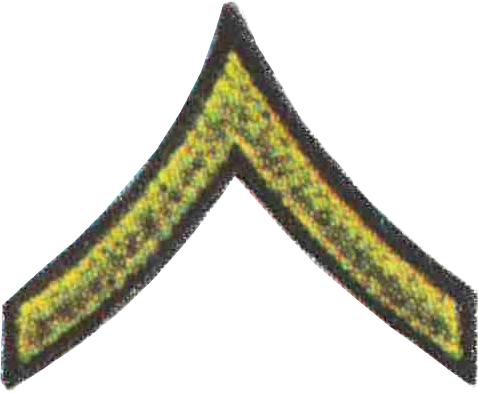
| RANK |
| |||||||||||||||||||||||||
| FONCTION | Infantry Man | |||||||||||||||||||||||||
| JOB BEFORE ENLISTEMENT | General industry clerks |  | ||||||||||||||||||||||||
| DATE of ENLISTEMENT | 3 August 1943 New York City NEW YORK | |||||||||||||||||||||||||
| COMPANY | ||||||||||||||||||||||||||
| REGIMENT | 141st Infantry Regiment | |||||||||||||||||||||||||
| DIVISION | 36th Infantry Division | |||||||||||||||||||||||||
| DATE OF DEATH | 23 August 1944 |
Source : Andy | ||||||||||||||||||||||||
| STATUS | KIA | |||||||||||||||||||||||||
| PLACE OF DEATH | ---- | |||||||||||||||||||||||||
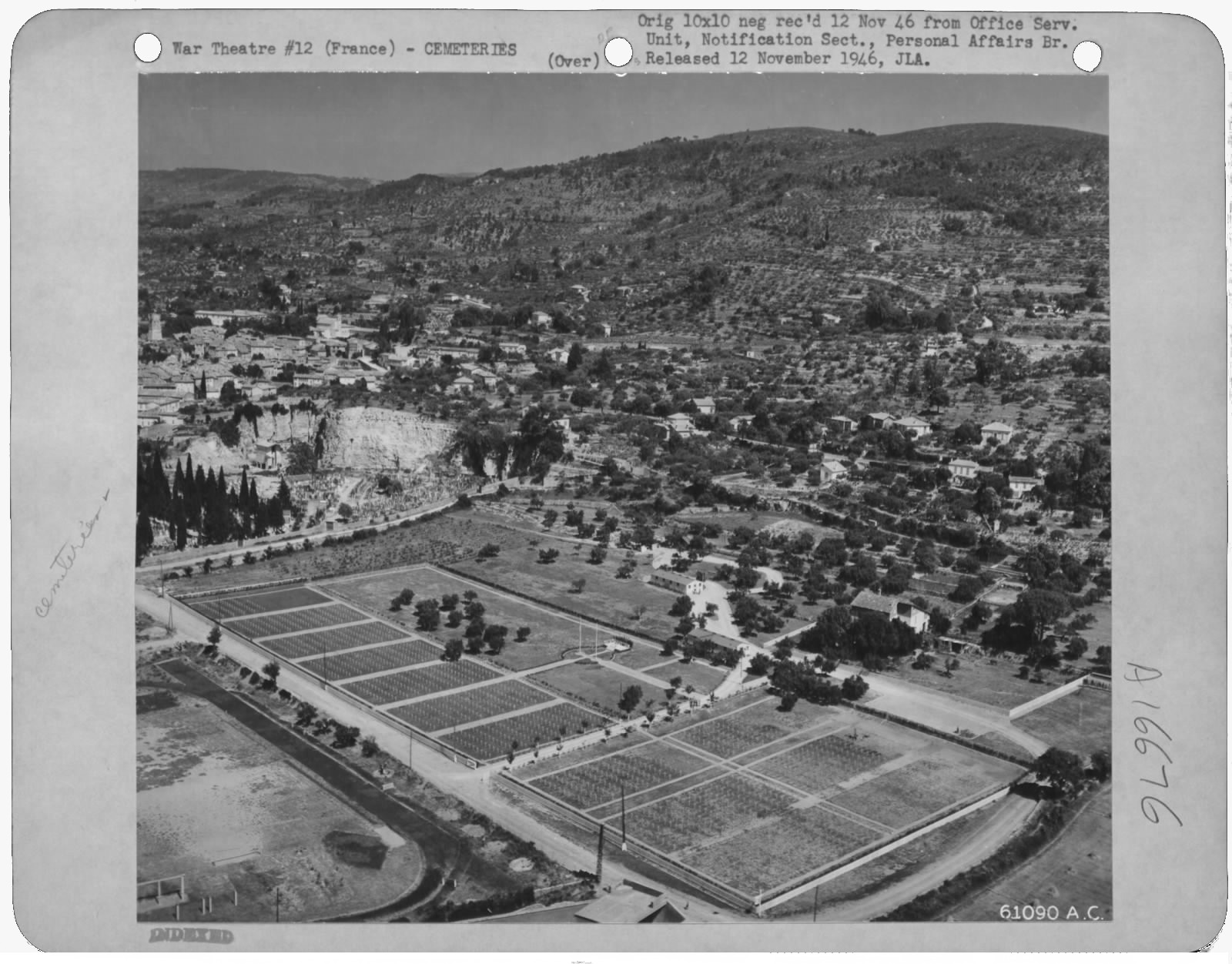
| CEMETERY TEMPORARY |
CEMTERY TEMPORARY of Draguignan N°3519 | |||||||||||||||||||||||||
| CEMETERY | RHONE AMERICAN CEMETERY and MEMORIAL of Draguignan | |||||||||||||||||||||||||
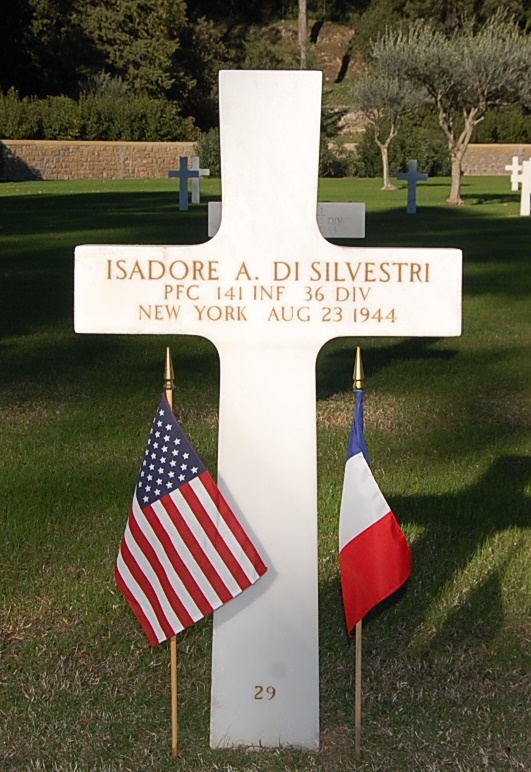
| GRAVE |
| |||||||||||||||||||||||||
| DECORATION & BREVET |
| |||||||||||||||||||||||||
| ||||||||||||||||||||||||||
| STORY | ||||||||||||||||||||||||||
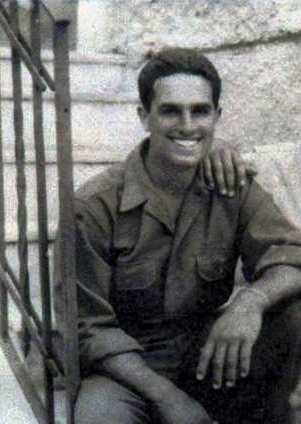
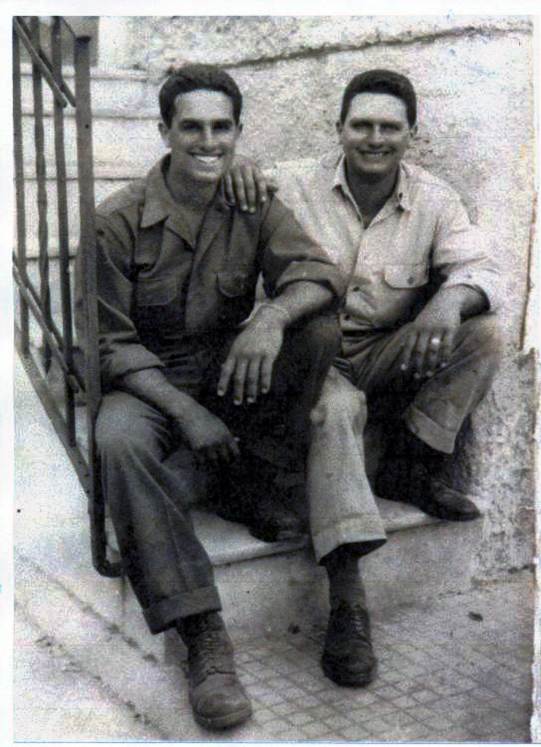
The Story of Isadore and TitoIsadore was a 2nd (his parents lived in NYC) generation Italian American. He was a handsome young man with a world of possibilities stretching out in his future. He had recently signed a contract to play with the New York Yankees baseball team that would take effect after the war. His extended family lived in the same neighborhood in New York. As was typical with families at the time, cousins and siblings blended to be one huge family group. Isadore and his cousin Tito were like brothers. When the call of war sounded, Isadore and Tito went to the Army together. Isadore when to the 36th Infantry division and Tito went to the 3rd. Both Divisions fought in Italy and took part in Operation Dgagoon the invasion of southern France. This picture was taken of the cousins sitting on a church steps in Rome. The men had taken a break to see their aunt who was a Catholic Nun in Rome during the war. | ||||||||||||||||||||||||||
|
Isadore on the left with his cousin Tito. Photo taken in Rome where on the steps of a convent where Tito's sister was a nun. Source : Andy | ||||||||||||||||||||||||||
|
As Operation Dragoon unfolded, Isadore's 36th Infantry landed on the St Raphaël beach; Tito's 3rd landed on Cavalaire-sur-Mer. As the 7th Army proceeded up the Rhone valley, they were stopped at Montélimar. The 3rd Infantry Division attacked Montelimar from the south in an attempted a break through taking over 3000 causalities (dead, wounded, captured). With the assistance of the French resistance a trail through the French Alps was found to maneuver a task force around the German defenders left flank and rear. Task Force Butler (commanded by BG Butler) primarily from the 36th Division, included a motorized battalion from the 141st Infantry, two medium tank companies, a tank destroyer company, a light cavalry squadron, and a self-propelled artillery battalion. It cut through a pass in the French Alps with the intent of cutting off the Germans (Blaksowitz's) retreat and breaking down the defenses of Montelimar. The Task Forrce successfully caused the German Uniits defending Montelimar to disengage and retreat further north. Sadly, Isadore fell on 23 August as a member of Task Force Butler. The 3rd Division was not part of the Task Force Bulter fighting. Tito was assigned a special duty, unloading American soldiers' bodies from the back of the trucks that brought them back to the Graves Registration processing site. While unloading the bodies, Tito found Isadore. The loss of Tito's cousin "brother" was too great; the shock and sadness overwhelmed him. Tito walked away from his duty station, disappearing for 7 to 10 days. When his unit found him, they found a broken man. Tito returned home unable to function and remained so for the rest of his life. Story written by: Alison Libersa, Rhone American Cemetery | ||||||||||||||||||||||||||
|
Source : Ancestry | ||||||||||||||||||||||||||





Activated/Activé |
Normandy/Normandie |
| 25 Nov 1940 | Days of Combat/Jour de Combat 400 |
| Casualties/Victimes 19 466 | |
Entered Combat/Entré au combat |
|
| 9 Sep 1943 Salerno | |
|
Commanding Generals/Commandants généraux Maj. Gen. Claude V. Birkhead (Nov 40 - Sep 41) |
Campaigns/CampagnesNaples-Foggia (9 Sep 43 - 21 Jan 44) Southern France (15 Aug 44 - 14 Sep 44) |
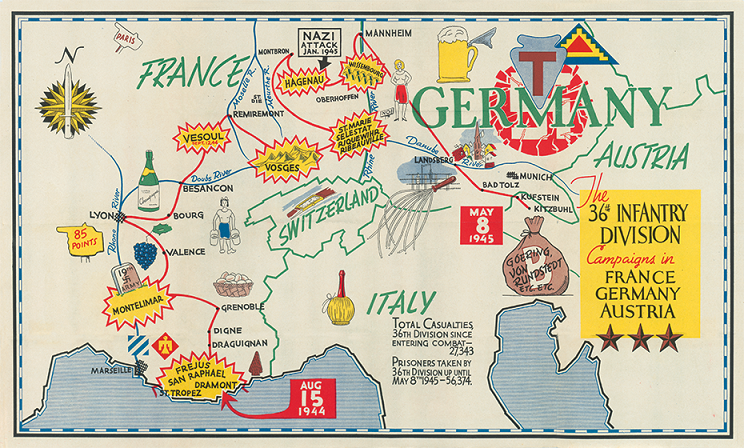
PLAN DE ROUTE DE LA CAMPAGNE - CAMPAIGN ROUTE MAP |
|
|
 |
|
DIVISION CHRONICLEThe 36th Infantry Division landed in North Africa, 13 April 1943, and trained at Arzew and Rabat. It first saw action, 9 September 1943, when it landed at Paestum on the Gulf of Salerno. The waiting enemy launched counterattacks, but the 36th advanced slowly, securing the area from Agropoli to Altavilla. After a brief rest the 36th returned to combat, 15 November. It captured Mount Maggiore, Mount Lungo, and the village of San Pietro despite strong enemy positions and severe winter weather. This grueling campaign was marked by futile attempts to establish a secure bridgehead across the Rapido River, 1 January to 8 February 1944. After assisting the 34th Division in the attack on Cassino and fighting defensively along the Rapido River, the 36th withdrew, 12 March 1944, for rest and rehabilitation. On 25 May, the Division landed at Anzio, drove north to capture Velletri, 1 June, and entered Rome on the 5th. Pushing up from Rome, the 36th encountered sharp resistance at Magliano, but reached Piombino, 26 June, before moving back to Paestum for rest and rehabilitation. On 15 August, the Division made another assault landing against light opposition in the RaphaelFrejus area of Southern France. A lightning dash opened the Rhone River Valley. Montelimar fell, 28 August, and large Nazi units were trapped. The 36th advanced to the Moselle River at Remiremont and the foothills of the Vosges. In a grinding offensive, the Division crossed the Meurthe River, breached the Ste. Marie Pass and burst into the Alsatian Plains. The enemy counterattacked, 13 December, and the 36th held in the Colmar Pocket. On the 20th the Division resumed the attack, advancing northward along the Rhine River to Mannheim meeting heavy resistance at Haguenau, Oberhofen, and Wissembourg. The 36th moved to the Danube, 22 April 1945, and attacked the "National Redoubt" at Kunzelsau on the 30th in its final action. |
CHRONIQUE DE DIVISIONThe 36th Infantry Division landed in North Africa, 13 April 1943, and trained at Arzew and Rabat. It first saw action, 9 September 1943, when it landed at Paestum on the Gulf of Salerno. The waiting enemy launched counterattacks, but the 36th advanced slowly, securing the area from Agropoli to Altavilla. After a brief rest the 36th returned to combat, 15 November. It captured Mount Maggiore, Mount Lungo, and the village of San Pietro despite strong enemy positions and severe winter weather. This grueling campaign was marked by futile attempts to establish a secure bridgehead across the Rapido River, 1 January to 8 February 1944. After assisting the 34th Division in the attack on Cassino and fighting defensively along the Rapido River, the 36th withdrew, 12 March 1944 , for rest and rehabilitation. On 25 May, the Division landed at Anzio, drove north to capture Velletri, 1 June, and entered Rome on the 5th. Pushing up from Rome, the 36th encountered sharp resistance at Magliano, but reached Piombino, 26 June, before moving back to Paestum for rest and rehabilitation. On 15 August, the Division made another assault landing against light opposition in the RaphaelFrejus area of Southern France. A lightning dash opened the Rhone River Valley. Montelimar fell, 28 August, and large Nazi units were trapped. The 36th advanced to the Moselle River at Remiremont and the foothills of the Vosges. In a grinding offensive, the Division crossed the Meurthe River, breached the Ste. Marie Pass and burst into the Alsatian Plains. The enemy counterattacked, 13 December, and the 36th held in the Colmar Pocket. On the 20th the Division resumed the attack, advancing northward along the Rhine River to Mannheim meeting heavy resistance at Haguenau, Oberhofen, and Wissembourg. The 36th moved to the Danube, 22 April 1945, and attacked the "National Redoubt" at Kunzelsau on the 30th in its final action.
|
| SOURCE INFORMATION & PHOTO | Armydivs.squarespace.com |
|---|
| SOURCE INFORMATION & SOURCE PHOTO | Ancestry - Findagrave.com - Weremember.abmc.gov - Aad.archives.gov |
|---|---|
| EDITORS | Victor, Jean-Philippe, Eric, Henri, Garrett, Clive, Frédéric & Renaud |