




|
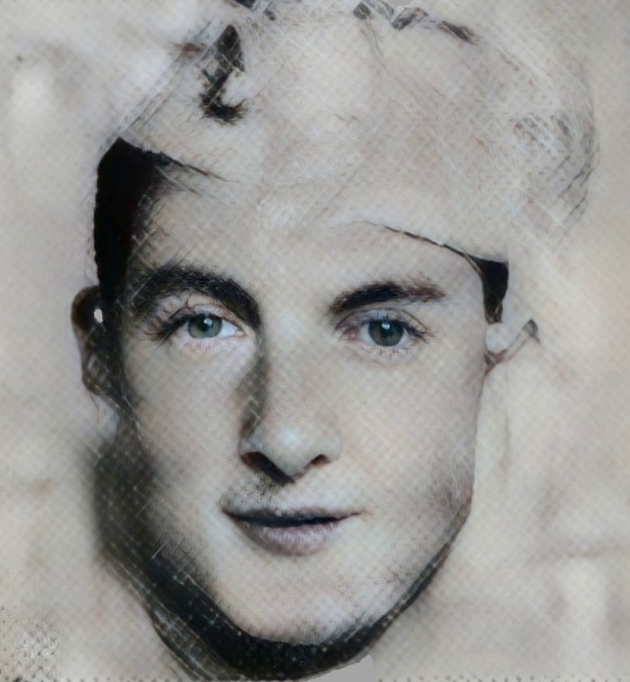
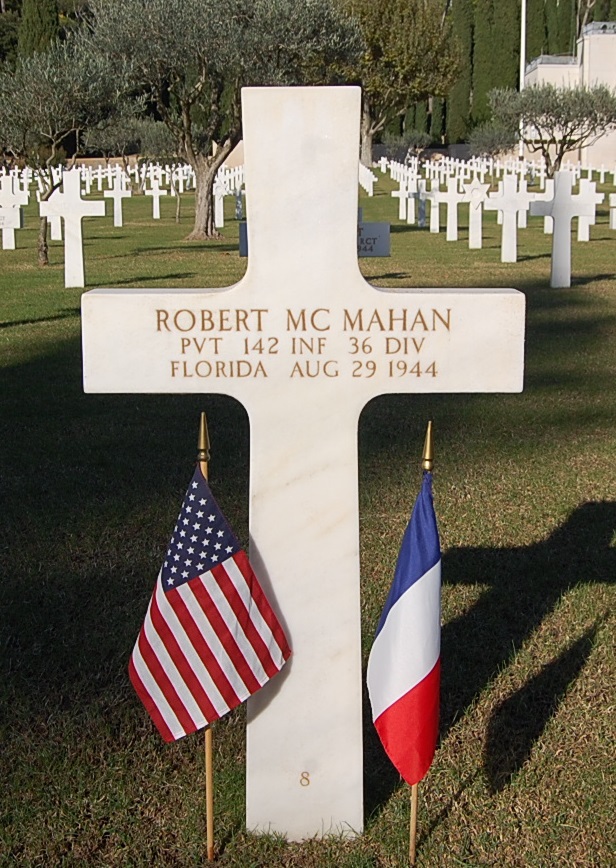
Robert Mc MAHAN
| ||||||||||||||||||||||||||
|---|---|---|---|---|---|---|---|---|---|---|---|---|---|---|---|---|---|---|---|---|---|---|---|---|---|---|
|
Source : Projects.cah.ucf.edu (Ellen Marchese)
| ||||||||||||||||||||||||||
| NUMERO DE SERVICE | 34530352 | |||||||||||||||||||||||||
| AGE | 23 ans | |||||||||||||||||||||||||
| DATE DE NAISSANCE | 11 juillet 1921 | |||||||||||||||||||||||||
| ÉTAT D’ENRÔLEMENT | FLORIDA | |||||||||||||||||||||||||
| FAMILLE | Epouse : Mildred | |||||||||||||||||||||||||
| GRADE | Private | |||||||||||||||||||||||||
| FONCTION | Infantry Man | |||||||||||||||||||||||||
| PROFESSION AVANT INCORPORATION | Semiskilled cooperage occupations |  | ||||||||||||||||||||||||
| DATE D'INCORPORATION | 13 novembre 1942 Camp BLANDING FLORIDA | |||||||||||||||||||||||||
| COMPANY | Company G | |||||||||||||||||||||||||
| REGIMENT | 142nd Infantry Regiment | |||||||||||||||||||||||||
| DIVISION | 36th Infantry Division | |||||||||||||||||||||||||
| DATE DU DECES | 29 aout 1944 |
Source : Andy | ||||||||||||||||||||||||
| STATUT | KIA | |||||||||||||||||||||||||
| LIEU DU DECES | -- | |||||||||||||||||||||||||
| CIMETIERE PROVISOIRE |
CIMETIERE PROVISOIRE de Draguignan N°3519 | |||||||||||||||||||||||||
| CIMETIERE | RHONE AMERICAN CEMETERY and MEMORIAL de Draguignan | |||||||||||||||||||||||||
| TOMBE |
| |||||||||||||||||||||||||
| DECORATION |
| |||||||||||||||||||||||||
| ||||||||||||||||||||||||||
| HISTOIRE | ||||||||||||||||||||||||||
|
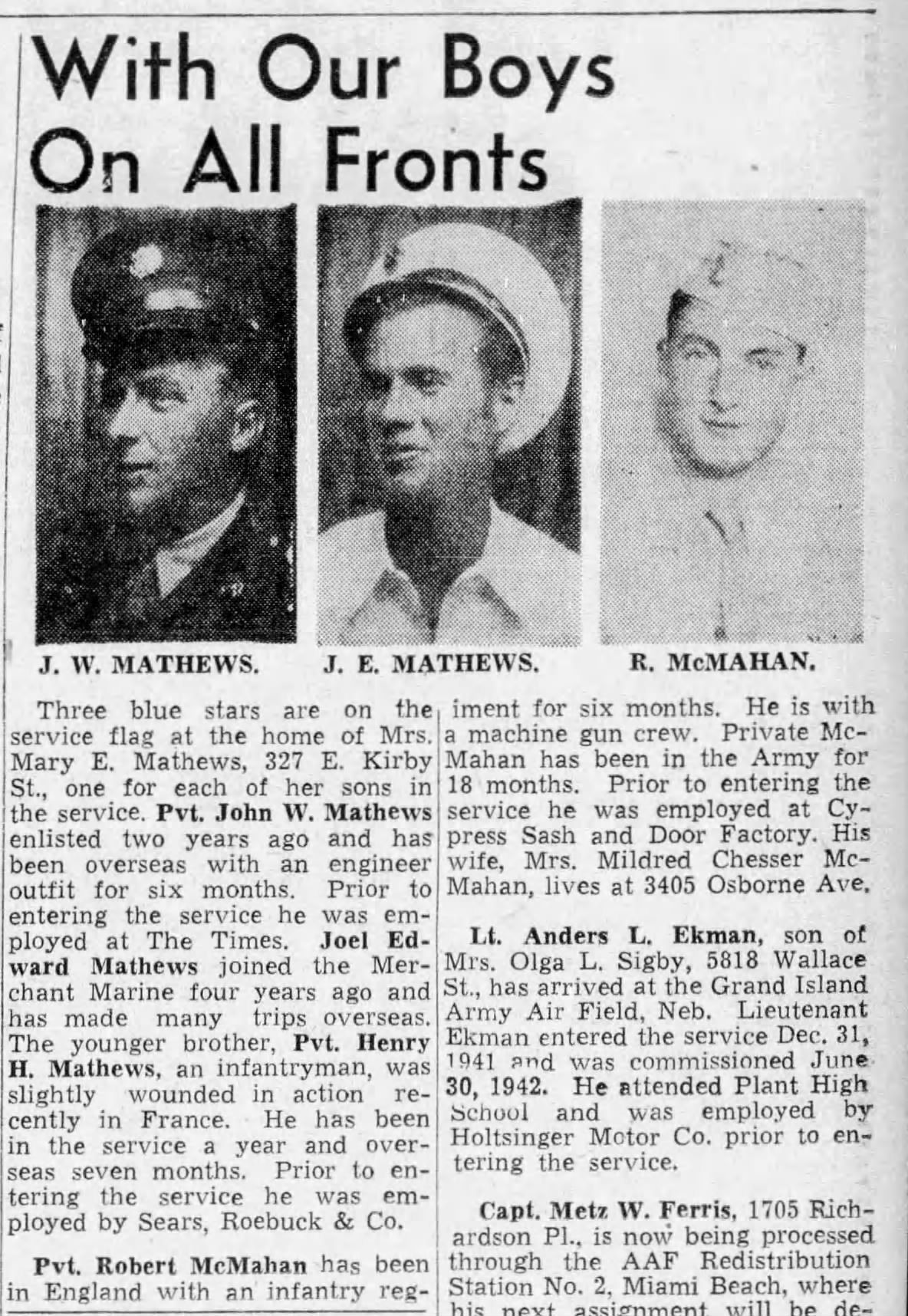
Robert McMahan est né le 11 juillet 1921 dans le comté de St. Clair, AL1.Ses parents, Albert et Dixie Bellah (née Day) McMahan, sont nés au Tennessee et ont déménagé entre le Tennessee, l’Alabama et la Géorgie entre 1910 et 1920 avant de s’installer sur une ferme à St. Clair. Robert était l’un des huit enfants : James (1912), Cleo (1915), Dora May (1917), L.C. (1918), Georgia Lee (1923), Woodrow (1924) et Bobbie Lou (1927). À St. Clair, les McMahans vivaient à côté des parents de Dixie, Harvey et Mary Day, et de son oncle, Ules Day. Les deux générations vivaient côte à côte, travaillant peut-être sur la même ferme. Comme beaucoup d’autres membres de leur communauté, les McMahans étaient des agriculteurs généralistes, élevant une grande variété de cultures et d’éleveurs. Ils sont devenus des maraîchers, plutôt que des agriculteurs de subsistance, ce qui signifie qu’ils ont cultivé des cultures spéciales, comme la pastèque, les choux, les tomates ou les pommes de terre, et les ont expédiés vers le nord. Les deux familles vivaient dans la même région, mais n’étaient plus voisines. Robert est allé vivre chez ses grands-parents et son grand-oncle, probablement parce qu’ils avaient besoin d’un coup de main supplémentaire sur leur ferme. En 1935, Harvey et Mary Day avaient 70 ans et Ules Day, 60 ans. Robert, un adolescent, aurait pu être l’âge parfait pour les aider. Il a quitté l’école après la troisième année, mais comme il faisait partie d’une famille d’agriculteurs, il aurait eu des connaissances et une certaine compréhension de ce qu’on attendait de lui comme ouvrier agricole. |
Source : Projects.cah.ucf.edu
| |||||||||||||||||||||||||
Là, il devient soldat dans la compagnie G, 142e régiment d’infanterie, 36e Division d’infanterie.13 Robert s’entraîna pendant environ un an avant que sa division ne soit envoyée en Afrique du Nord le 13 avril 1943. D’avril à septembre, la 36e Division se prépare à l’invasion alliée de l’Italie, ou opération Avalanche, en s’entraînant dans les villes d’Anzew, en Algérie, et de Rabat, au Maroc. Les troupes alliées s’emparent avec succès de l’île de Sicile en juillet 1943, qui a provoqué la chute du leader fasciste italien, Mussolini. Le nouveau gouvernement italien se rend aux forces alliées le 8 septembre 1943, mais les dirigeants allemands ordonnent à leurs troupes déjà postées en Italie de poursuivre le combat. Le lendemain, les forces alliées, y compris la division de Robert, débarquèrent dans le golfe de Salerne, dans le sud de l’Italie. Là-bas, ils repoussèrent de lourdes contre-attaques de l’armée allemande avec l’appui de navires et de parachutistes, et repoussèrent à l’intérieur des terres, sécurisant le territoire à travers la péninsule.
| ||||||||||||||||||||||||||
| | ||||||||||||||||||||||||||





Activated/Activé |
Normandy/Normandie |
| 25 Nov 1940 | Days of Combat/Jour de Combat 400 |
| Casualties/Victimes 19 466 | |
Entered Combat/Entré au combat |
|
| 9 Sep 1943 Salerno | |
|
Commanding Generals/Commandants généraux Maj. Gen. Claude V. Birkhead (Nov 40 - Sep 41) |
Campaigns/CampagnesNaples-Foggia (9 Sep 43 - 21 Jan 44) Southern France (15 Aug 44 - 14 Sep 44) |
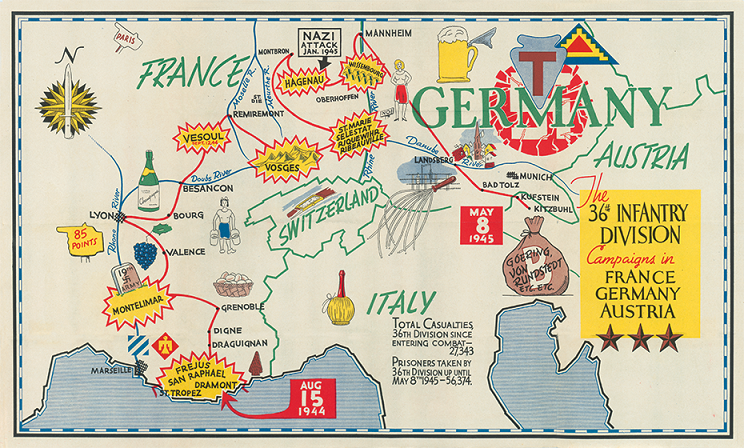
PLAN DE ROUTE DE LA CAMPAGNE - CAMPAIGN ROUTE MAP |
|
|
 |
|
DIVISION CHRONICLEThe 36th Infantry Division landed in North Africa, 13 April 1943, and trained at Arzew and Rabat. It first saw action, 9 September 1943, when it landed at Paestum on the Gulf of Salerno. The waiting enemy launched counterattacks, but the 36th advanced slowly, securing the area from Agropoli to Altavilla. After a brief rest the 36th returned to combat, 15 November. It captured Mount Maggiore, Mount Lungo, and the village of San Pietro despite strong enemy positions and severe winter weather. This grueling campaign was marked by futile attempts to establish a secure bridgehead across the Rapido River, 1 January to 8 February 1944. After assisting the 34th Division in the attack on Cassino and fighting defensively along the Rapido River, the 36th withdrew, 12 March 1944, for rest and rehabilitation. On 25 May, the Division landed at Anzio, drove north to capture Velletri, 1 June, and entered Rome on the 5th. Pushing up from Rome, the 36th encountered sharp resistance at Magliano, but reached Piombino, 26 June, before moving back to Paestum for rest and rehabilitation. On 15 August, the Division made another assault landing against light opposition in the RaphaelFrejus area of Southern France. A lightning dash opened the Rhone River Valley. Montelimar fell, 28 August, and large Nazi units were trapped. The 36th advanced to the Moselle River at Remiremont and the foothills of the Vosges. In a grinding offensive, the Division crossed the Meurthe River, breached the Ste. Marie Pass and burst into the Alsatian Plains. The enemy counterattacked, 13 December, and the 36th held in the Colmar Pocket. On the 20th the Division resumed the attack, advancing northward along the Rhine River to Mannheim meeting heavy resistance at Haguenau, Oberhofen, and Wissembourg. The 36th moved to the Danube, 22 April 1945, and attacked the "National Redoubt" at Kunzelsau on the 30th in its final action. |
CHRONIQUE DE DIVISIONThe 36th Infantry Division landed in North Africa, 13 April 1943, and trained at Arzew and Rabat. It first saw action, 9 September 1943, when it landed at Paestum on the Gulf of Salerno. The waiting enemy launched counterattacks, but the 36th advanced slowly, securing the area from Agropoli to Altavilla. After a brief rest the 36th returned to combat, 15 November. It captured Mount Maggiore, Mount Lungo, and the village of San Pietro despite strong enemy positions and severe winter weather. This grueling campaign was marked by futile attempts to establish a secure bridgehead across the Rapido River, 1 January to 8 February 1944. After assisting the 34th Division in the attack on Cassino and fighting defensively along the Rapido River, the 36th withdrew, 12 March 1944 , for rest and rehabilitation. On 25 May, the Division landed at Anzio, drove north to capture Velletri, 1 June, and entered Rome on the 5th. Pushing up from Rome, the 36th encountered sharp resistance at Magliano, but reached Piombino, 26 June, before moving back to Paestum for rest and rehabilitation. On 15 August, the Division made another assault landing against light opposition in the RaphaelFrejus area of Southern France. A lightning dash opened the Rhone River Valley. Montelimar fell, 28 August, and large Nazi units were trapped. The 36th advanced to the Moselle River at Remiremont and the foothills of the Vosges. In a grinding offensive, the Division crossed the Meurthe River, breached the Ste. Marie Pass and burst into the Alsatian Plains. The enemy counterattacked, 13 December, and the 36th held in the Colmar Pocket. On the 20th the Division resumed the attack, advancing northward along the Rhine River to Mannheim meeting heavy resistance at Haguenau, Oberhofen, and Wissembourg. The 36th moved to the Danube, 22 April 1945, and attacked the "National Redoubt" at Kunzelsau on the 30th in its final action.
|
| SOURCE INFORMATION & PHOTO | Armydivs.squarespace.com |
|---|
| SOURCE INFORMATION & SOURCE PHOTO | Findagrave.com - Abmc.gov - Aad.archives.gov - Projects.cah.ucf.edu |
|---|---|
| PROGRAMMEURS | Eric, Henri, Garrett, Clive, Frédéric & Renaud |